Episode Details
Back to Episodes“Why I’m Skeptical of Air Filters for Infection Prevention” by Alastair Fraser-Urquhart
Description
Air Filters for Infection
Air filters are often proposed as a simple, scalable way to reduce the spread of respiratory infections. The underlying logic is simple - respiratory pathogens can be transmitted through the air in aerosol form, and air filters are capable of removing these particles before they are inhaled and go on to cause infection. This has led to sustained interest in air filtration as a non-pharmaceutical intervention to prevent the spread of respiratory disease.
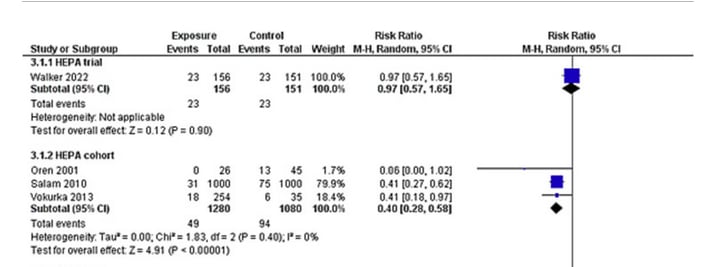
I’ve spent a significant portion of my time at 1Day Sooner researching interventions for indoor air quality. Throughout that time, I’ve become increasingly bearish about the utility of air filters for preventing respiratory infection. I argue that, because respiratory infections are driven by short-range exposure to highly concentrated emissions and because empirical findings also fail to find a link between filters and infectious disease, air filters are unlikely to work well in a wide variety of settings and situations.
Summary
- The theoretical argument that air filters significantly prevent the spread of infectious disease is weak. Much infectious disease transmission occurs over short times and distances, which air filters fail to disrupt.
- Evidence for the real-world effectiveness of filters is confined to [...]
---
Outline:
(00:11) Air Filters for Infection
(01:11) Summary
(01:48) Real-world studies
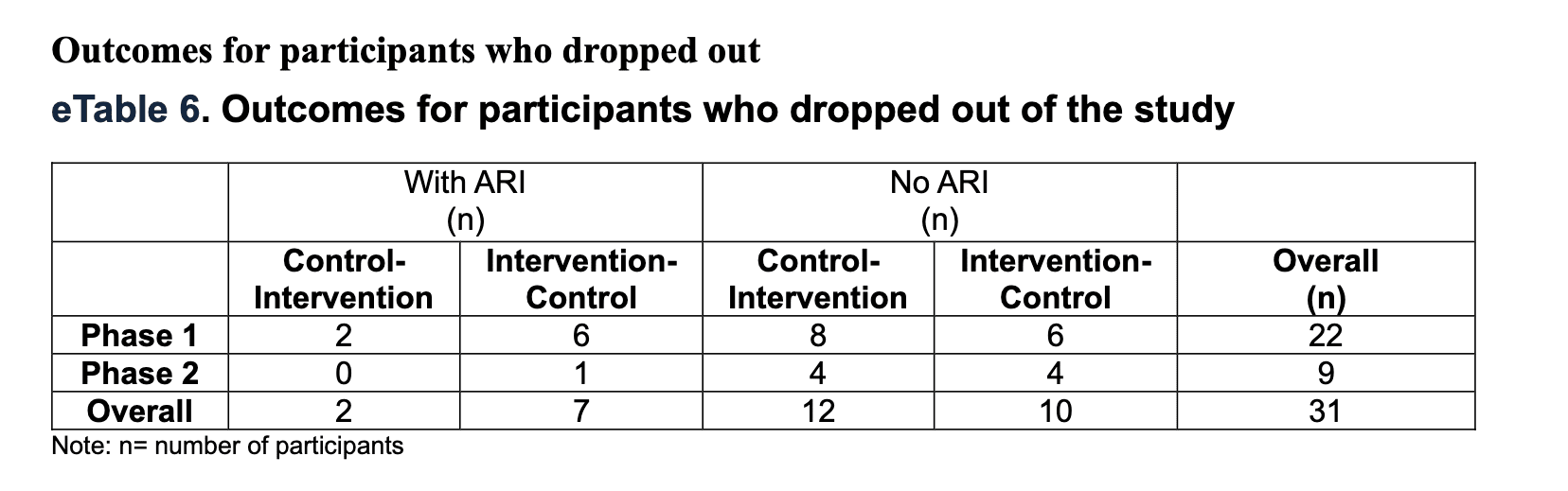
(05:32) CAFACS (Clean Air For Aged Care Study)
(09:33) AFRI-c
(10:43) Theoretical basis for filtration
(13:36) Conclusion
---
First published:
May 28th, 2026
---
Narrated by TYPE III AUDIO.
---
Images from the article:
Apple Podcasts and Spotify do not show images in the episode description. Try Pocket Casts, or another podcast app.