Episode Details
Back to Episodes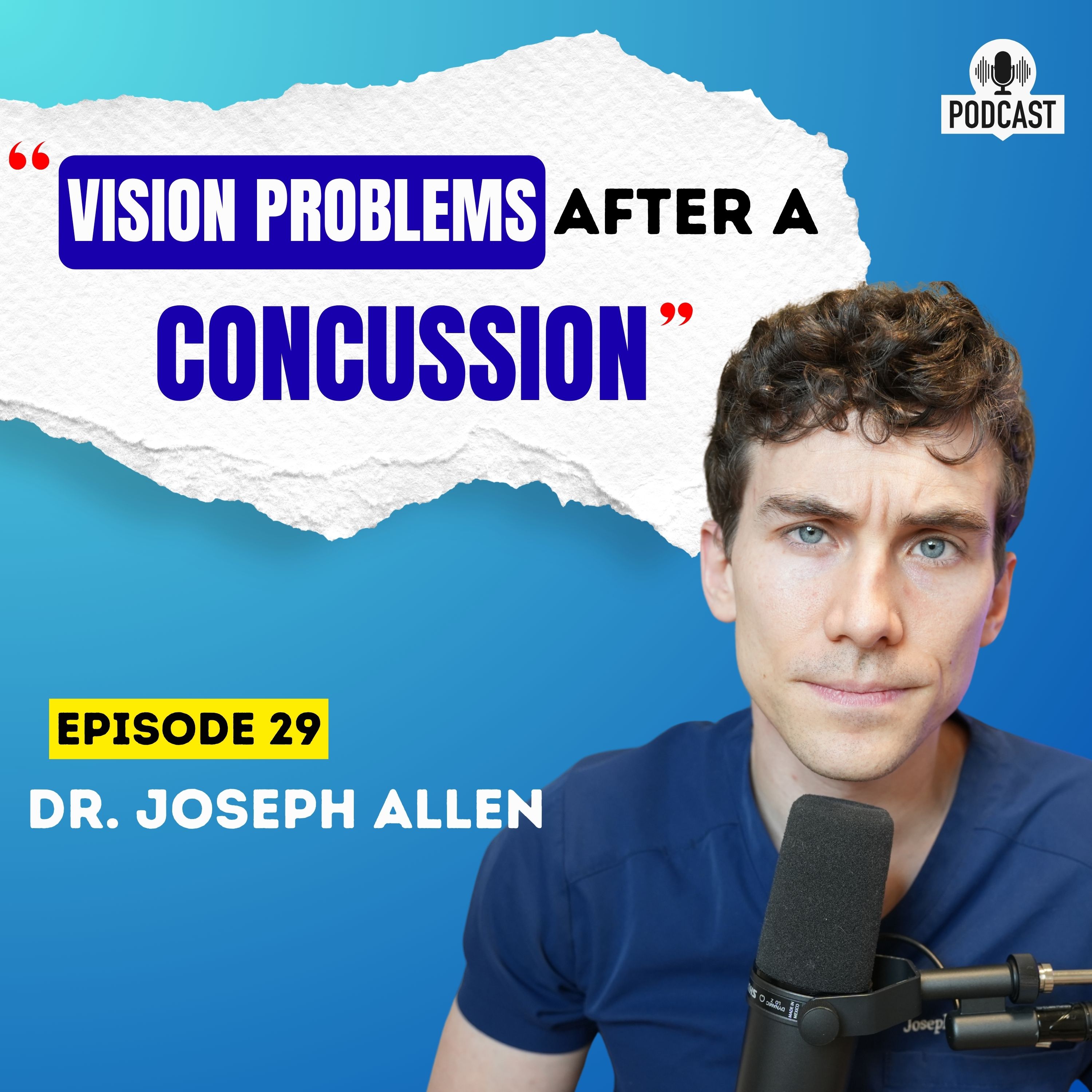
Vision Problems After a Concussion: Causes, Symptoms & Recovery
Description
Experiencing blurred vision, double vision, headaches, dizziness, or difficulty reading after a concussion? You're not alone.
On the Dr. Eye Health Podcast, Dr. Joseph Allen explores how concussions and traumatic brain injuries (TBI) can affect the visual system, even when a standard eye exam appears normal.
Learn why symptoms such as eye strain, light sensitivity, trouble focusing, visual fatigue, and reading difficulties are so common after a head injury. Dr. Allen explains three of the most frequently diagnosed post-concussion vision disorders: accommodative insufficiency, convergence insufficiency, and saccadic dysfunction.
You'll also discover why these conditions are often missed, when to seek specialized care, and how vision therapy and multidisciplinary rehabilitation may help support recovery.
Whether you're recovering from a concussion, caring for a loved one with a brain injury, or looking for answers about persistent vision symptoms, this episode provides practical guidance and evidence-based information to help you better understand the connection between concussion and vision.
What You Will Learn
✅ Why vision problems are one of the most common symptoms following a concussion
✅ The difference between accommodative insufficiency, convergence insufficiency, and saccadic dysfunction
✅ Why standard eye exams may not detect post-concussion visual disorders
✅ How vision therapy and interdisciplinary rehabilitation can support recovery
👉 Like the podcast? Stay updated with the latest eye health tips, treatments, and expert advice by signing up for the newsletter at Dr. Eye Health
Concussion Rehab References: https://doctoreyehealth.com/concussion-rehab-references
Key Timestamps
- (00:00) Understanding Concussion-Related Vision Problems
- (02:34) Common Symptoms of Concussion and Traumatic Brain Injury
- (03:03) How Brain Injuries Affect the Visual System
- (04:11) Why Eye Exams Can Appear Normal Despite Visual Symptoms
- (04:38) Accommodative Insufficiency Explained
- (05:45) Understanding Convergence Insufficiency and Double Vision
- (06:20) What Is Saccadic Dysfunction?
- (07:45) How Visual Dysfunction Impacts Reading, School, and Work
- (08:34) Additional Eye Movement Disorders After Concussion
- (09:12) Recovery Timelines and Persistent Post-Concussion Symptoms
- (10:46) When to Seek Medical and Vision Care
- (12:00) How Vision Therapy Can Help Recovery
- (12:43) The Importance of an Interdisciplinary Rehabilitation Team
- (13:37) Resources for Patients, Caregivers, and Healthcare Providers
Key Takeaways
🔹 Up to 65–80% of people experience some form of visual dysfunction during the acute phase following a concussion or traumatic brain injury.
🔹 Common post-concussion vision disorders include accommodative insufficiency, convergence insufficiency, and saccadic dysfunction, all of which can significantly impact daily activities.
🔹 Many patients experience persistent symptoms despite having healthy eyes and normal visual acuity, highlighting the importance of specialized vision evaluations.
🔹 Recovery often requires a multidisciplinary approach that may include vision therapy, physical therapy, neurology, occupational therapy, and other rehabilitation specialists.
Want More from Dr Eye Health? Check out these Videos:
- My Concussion Story https://youtu.be/4-cs9jLCMEg
- Are Your Migraines a Warning Sign? Migraine Aura, Triggers, and Treatments E