Episode Details
Back to Episodes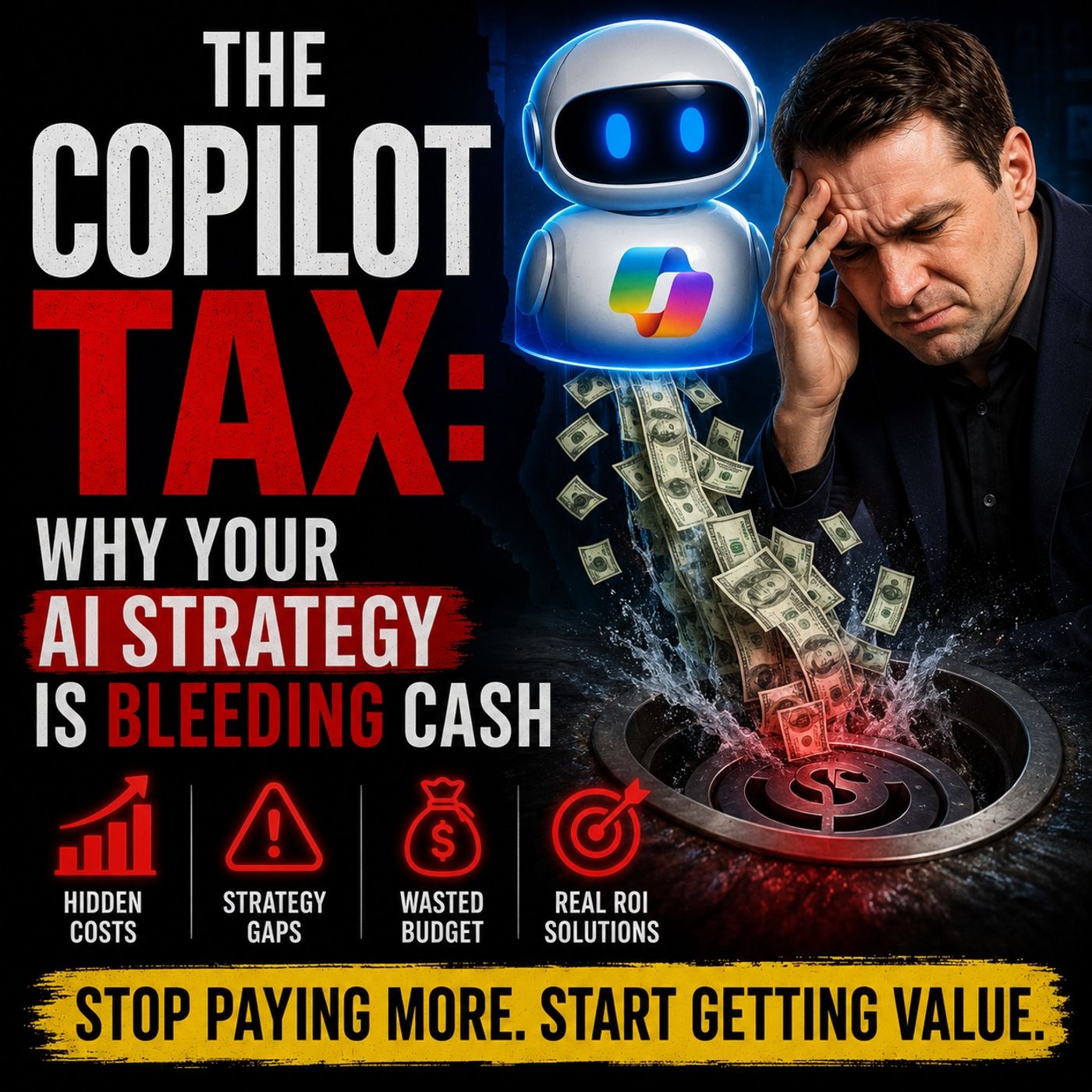
The Copilot Tax: Why Your AI Strategy is Bleeding Cash
Season 2
Published 2 months, 1 week ago
Description
Most organizations believe their AI costs are predictable.They look at the Microsoft invoice, see the $30-per-user Copilot add-on, multiply it by headcount, and assume they understand what enterprise AI is costing them.They don’t.In this episode, Mirko Peters breaks down the hidden financial architecture underneath Microsoft Copilot, Azure OpenAI, Copilot Studio, Security Copilot, and agentic AI systems. What looks like a simple licensing model is actually a layered consumption economy built on tokens, compute, orchestration loops, verification labor, governance overhead, and hidden operational waste.This episode explains why many organizations are dramatically underestimating what enterprise AI actually costs — and why some deployments are quietly bleeding millions of dollars through zombie licenses, idle token waste, poorly governed agents, and low-adoption rollouts.More importantly, the episode explores how organizations can stop the bleeding and build a sustainable, measurable, ROI-driven AI strategy going into 2026.
THE REAL COST OF COPILOT
The $30 Copilot license is not the real cost of enterprise AI.It is the entry fee.Mirko explains how Microsoft’s licensing strategy changed dramatically between 2024 and 2026 through price increases, removal of Enterprise Agreement discounts, bundled AI suites, and consumption-based billing models.The conversation explores:
TWO BILLING SYSTEMS AT THE SAME TIME
One of the biggest problems in enterprise AI today is that Microsoft effectively runs two billing models simultaneously.The first is traditional seat-based licensing.The second is variable consumption-based billing driven by tokens, compute units, and AI workload execution.This episode explains how products like Copilot Studio, Azure OpenAI, Security Copilot, and GitHub Copilot blur these billing systems together, creating fragmented visibility across multiple invoices and reporting platforms.Mirko explores how a single AI interaction can trigger:
WHAT TOKENS ACTUALLY COST
This episode provides one of the clearest explanations available of how token economics work inside enterprise AI systems.Mirko breaks down:
THE IDLE TOKEN PROBLEM
One of the most important concepts introduced in the episode is idle token waste.These are tokens organizations pay for that produce little or no measurable business value.This includes:
THE REAL COST OF COPILOT
The $30 Copilot license is not the real cost of enterprise AI.It is the entry fee.Mirko explains how Microsoft’s licensing strategy changed dramatically between 2024 and 2026 through price increases, removal of Enterprise Agreement discounts, bundled AI suites, and consumption-based billing models.The conversation explores:
- E3 and E5 licensing inflation
- Microsoft’s E7 Frontier Suite strategy
- The end of traditional volume discount leverage
- AI becoming a fixed operational cost
- The shift toward bundled dependency ecosystems
TWO BILLING SYSTEMS AT THE SAME TIME
One of the biggest problems in enterprise AI today is that Microsoft effectively runs two billing models simultaneously.The first is traditional seat-based licensing.The second is variable consumption-based billing driven by tokens, compute units, and AI workload execution.This episode explains how products like Copilot Studio, Azure OpenAI, Security Copilot, and GitHub Copilot blur these billing systems together, creating fragmented visibility across multiple invoices and reporting platforms.Mirko explores how a single AI interaction can trigger:
- M365 licensing costs
- Copilot Credit consumption
- Azure OpenAI token usage
- Security Compute Unit overages
- Agent orchestration costs
WHAT TOKENS ACTUALLY COST
This episode provides one of the clearest explanations available of how token economics work inside enterprise AI systems.Mirko breaks down:
- Input tokens
- Output tokens
- Context windows
- Reasoning tokens
- Consumption scaling
- Variable AI compute pricing
THE IDLE TOKEN PROBLEM
One of the most important concepts introduced in the episode is idle token waste.These are tokens organizations pay for that produce little or no measurable business value.This includes:
- Background completions users never read
- Suggestions immediately discarded
- Oversized context injection
- Redundant orchestration loops
- Agent chatter
- Poor workflow routing
- Unnecessary reasoning cycles