Episode Details
Back to Episodes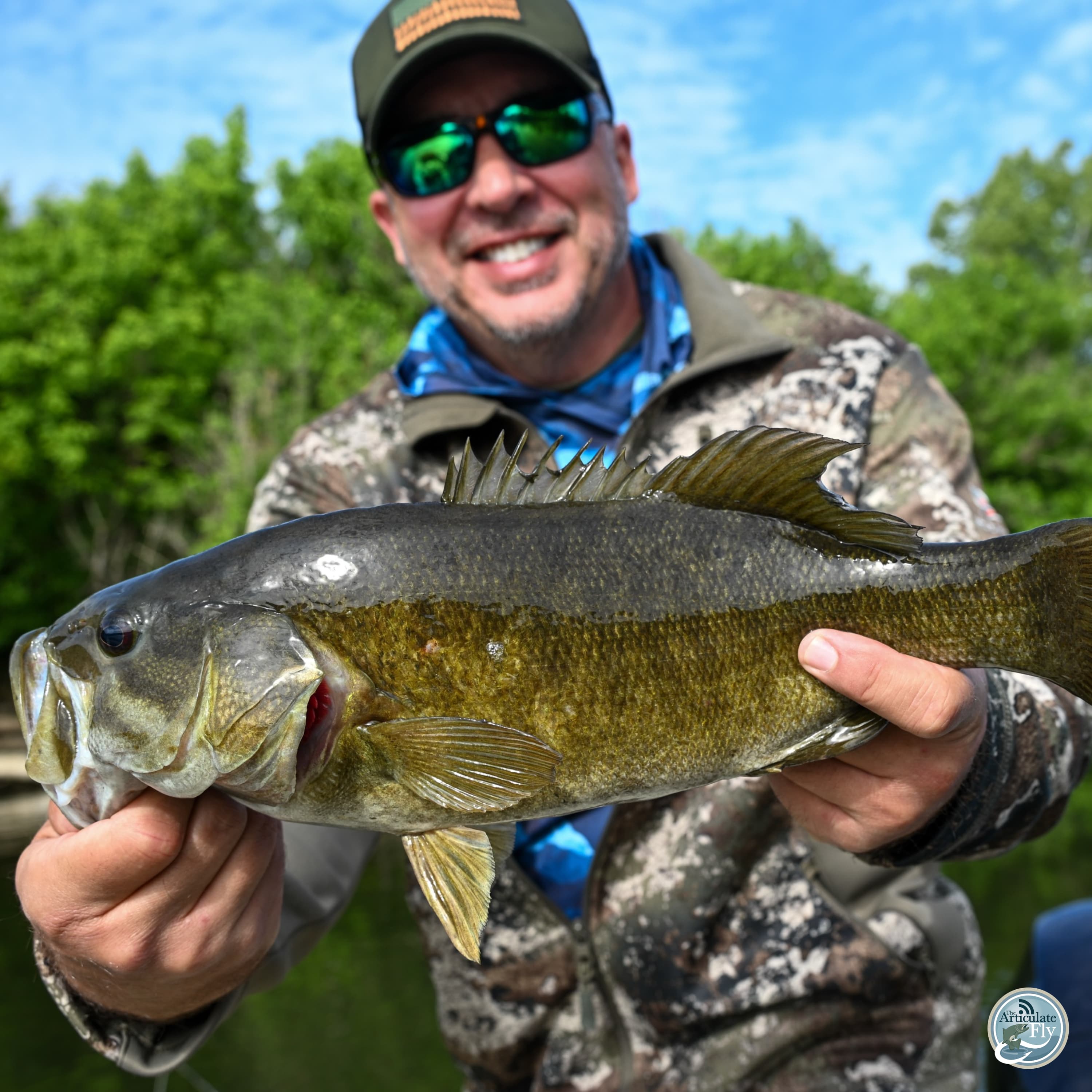
High Water and Transitional Fish: Matt Reilly's Southwest Virginia Fishing Insights
Description
Episode Overview
In this Southwest Virginia Fishing Report on The Articulate Fly fly fishing podcast, host Marvin Cash checks in with guide Matt Reilly of Matt Reilly Fly Fishing for a candid late-spring conditions update covering the post-spawn transition, dirty water tactics and the seasonal arc ahead. Recorded amid rising, stained flows on the New River and surrounding drainages — following months of below-average flows — the episode captures a moment when Southwest Virginia smallmouth fishing is firmly in between patterns, and angler adaptability is the only reliable edge. Reilly addresses the dual pressure facing anglers right now: a post-spawn funk settling over fish on some waters while others remain slightly earlier in that arc, and high, off-color water shrinking reactive distances and pushing fish to the bottom. He details how an early crayfish molt — triggered by unusually warm water temps in the low-to-mid 70s weeks ahead of schedule — has shifted his focus away from streamer presentations and toward bottom-contact crayfish patterns on fish that are otherwise visible but unmovable on top. Reilly also previews the seasonal calendar ahead, sketching the transition through a late-May/June baitfish bite, crayfish activity and eventually the cleaner, lower-water conditions that make topwater the dominant game — typically not until around the Fourth of July. Guide availability closes the episode, with Reilly noting his summer calendar is fully booked and early October representing the next realistic opportunity for prospective clients.
Key Takeaways
- How to identify the post-spawn funk by its signature symptom: cycling rapidly through multiple fly types with sporadic, pattern-less catches.
- Why bottom-contact crayfish patterns outperform streamers and topwater when smallmouth are locked down during an early crayfish molt.
- How to approach high, stained water when flows are elevated but not extreme — targeting the bottom rather than automatically moving to the banks, because fish can spread across mid-river structure when current isn't pushing them to the edges.
- Why an early summer crayfish molt can pull even cruising, visible fish away from topwater presentations and onto gravel-bar bottom feeding.
- When to expect the seasonal transition to more consistent patterns: a late-May/June baitfish bite followed by bug-fishing conditions that typically don't fully materialize until around the Fourth of July.
Techniques & Gear Covered
Reilly runs multiple rods in the boat simultaneously — a floating line with a topwater bug, an intermediate-tip with a streamer and a floater rigged with a crayfish — to rotate through presentations efficiently when no single pattern dominates. In dirty, elevated water he emphasizes making bottom contact as the primary directive, noting that smallmouth research documents a behavioral shift toward bottom-oriented hunting when turbidity increases. Crayfish patterns are the anchor of his current program given the early molt activity, with darker, high-contrast and flashier fly choices appropriate for off-color conditions. Streamer fishing remains part of the rotation but Reilly is candid that listening to what the fish show you — even when it conflicts with your instinct — is the overriding tactical discipline during transitional windows.
Locations & Species
The episode centers on Southwest Virginia's river systems, with the New River specifically mentioned as the water Reilly was guiding on the day of recording. The New is described as deteriorating during the conversation — elevated and stained from recent rainfall — but holding up better than surrounding rivers that Reilly characterizes as borderline blown out. Smallmouth bass