Episode Details
Back to Episodes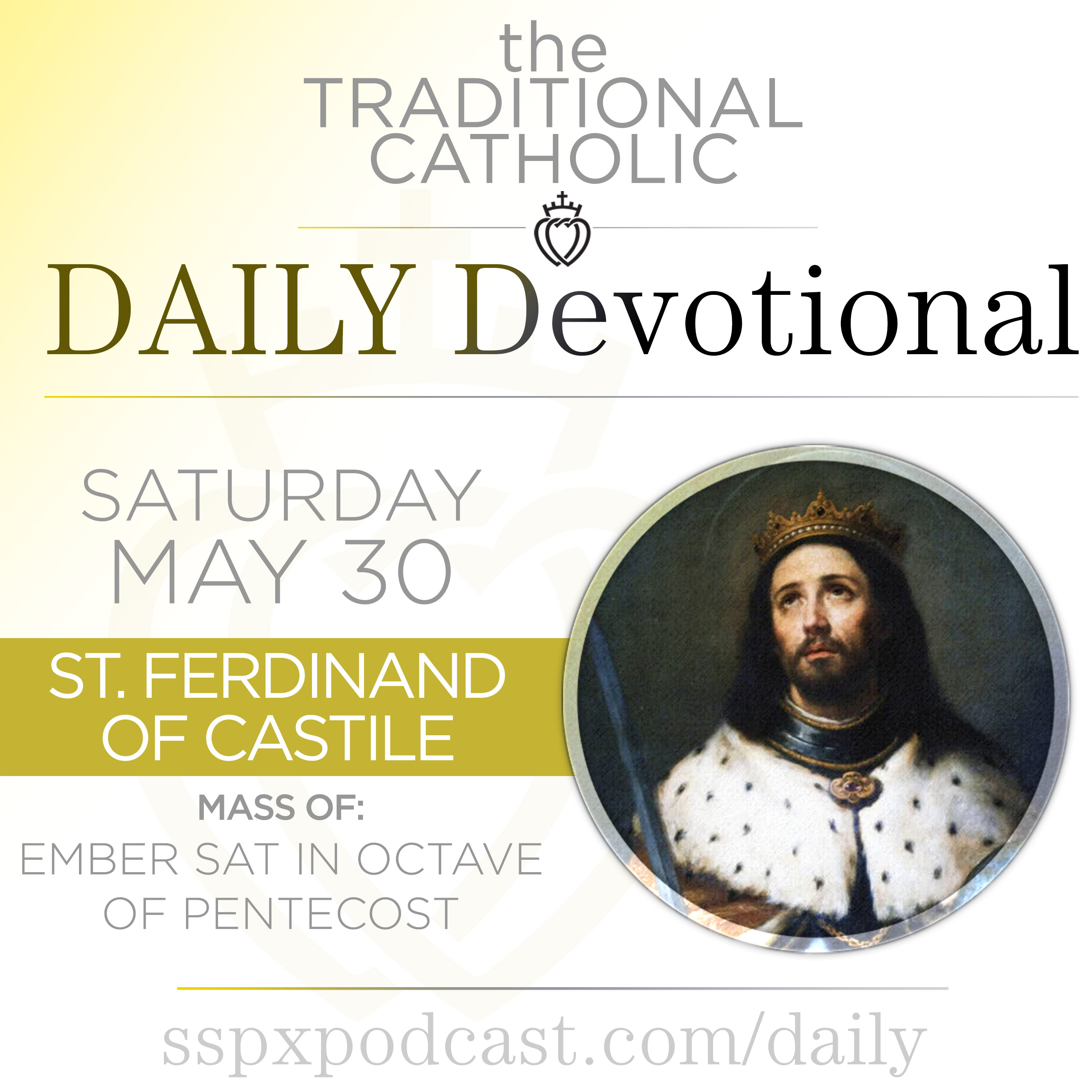
May 30 – Ember Sat of Pentecost / S Ferdinand of Castile
Description
Sources Used Today:
- "The Holy Ghost and the Apostolate" — Eastertide Day by Day
- "Archbishop Marcel Lefebvre and the 1976 Audience with Pope Paul VI" (FSSPX.news)
- The Spiritual Life — Archbishop Marcel Lefebvre (Angelus Press)
Please support our new project, the Archbishop Lefebvre Biography Audiobook!
- Learn more:https://www.youtube.com/watch?v=Y-Wp4MQdK2o
- Donate:https://sspx.gifts/audiobook
Saint Ferdinand III of Castile was a king, warrior, and saint who sought to govern not merely with political skill, but according to the principles of the Christian faith. He was born around the year 1199 in Spain, the son of King Alfonso IX of León and Queen Berengaria of Castile. Through a series of events that united the two kingdoms, Ferdinand eventually became ruler of both Castile and León, helping to shape the future of Spain during a pivotal period of its history.
Ferdinand lived during the centuries-long Reconquista, when Christian kingdoms sought to reclaim territories that had been under Muslim rule. As king, he led military campaigns that resulted in the capture of important cities, including Córdoba, Jaén, and Seville. Yet what distinguished Ferdinand was not merely his success as a military leader, but the spirit in which he exercised authority. Contemporary accounts describe him as a ruler who combined courage with mercy, justice, and personal piety.
Before important decisions, Ferdinand frequently sought guidance through prayer. He attended Mass regularly, showed deep devotion to the Blessed Virgin Mary, and was known for his concern for the poor. Even amid military campaigns, he worked to restore churches, support religious communities, and encourage the Christian life in newly recovered territories.
The Church honors Ferdinand as an example of the Christian ideal of kingship. He understood that political authority was a responsibility entrusted by God and that rulers would ultimately be judged by how they governed. Rather than seeking personal glory, he sought to use his position for the good of his people and the defense of the faith.
Ferdinand also played an important role in the cultural and religious development of Spain. Under his rule, cathedrals were built, learning was encouraged, and the f