Episode Details
Back to Episodes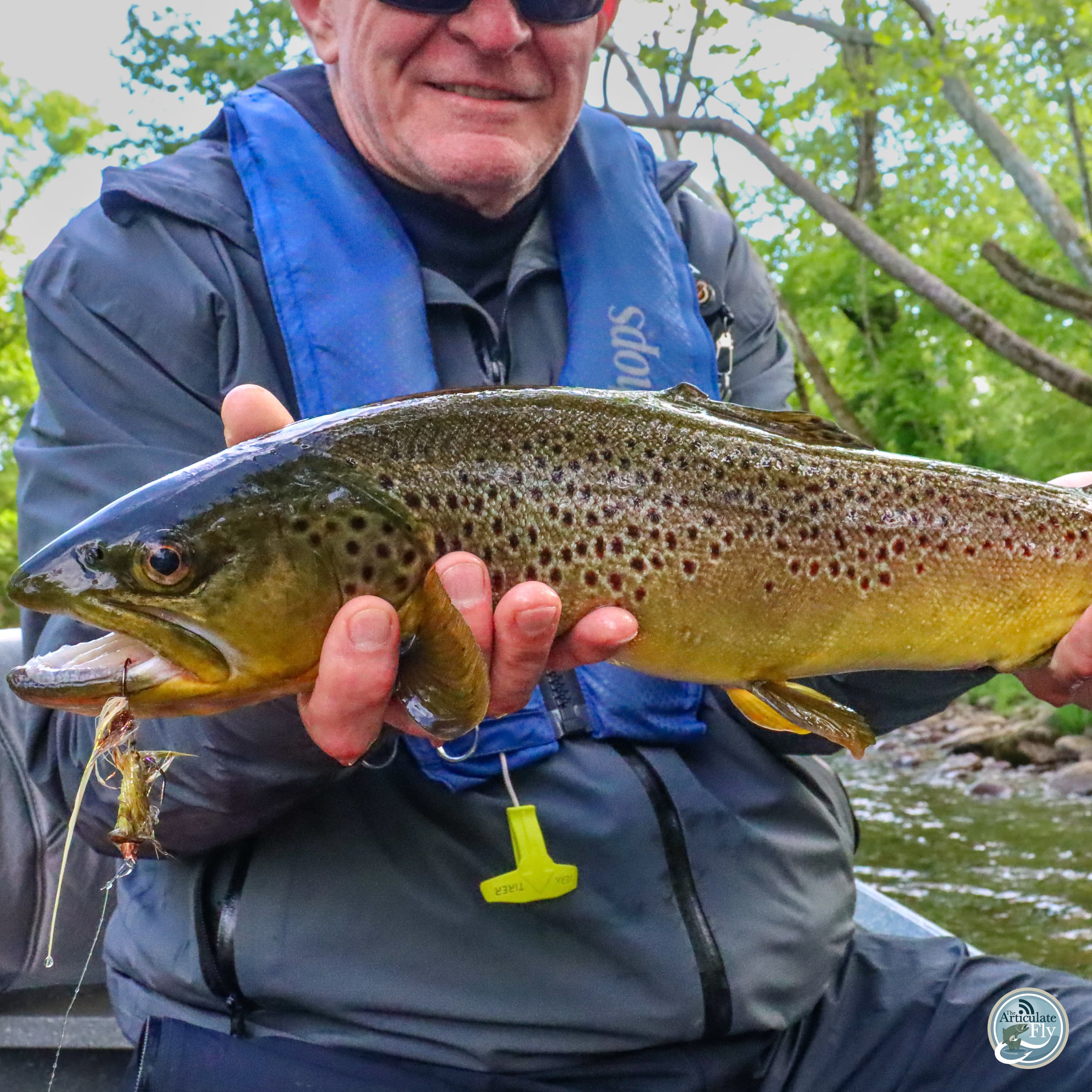
Big Water, Big Fish: Ellis Ward's Strategies for Streamer Fishing Success
Description
Episode Overview
In this East Tennessee Fishing Report on The Articulate Fly, host Marvin Cash checks in with guide Ellis Ward for an early-summer conditions update focused on the Watauga River tailwater. After a dry spring that kept anglers grinding through tough conditions, a stretch of rain and rising water has Ellis bullish on what's ahead: bigger flows, off-color water, and the full slate of techniques that make East Tennessee tailwaters unique. He covers the current Watauga generation schedule (six days a week, five hours of afternoon generation), how that release window shapes a full-day float, and why the combination of streamers, dry fly fishing to rising trout, and mousing after dark makes summer his favorite time of year to be on the water. Ellis also discusses the browns that have been showing up even through the tough conditions — fish in the 24-inch range with a handful over two feet — and a striper in the 34–35 inch class that made it to the boat. The deeper thread of the conversation is mindset: Ellis draws a direct parallel between hunting big brown trout on streamers and musky fishing, emphasizing patience, sustained focus, team mechanics in the boat, and the discipline of forming good habits before a big fish shows. His approach to dry flies gets equal attention, with a nuanced breakdown of how he thinks about hackle, CDC, and the meniscus — treating dry flies as micro topwater rather than fixed imitations.
Key Takeaways
- How the Watauga River's afternoon generation schedule structures a productive full-day float that can include streamers, dry fly fishing to risers, and mousing after dark.
- Why approaching big brown trout on streamers through the lens of musky fishing — managing expectations, maintaining focus, and working as a team — produces fish that pure numbers-chasing won't.
- How to distinguish the post-spawn streamer fishery (low-feedback, high-consequence encounters with giant fish) from the early-summer streamer bite when 20 or more fish in the boat per day becomes realistic.
- Why the visual feedback of rising trout makes dry fly fishing a productive mental reset within a streamer-focused float, keeping anglers sharp throughout the day.
- How to think about dry fly construction in terms of water contact — CDC touch points versus hackle touch points, emerger versus floating presentations — rather than vise aesthetics.
- When moon selection matters for night mousing on tailwaters and why the hook set on a mousing fish is a fundamentally different skill than a streamer or dry fly hook set.
Techniques & Gear Covered
This episode covers a multi-technique summer tailwater program built around the Watauga River generation schedule. Ellis describes the float structure in detail: streamer fishing for the first several hours, pausing for risers whenever the dry fly opportunity presents itself, then transitioning to mousing as light fades — a full-day arc that demands different focus and mechanics at each stage. On streamers, Ellis fishes seven-weight setups with smaller trout flies rather than musky-scale patterns, emphasizing presentation discipline (getting the fly three inches from the bank when necessary), sustained team focus, and strip-set timing over fly size or flash. His dry fly breakdown centers on how materials actually sit on the water: he favors CDC for its hundreds of micro touch points holding the fly at the meniscus, contrasting it with the louder, fewer contact points of rooster hackle, and notes that many flies riding low in the surface are effectively fishing as emergers regardless of how they look in the vise. Mousing is treated as a patience game similar to streamer fishing, with moon phase factoring into session planning and requ