Episode Details
Back to Episodes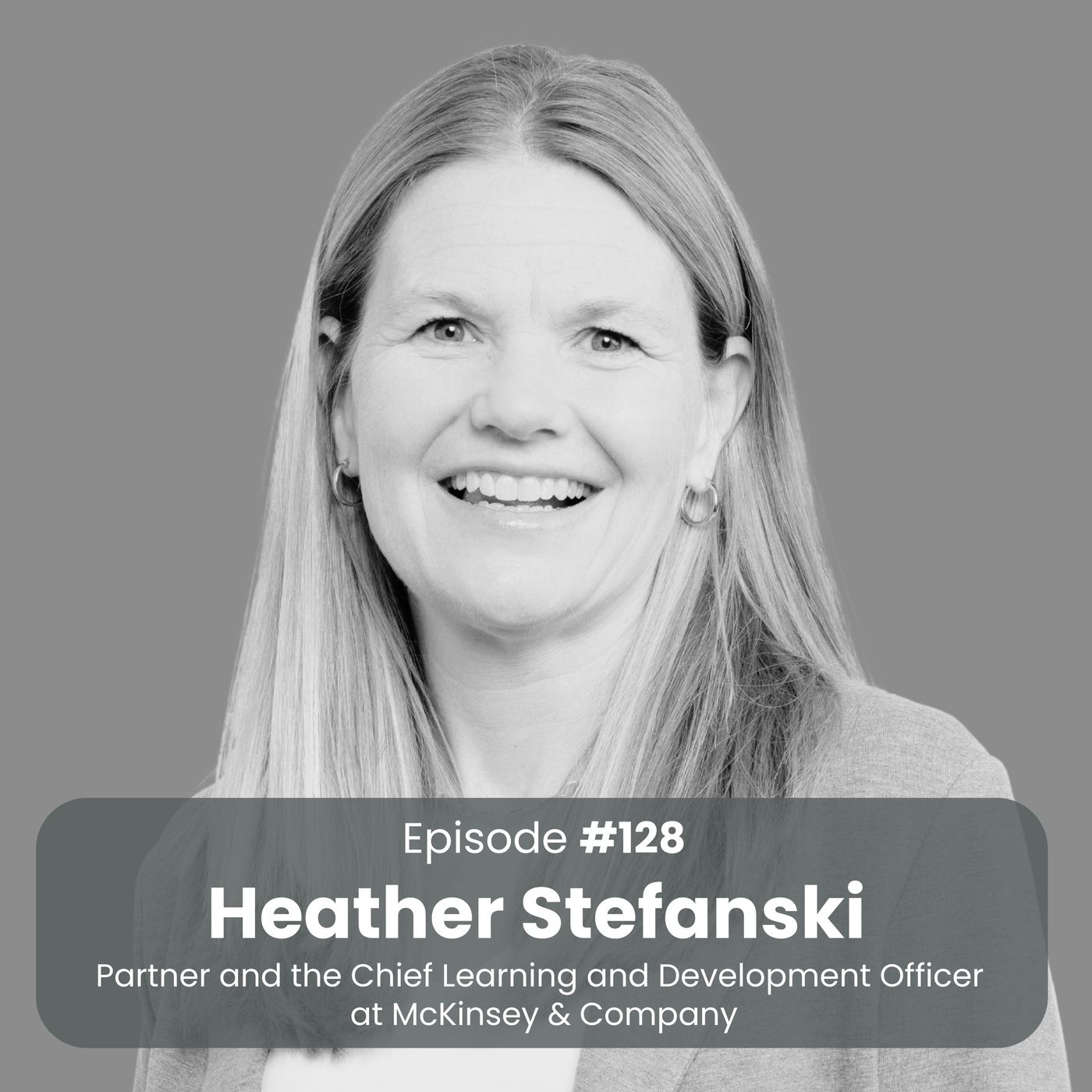
How McKinsey Is Rewiring L&D for the AI Age: Heather Stefanski
Episode 128
Published 3 months, 2 weeks ago
Description
This week on the podcast, we welcome Heather Stefanski, Chief Learning and Development Officer at McKinsey & Company. We explore how organizations like McKinsey are reimagining employee development for the age of AI, shifting learning into the flow of work, focusing on systems and purposeful apprenticeships, and embedding L&D directly into workflow design. You'll also hear all about the evolving skill sets for L&D teams and the importance of updating how we measure development.
You will want to hear this episode if you are interested in...
Rethinking Language: Why Development Surpasses Training
One of the first shifts Heather Stefanski identifies is a deliberate move away from talking about “training” or even just “learning.” Instead, McKinsey centers its L&D strategy on development, a more holistic approach that encompasses formal programs, feedback mechanisms, leadership modeling, and real-time experiences in the flow of work.
For McKinsey, development is inseparable from business outcomes, and employee development is critical to the firm’s value proposition. This means McKinsey designs work intentionally to be developmental, combining upskilling, leadership building, and project experiences into a seamless ecosystem.
Purposeful Apprenticeship
Heather discusses embedding rituals, such as performance check-ins and feedback sessions, directly into core workflows to build a system grounded in purposeful practices. By standardizing these rituals, McKinsey can even quantify the impact of great teachers on advancement, and L&D becomes part of organizational culture rather than a siloed function.The New Learning Tech Stack
One of the most exciting transformations is McKinsey’s ongoing work to blend learning seamlessly into technology-enabled workflows. Rather than relying solely on traditional LMS platforms, McKinsey is embedding learning designers into business teams that are building agentic workflows—AI-powered systems that guide, prompt, and provide real-time feedback as employees work.
AI agents are being designed to do more than just increase productivity. Heather emphasizes that agents should also foster professional development by challenging users, prompting reflective questions, and offering immediate coaching. This shift pushes L&D professionals to evolve their skills, requiring fluency not just in instructional design but in data analysis and collaborative workflow engineering.
What Skills Do Employees Still Need?
As AI tools automate routine tasks, think aligning PowerPoint columns or data cleanup, McKinsey is strategically deciding what to stop teaching, redirecting focus to what keeps the firm distinctive: problem solving, judgment, metacognition, systems thinking, and authentic leadership. Purposeful abandonment of now-obsolete skills is as vital as doubling down on those that matter, ensuring development keeps pace with the shifting demands of knowledge work.
Resources & People Mentioned
You will want to hear this episode if you are interested in...
- 00:00 Integrating development into AI assistants
- 04:49 Heather's role at McKinsey
- 08:32 Developing skills in the workplace
- 16:08 Designing developmental workflows with AI
- 24:56 Understanding skill proficiency levels
- 26:25 Building agentic development solutions
- 30:53 Assessing AI proficiency levels
- 33:18 Future skills focus at McKinsey
- 42:55 AI in performance evaluations
- 53:13 Using AI for feedback and review
Rethinking Language: Why Development Surpasses Training
One of the first shifts Heather Stefanski identifies is a deliberate move away from talking about “training” or even just “learning.” Instead, McKinsey centers its L&D strategy on development, a more holistic approach that encompasses formal programs, feedback mechanisms, leadership modeling, and real-time experiences in the flow of work.
For McKinsey, development is inseparable from business outcomes, and employee development is critical to the firm’s value proposition. This means McKinsey designs work intentionally to be developmental, combining upskilling, leadership building, and project experiences into a seamless ecosystem.
Purposeful Apprenticeship
Heather discusses embedding rituals, such as performance check-ins and feedback sessions, directly into core workflows to build a system grounded in purposeful practices. By standardizing these rituals, McKinsey can even quantify the impact of great teachers on advancement, and L&D becomes part of organizational culture rather than a siloed function.The New Learning Tech Stack
One of the most exciting transformations is McKinsey’s ongoing work to blend learning seamlessly into technology-enabled workflows. Rather than relying solely on traditional LMS platforms, McKinsey is embedding learning designers into business teams that are building agentic workflows—AI-powered systems that guide, prompt, and provide real-time feedback as employees work.
AI agents are being designed to do more than just increase productivity. Heather emphasizes that agents should also foster professional development by challenging users, prompting reflective questions, and offering immediate coaching. This shift pushes L&D professionals to evolve their skills, requiring fluency not just in instructional design but in data analysis and collaborative workflow engineering.
What Skills Do Employees Still Need?
As AI tools automate routine tasks, think aligning PowerPoint columns or data cleanup, McKinsey is strategically deciding what to stop teaching, redirecting focus to what keeps the firm distinctive: problem solving, judgment, metacognition, systems thinking, and authentic leadership. Purposeful abandonment of now-obsolete skills is as vital as doubling down on those that matter, ensuring development keeps pace with the shifting demands of knowledge work.
Resources & People Mentioned
Listen Now
Love PodBriefly?
If you like Podbriefly.com, please consider donating to support the ongoing development.
Support Us