Episode Details
Back to Episodes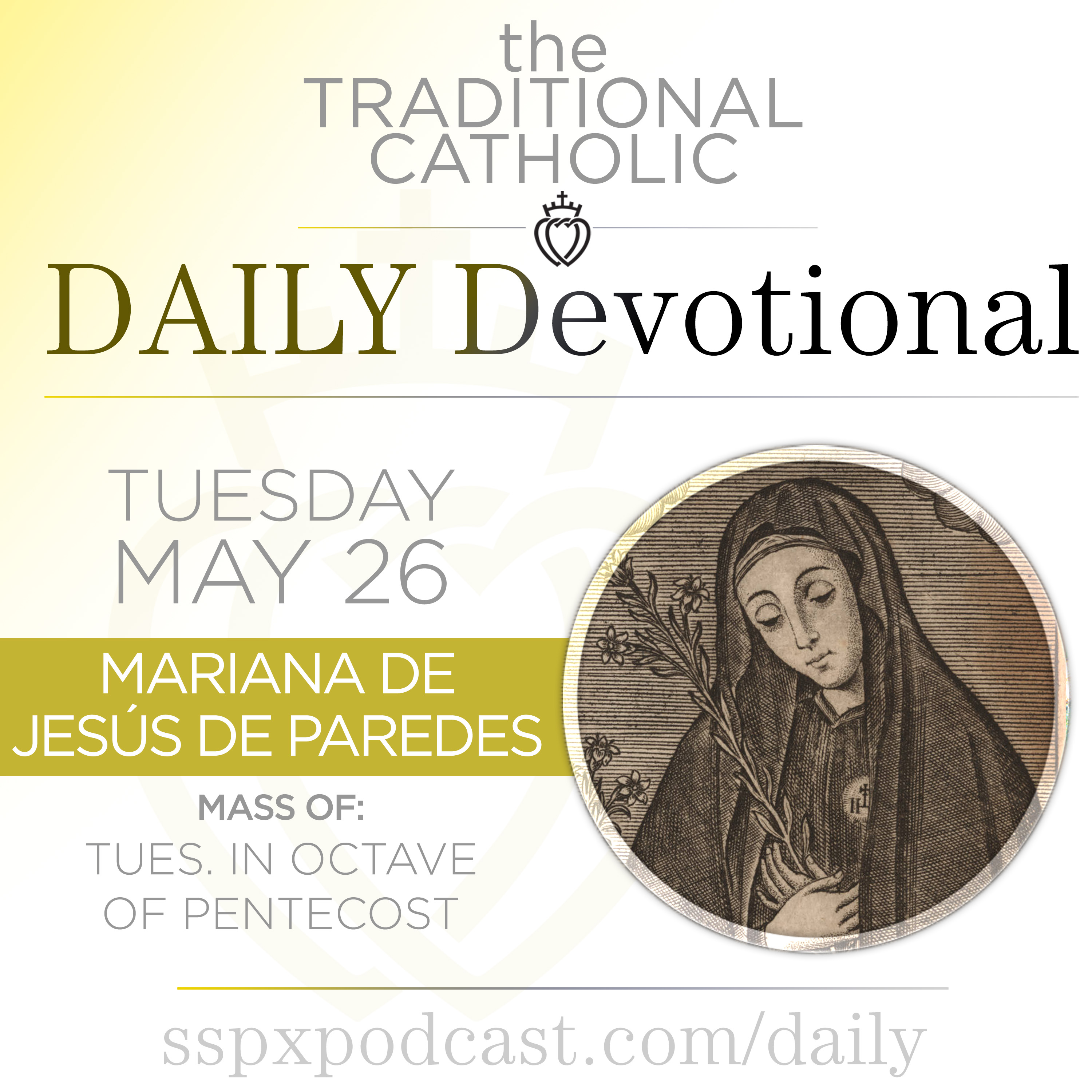
May 26 – Tue of Pentecost / S Mariana de Jesús de Paredes
Description
Sources Used Today:
- "Pentecost: Cradle of the Church" — Eastertide Day by Day
- "Rome and German Progressivism (1): Roman Impotence" (FSSPX.news)
- The SSPX Podcast: "Continuing Tradition in the Heart of North Dakota" (SSPX Podcast)
- View on YouTube
- Listen & Subscribe on SSPXpodcast.com
- The Spiritual Life — Archbishop Marcel Lefebvre (Angelus Press)
Please support our new project, the Archbishop Lefebvre Biography Audiobook!
- Learn more:https://www.youtube.com/watch?v=Y-Wp4MQdK2o
- Donate:https://sspx.gifts/audiobook
Saint Mariana de Jesús de Paredes is remembered as the “Lily of Quito,” a woman of prayer and penance whose hidden life became a powerful witness of love for God and neighbor. She was born in 1618 in Quito, in present-day Ecuador, into a noble Spanish family. Orphaned while still young, Mariana was raised by relatives who recognized early her unusual devotion and seriousness in the spiritual life.
From childhood, Mariana desired to consecrate herself completely to God. Though she hoped to enter religious life, circumstances prevented it, and she instead embraced a life of prayer and sacrifice while remaining in the world. Inspired by the spirituality of the Jesuits and by saints such as Rose of Lima, she transformed part of her home into a kind of private cell where she lived with remarkable austerity.
Mariana devoted herself to prayer, fasting, and acts of penance, offering her sufferings for the conversion of sinners and the protection of her city. Yet her holiness was not withdrawn or cold. She also cared for the sick, instructed children in the faith, and showed deep charity toward the poor. Those around her were struck by both her recollection and her kindness.
She became known throughout Quito for extraordinary piety and mystical experiences, though she tried to avoid attention and remained deeply humble. Her love for Christ in the Blessed Sacrament and her devotion to the Passion shaped her entire life.
One of the most famous traditions connected to Mariana concerns a series of earthquakes and epidemics that struck Quito. According to longs