Episode Details
Back to Episodes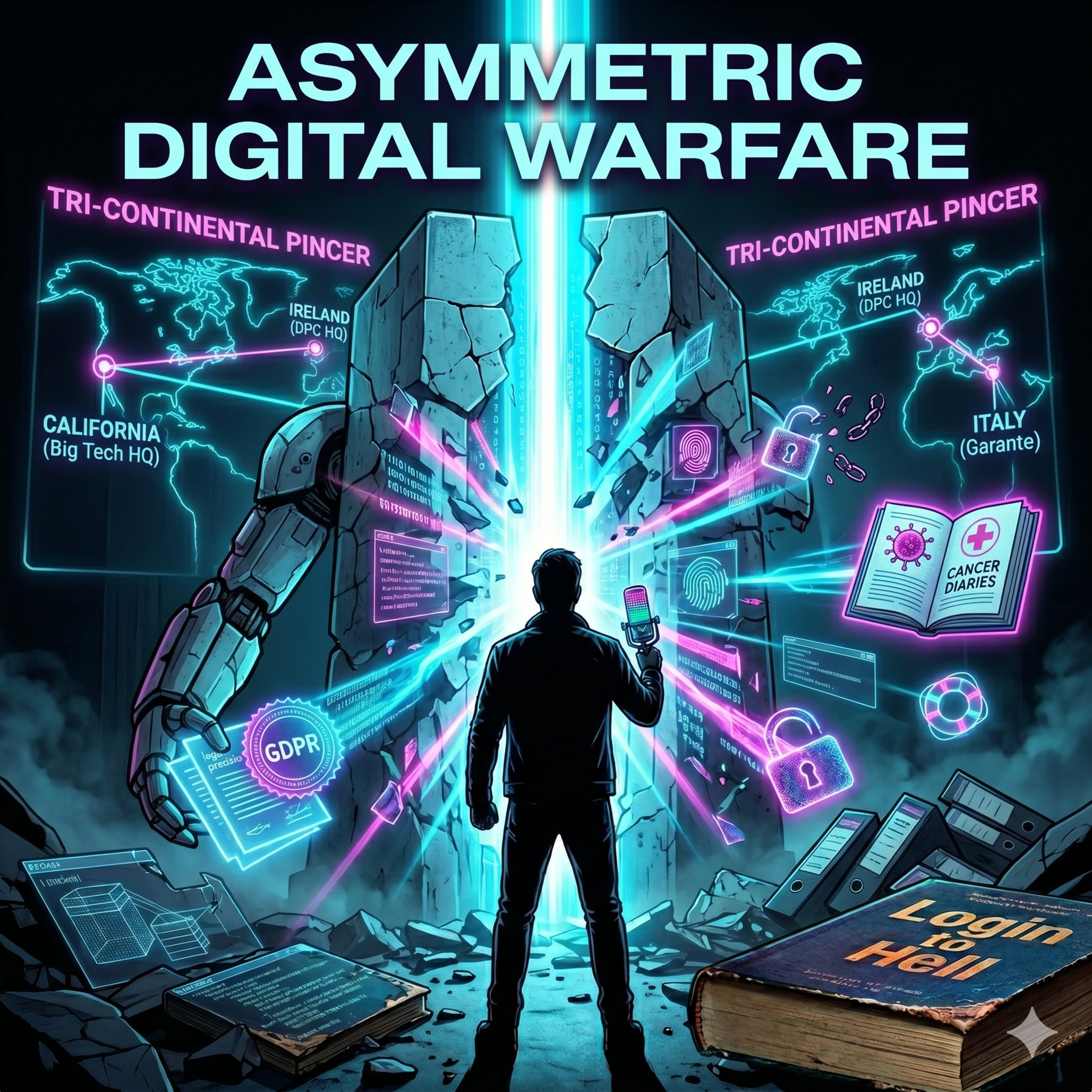
Asymmetric Cyber Warfare
Published 5 days ago
Description
Asymmetric Cyber Warfare involves using unconventional, low-cost strategies to achieve a disproportionate impact against heavily resourced opponents, exploiting the fact that defenders must protect everything while attackers only need one successful entry point.
Predictions and Trends for 2025–2026:
- AI Agentic Attacks & Deepfakes: The modern threat landscape is trending heavily toward autonomous AI agents capable of handling both reconnaissance and exploitation, augmented by deepfake-driven human impersonation.
- Hybrid Campaigns: Future attacks are predicted to increasingly blend technical cyber operations with information and narrative warfare, particularly targeting critical infrastructure.
Alberto Daniel Hill's Asymmetric Defense Examples:Hill counters institutional opacity and advanced threat actors using "asymmetric defense"—prioritizing agility, rapid intelligence sharing, and radical transparency over massive corporate budgets. His real-world examples include:
- The Chronus Mafia Forecast (March 2026): Hill intercepted a threat vector while monitoring a volatile underground Mexican live audio room called "Bombitas del gobierno." He successfully predicted and publicly broadcasted an impending, massive data exfiltration attack on Argentine state infrastructure days before it was executed.
- The Be Prime Breach (April 2026): When a cybersecurity firm suffered a 53 GB leak, Hill utilized "legal precision" and public pressure—including open letters and weaponizing references to the GDPR, Amnesty International, and the EFF—to force the opaque organization to notify its compromised clients,.
- Forensic Narrative Control in the Vlady Case (2025–2026): Hill cross-referenced dark web and Telegram testimonies from hacktivists (like PampaLeaks) with public data to dismantle the Uruguayan government's official narrative, exposing how an 18-year-old was likely being used as a scapegoat for state-level vulnerabilities,,.
- Banco Hipotecario del Uruguay (BHU) (Oct 2025): He asymmetrically countered the bank's attempt to cover up a breach as a "minor IT incident" by publicly proving it was a catastrophic ~700 GB double-extortion ransomware attack,.