Episode Details
Back to Episodes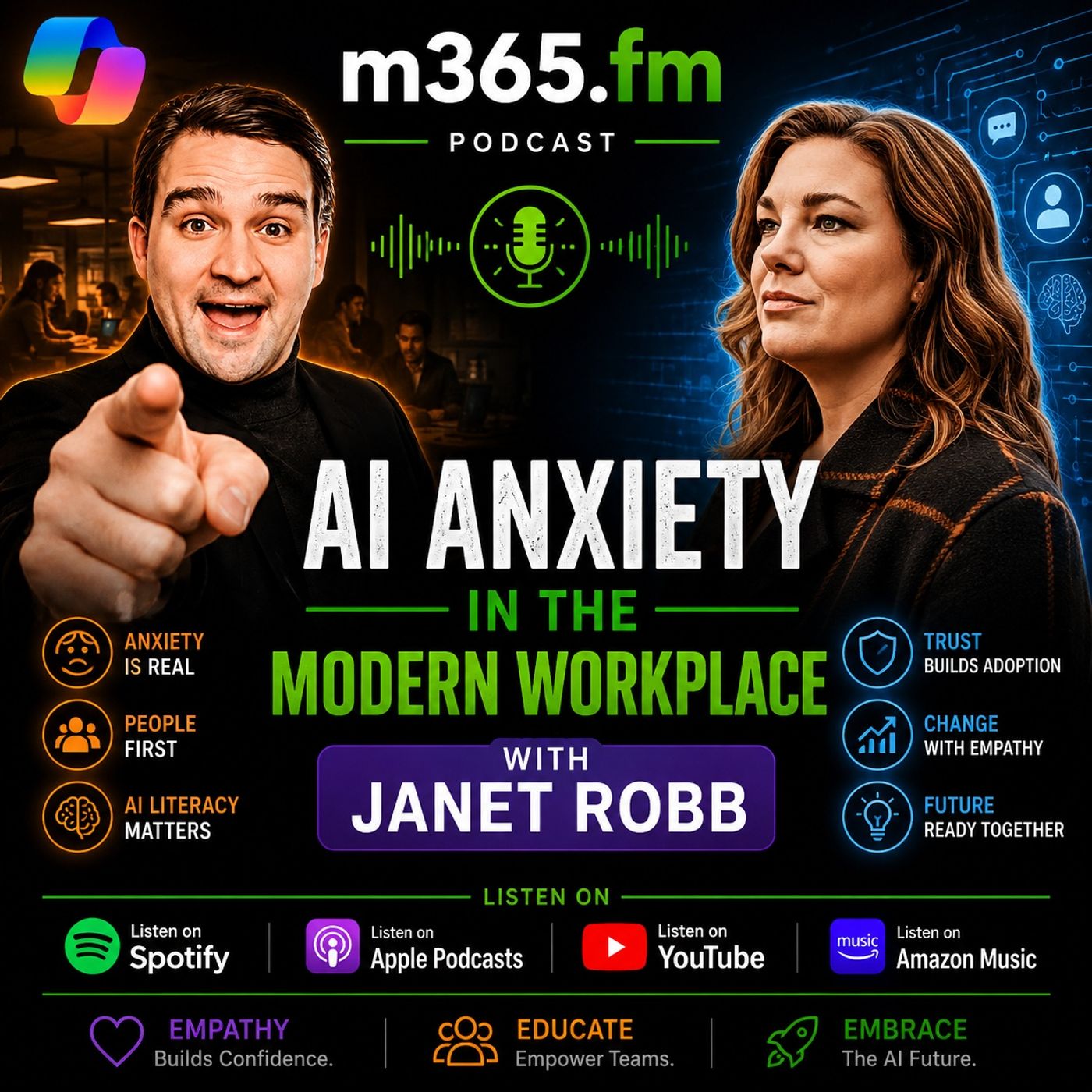
AI Anxiety in the Modern Workplace with Janet Robb
Season 2
Published 2 months, 2 weeks ago
Description
In this deeply human and thought-provoking episode of the m365.fm podcast, Mirko Peters sits down with workplace transformation expert Janet Robb to discuss one of the biggest hidden challenges of the AI revolution: anxiety. While most conversations around AI focus on productivity, automation, Copilot, prompts, and innovation, this episode focuses on the emotional reality many employees and IT professionals are silently experiencing every single day. Together, Mirko and Janet explore AI overload, workplace culture, digital stress, fear of being left behind, communication gaps, social pressure, learning fatigue, and the emotional side of modern digital transformation. This episode is not about hype — it is about people.
THE HUMAN SIDE OF AI ADOPTION
One of the strongest themes throughout the conversation is the fact that organizations often focus heavily on technology while forgetting the emotional impact AI is having on employees. Janet explains how many people currently feel overwhelmed by:
THE PROBLEM WITH AI TERMINOLOGY
One of the most fascinating parts of the episode focuses on language itself. Janet explains how AI has introduced an explosion of new terms, acronyms, buzzwords, and phrases that many people simply do not understand. Instead of creating inclusion, organizations often unintentionally exclude employees by assuming everyone already knows what terms like:
“I don’t understand.”
WHY WORKPLACE CULTURE MATTERS MORE THAN TECHNOLOGY
A major topic throughout the episode is the relationship between AI tools and workplace culture. Janet explains that technology itself is not necessarily the biggest problem. Instead, many organizations fail because the culture around technology adoption is unhealthy. The episode explores:
“Did I really work today?” The conversation highlights how organizations urgently need new ways to measure value, contribution, and productivity in the AI era.
INFORMATION OVERLOAD & “AI SLOP”
Mirko and Janet also dive into the growing problem of AI-generated low-quality content, often referred to online as “AI slop.” The discussion covers:
THE HUMAN SIDE OF AI ADOPTION
One of the strongest themes throughout the conversation is the fact that organizations often focus heavily on technology while forgetting the emotional impact AI is having on employees. Janet explains how many people currently feel overwhelmed by:
- Constant AI announcements
- Endless new tools
- Rapid platform changes
- Information overload
- New terminology
- Pressure to “keep up”
- Fear of becoming irrelevant
THE PROBLEM WITH AI TERMINOLOGY
One of the most fascinating parts of the episode focuses on language itself. Janet explains how AI has introduced an explosion of new terms, acronyms, buzzwords, and phrases that many people simply do not understand. Instead of creating inclusion, organizations often unintentionally exclude employees by assuming everyone already knows what terms like:
- Agents
- Prompt engineering
- Foundation models
- MLOps
- RAG
- LLMs
- Vector databases
- Copilot orchestration
“I don’t understand.”
WHY WORKPLACE CULTURE MATTERS MORE THAN TECHNOLOGY
A major topic throughout the episode is the relationship between AI tools and workplace culture. Janet explains that technology itself is not necessarily the biggest problem. Instead, many organizations fail because the culture around technology adoption is unhealthy. The episode explores:
- Fear-based cultures
- Pressure to perform
- AI guilt
- Unrealistic expectations
- Productivity anxiety
- Lack of psychological safety
- Fear of asking questions
- Shame around learning
“Did I really work today?” The conversation highlights how organizations urgently need new ways to measure value, contribution, and productivity in the AI era.
INFORMATION OVERLOAD & “AI SLOP”
Mirko and Janet also dive into the growing problem of AI-generated low-quality content, often referred to online as “AI slop.” The discussion covers:
- Endless AI-generated LinkedIn posts
- Low-quality YouTube tutorials
- Fake expertise
- AI-generated spam
- Content fatigue
- Digital noise
- Trust problems
Listen Now
Love PodBriefly?
If you like Podbriefly.com, please consider donating to support the ongoing development.
Support Us