Episode Details
Back to Episodes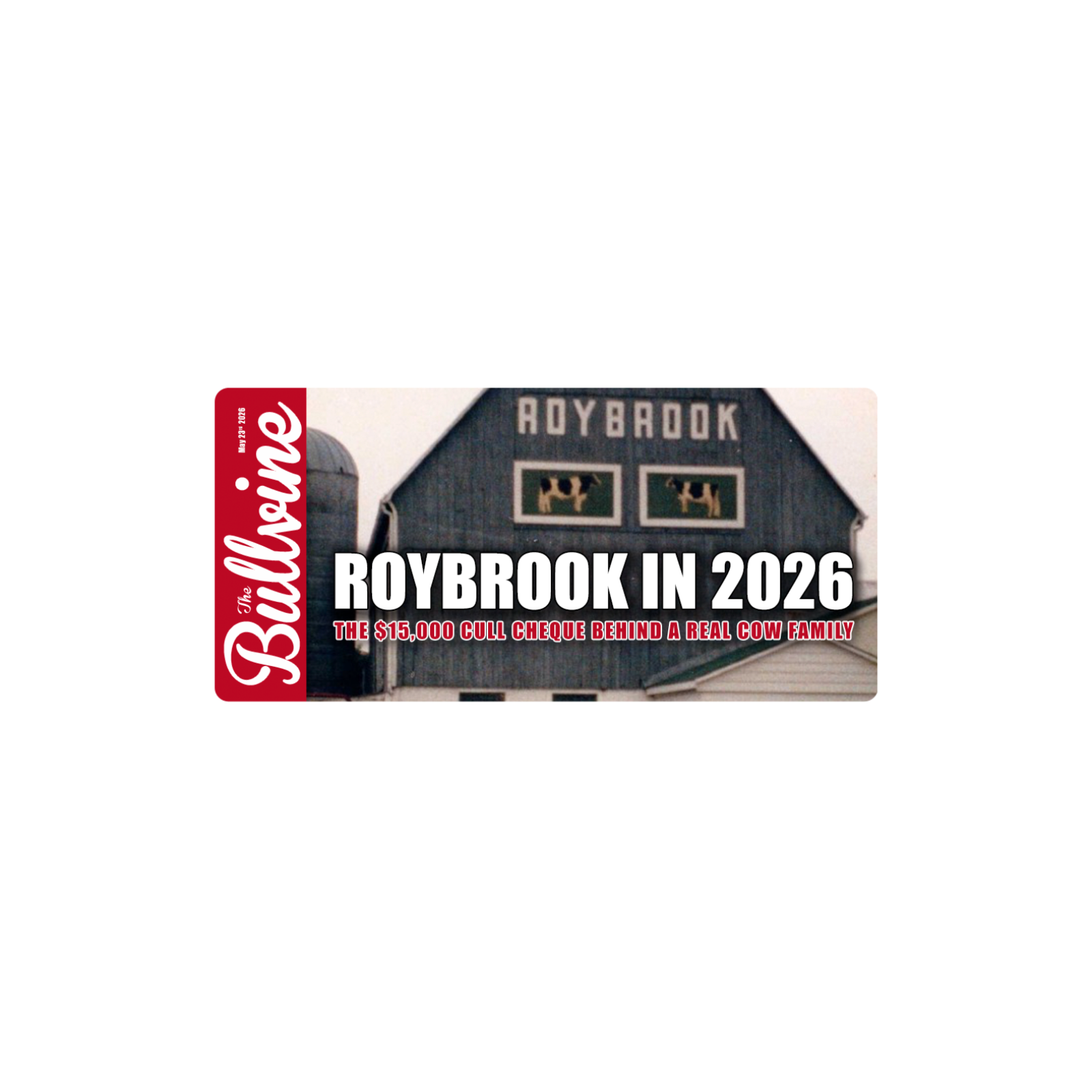
E566 Roybrook in 2026: The $15,000 Cull Cheque Behind a Real Cow Family
Description
In 1956, Roy Ormiston paid $750 for a five‑year‑old Holstein in a Bowmanville barn — and quietly rewired the breed.
He called her Balsam Brae Pluto Sovereign. Everyone else called her The White Cow. Four Peterborough Grand Championships, six straight All‑Canadian nominations, and 185,327 lbs of lifetime milk later, she'd become the foundation of one of the tightest line‑breeding programs the Holstein world has ever produced. Telstar. Starlite. Tempo. A bronze statue in Hokkaido. A "Roybrook Look" so distinct that classifiers could call it from the alley. This is the story of how one stockman, one closed herd, and one stubborn refusal to chase the bull‑of‑the‑month built a pedigree empire that still runs through 2026 catalogs — and what it cost him to do it.
Key Moments
- Why Ormiston paid $750 for a five‑year‑old cow he'd just met — and what he saw that nobody else in the sale ring did
- The moment line‑breeding stopped being theory and started stamping daughters that all looked like sisters
- How Telstar topped the 1964 National Sale at $25,000 as a six‑month‑old — and ended up bronzed in Japan
- The $10,000–$15,000 cull cheques Ormiston wrote without flinching, and the heifers most modern breeders would have kept
- The "three strikes" rule for spotting a weak branch — the diagnostic Ormiston used decades before genomic relationship reports existed
- Why the Telstar–Starlite–Tempo trifecta worked when every neighbouring herd was being told to outcross
If you've opened a Holstein catalog in the last 40 years, The White Cow is in there somewhere. Her sons and grandsons — Telstar, Starlite, Tempo, Valiant — laid down maternal and paternal lines that still surface in 2026 sire stacks, in classification scores, in the deep‑ribbed, clean‑necked, flat‑boned cows you see at every major show. Roybrook didn't just produce bulls; it produced a type template that other breeders chased for two generations and most never quite caught.
The breeding wisdom inside this episode isn't a template — Ormiston ran a closed herd in an era without genomics, without optimal contribution software, without an AI rep walking through the door every month. It's perspective. The discipline of choosing one cow family and culling everything that didn't fit her. The stomach to ship "almost good enough" heifers that any modern mating app would happily rubber‑stamp. The patience to wait three to five years for a tightened program to prove itself when every coffee‑shop conversation said he was wrong. In a 2026 world of beef‑on‑dairy revenue, $2,500‑plus heifer rearing costs, and herd LPI leaderboards updated every four months, those are the exact pressures Ormiston never had to live through — and the exact reasons most breeders quit halfway through the program he completed.
This is history that still picks fights with the present.
The full written profile — Roybrook in 2026: The $15,000 Cull Cheque Behind a Real Cow Family — lives at https://www.thebullvine.com/genetics-breeding/holstein-line-breeding-roybrook-test/, with the pedigree detail, the barn‑math breakdown, and the Lactanet longevity numbers we couldn't fit into the audio. Subscribe to The Bullvine Podcast so the next history episode lands in your feed the day it drops. And if you know a breeder who's seen "Roybrook" a hundred times in a pedigree without knowing the story — send them this one.