Episode Details
Back to Episodes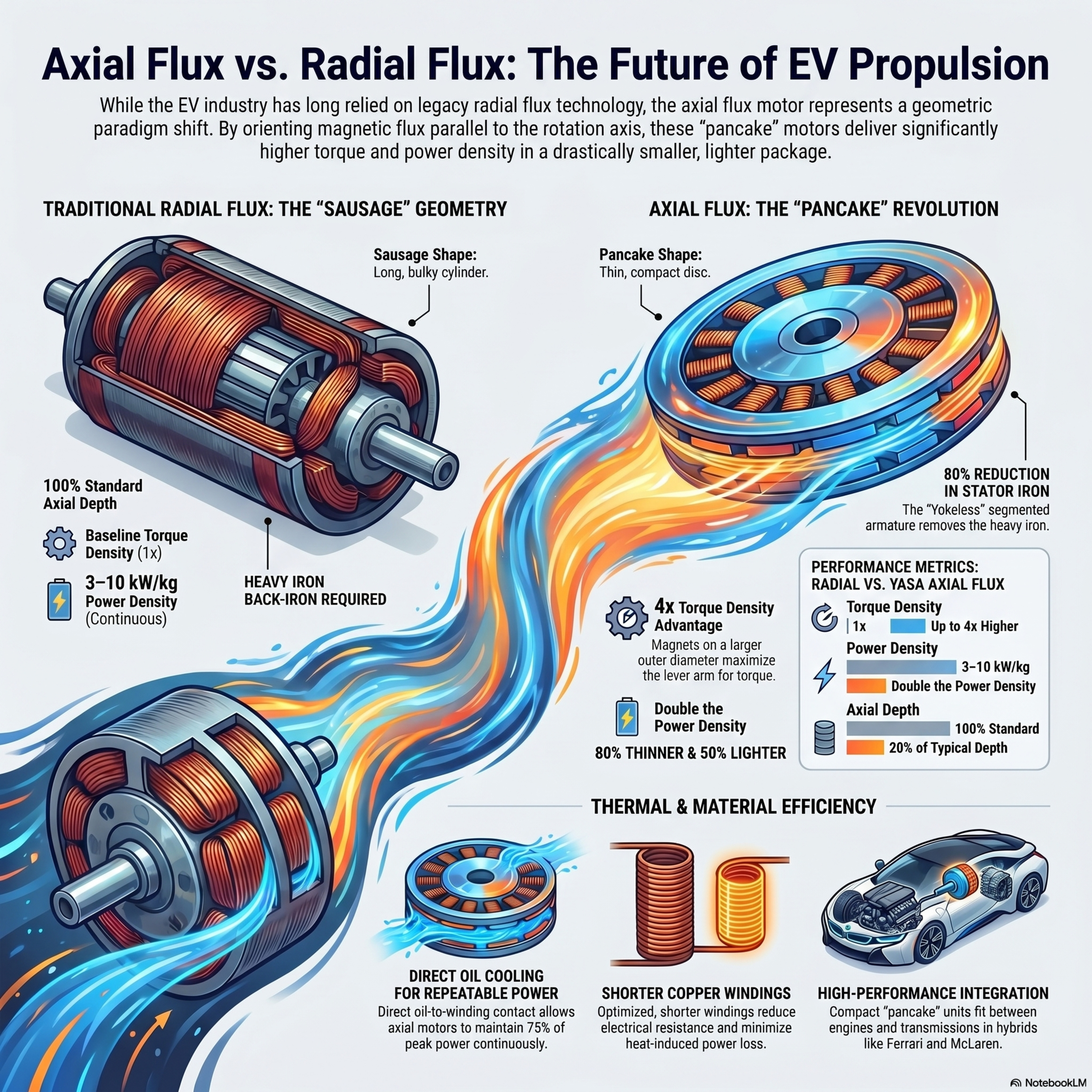
The Axial Flux Revolution: Redefining Electric Propulsion Engineering
Published 1 month ago
Description
Although the "pancake revolution" (axial flux motors) is currently led by the premium and high-performance electric vehicle sector, the sources indicate that the long-term goal is the democratization of the technology, potentially extending it even to city cars.Here is how this technology is evolving to reach the mass market:
- Premium Sector Debut: Initially, these motors have been reserved for the ultra-premium segment—such as the Ferrari SF90 Stradale, 296 GTB, McLaren Artura, and future Mercedes-AMG models—due to high initial production complexity.
- Democratization and In-Wheel Motors: The industry's true objective is not limited to supercars. The extraordinary compactness of axial flux motors allows for direct integration into the wheel hub (in-wheel motors). This solution is particularly attractive for city cars because it:
- Reduction of Costs and Materials: Contrary to what one might think, the YASA-type motor structure (segmented and yokeless) is well-suited for low-cost mass production. These motors use less iron, copper, and permanent magnets compared to traditional motors, which translates into significantly lower material costs and greater sustainability.
- Efficiency for Utility Cars: Being 50% lighter and taking up 80% less space than radial motors, they allow for a 5-10% increase in vehicle efficiency and range. Alternatively, they allow for a reduction in battery size while maintaining the same range, further lowering the overall weight and cost of the car.
In summary, while we see these motors in dream cars today, their advantages in living space and material costs make them ideal candidates for the next generation of electric urban vehicles.