Episode Details
Back to Episodes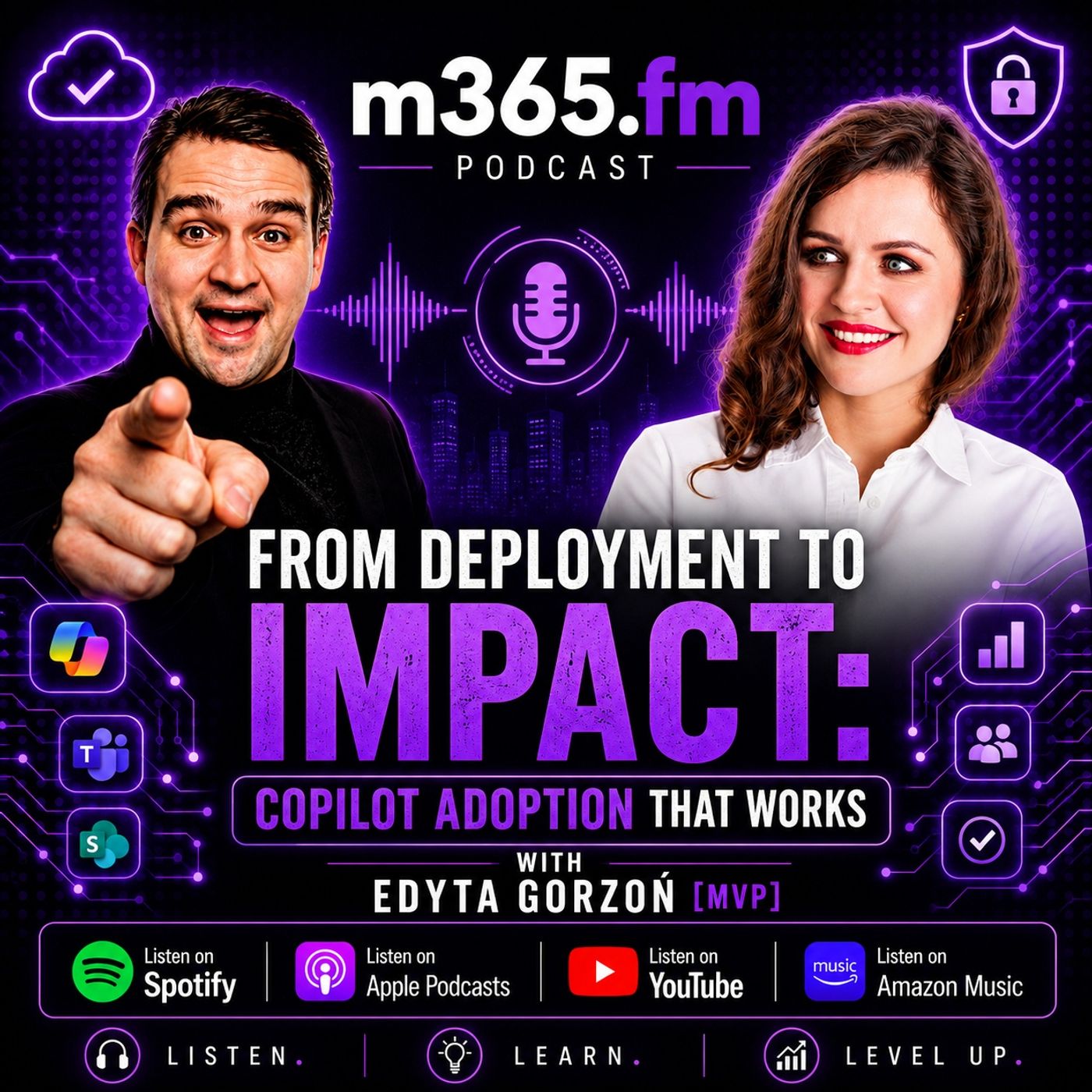
From Deployment to Impact: Copilot Adoption That Works with Edyta Gorzoń (MVP)
Season 2
Published 2 months, 3 weeks ago
Description
Deploying Microsoft Copilot is easy. Driving real adoption, measurable impact, and long-term behavioral change across an organization? That is the real challenge. In this episode of the m365.fm podcast, Mirko Peters sits down with Microsoft MVP, Copilot Architect, adoption expert, and Copilot Team Lead at Billennium, Edyta Gorzoń, for a deep and highly practical conversation about what truly makes Copilot adoption successful inside modern organizations. While many companies focus heavily on licensing, governance, and technical rollout, Edyta explains why successful AI transformation is ultimately about people, communication, culture, and change management. Throughout the episode, she shares real-world lessons from customer projects, common mistakes organizations continue to make, and practical strategies that help companies move from simply deploying AI to genuinely transforming the way employees work. With more than a decade of experience in Microsoft technologies and a strong business background, Edyta brings a unique perspective to the AI conversation. Her focus is not just on technology itself, but on understanding users, organizational behavior, productivity patterns, communication strategies, and how businesses can create sustainable adoption models that actually deliver ROI.
WHY COPILOT ADOPTION IS MORE THAN JUST TRAINING
One of the strongest themes throughout the episode is that Copilot adoption cannot be solved through generic feature-based training sessions alone. According to Edyta, many organizations mistakenly believe that purchasing Copilot licenses and scheduling a few training sessions automatically guarantees success. In reality, adoption requires a much broader strategy that includes governance, communication, behavioral change, scenario-based enablement, leadership involvement, and continuous support. She explains that organizations often experience temporary spikes in Copilot usage immediately after training sessions, only to see activity quickly decline again afterward. This happens because users never fully integrate AI into their daily workflows and routines. Building sustainable habits becomes far more important than simply delivering technical knowledge.
CHANGE MANAGEMENT IS THE REAL DIFFERENTIATOR
Edyta believes change management has become one of the most critical success factors for AI transformation projects. In previous Microsoft 365 adoption waves, organizations focused heavily on enabling tools like Teams, SharePoint, and OneDrive. But AI introduces entirely new emotional and cultural challenges:
COMMUNICATION IS EVERYTHING
One of the most powerful insights from the episode is the importance of communication. According to Edyta, poor communication remains one of the biggest reasons why digital transformation projects fail. Organizations frequently launch AI initiatives using technical jargon, generic messaging, or overly abstract business language that employees simply do not connect with. Instead, communication must be:
WHY COPILOT ADOPTION IS MORE THAN JUST TRAINING
One of the strongest themes throughout the episode is that Copilot adoption cannot be solved through generic feature-based training sessions alone. According to Edyta, many organizations mistakenly believe that purchasing Copilot licenses and scheduling a few training sessions automatically guarantees success. In reality, adoption requires a much broader strategy that includes governance, communication, behavioral change, scenario-based enablement, leadership involvement, and continuous support. She explains that organizations often experience temporary spikes in Copilot usage immediately after training sessions, only to see activity quickly decline again afterward. This happens because users never fully integrate AI into their daily workflows and routines. Building sustainable habits becomes far more important than simply delivering technical knowledge.
CHANGE MANAGEMENT IS THE REAL DIFFERENTIATOR
Edyta believes change management has become one of the most critical success factors for AI transformation projects. In previous Microsoft 365 adoption waves, organizations focused heavily on enabling tools like Teams, SharePoint, and OneDrive. But AI introduces entirely new emotional and cultural challenges:
- Fear of job replacement
- Concerns around data privacy
- Distrust in AI-generated content
- Resistance to changing workflows
- Uncertainty around productivity expectations
COMMUNICATION IS EVERYTHING
One of the most powerful insights from the episode is the importance of communication. According to Edyta, poor communication remains one of the biggest reasons why digital transformation projects fail. Organizations frequently launch AI initiatives using technical jargon, generic messaging, or overly abstract business language that employees simply do not connect with. Instead, communication must be:
- Tailored to different user groups
- Practical and scenario-focused
- Easy to understand
- Business relevant
- Continuous and visible
- Supported by leadership