Episode Details
Back to Episodes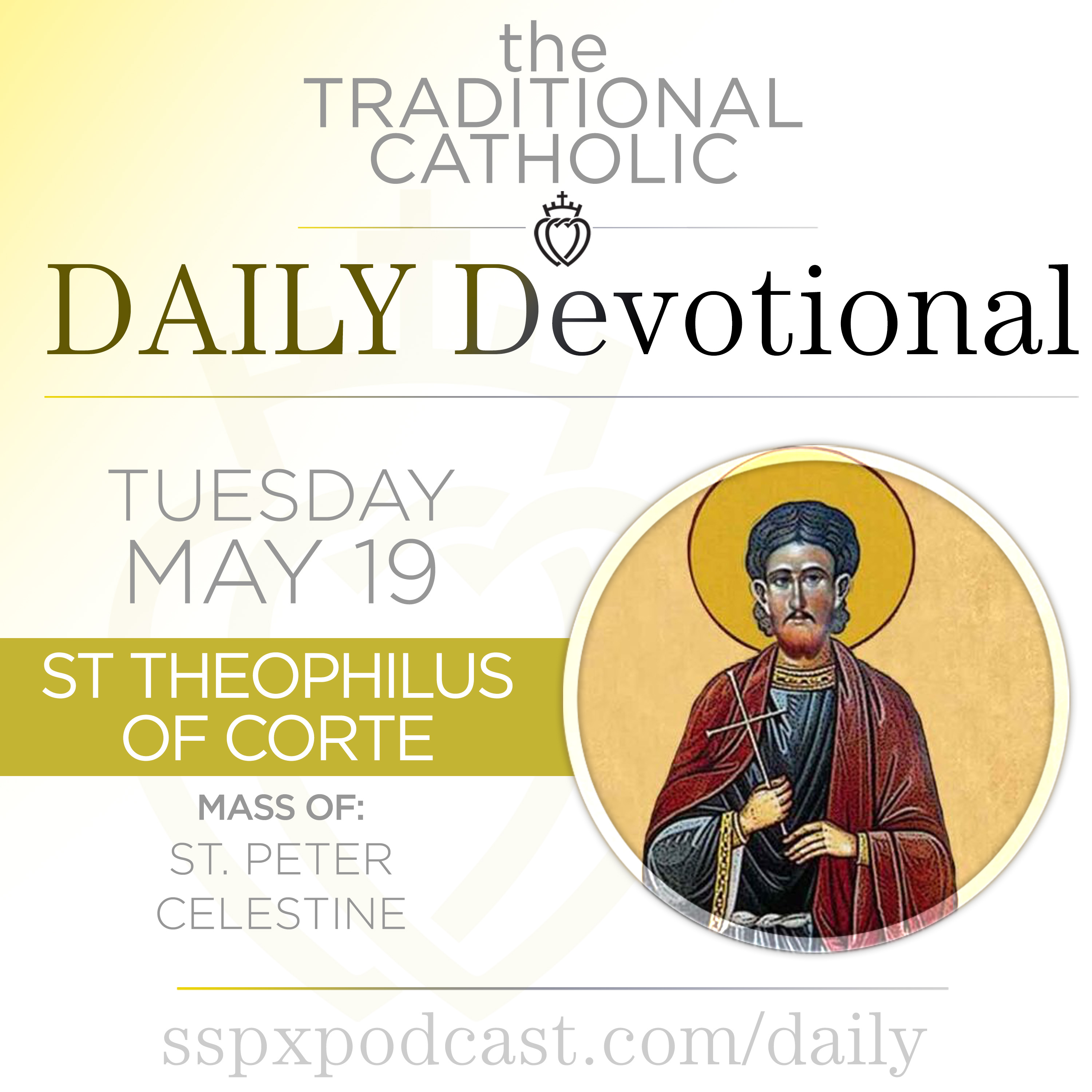
May 19 – S Peter Celestine / S Theophilus of Corte
Description
Sources Used Today:
- "The Spirit of Fortitude" — Eastertide Day by Day
- "Cardinal Eijk: Cardinals and Bishops Will Voice Their Objections" (FSSPX.news)
- The Spiritual Life — Archbishop Marcel Lefebvre (Angelus Press)
Please support our new project, the Archbishop Lefebvre Biography Audiobook!
- Learn more:https://www.youtube.com/watch?v=Y-Wp4MQdK2o
- Donate:https://sspx.gifts/audiobook
Saint Theophilus of Corte was a Franciscan friar whose life combined strict penance with deep charity and spiritual renewal. He was born in 1676 on the island of Corsica and given the name Biagio Arrighi. Raised in a devout family, he developed a strong love for prayer from an early age. As a young man, he entered the Franciscan Order of the Observants, taking the name Theophilus, which means “friend of God.”
Theophilus lived during a period when many religious communities were struggling to maintain the original fervor of their founders. Deeply inspired by the spirit of Saint Francis, he embraced a life of simplicity, poverty, and discipline. He spent long hours in prayer, practiced severe penances, and sought to lead others back to a more faithful observance of religious life.
Though naturally inclined toward solitude, Theophilus was repeatedly entrusted with responsibilities within the order. He traveled throughout Italy helping to reform Franciscan convents, encouraging stricter observance and deeper spiritual commitment. His manner was firm but compassionate. Rather than discouraging others through severity, he inspired them by personal example and genuine holiness.
Theophilus was especially devoted to the Passion of Christ and the Blessed Sacrament. Those who knew him spoke of his recollection, humility, and peaceful spirit. He often withdrew to quiet places for prayer, yet remained attentive to the needs of the people who sought his counsel.
Despite his austere life, he was known for kindness and patience, particularly toward the poor and those burdened by spiritual struggles. Many came to him for confession or guidance, recognizing in him a soul deeply united to God.
He died in 1740 at the convent of Fuc