Episode Details
Back to Episodes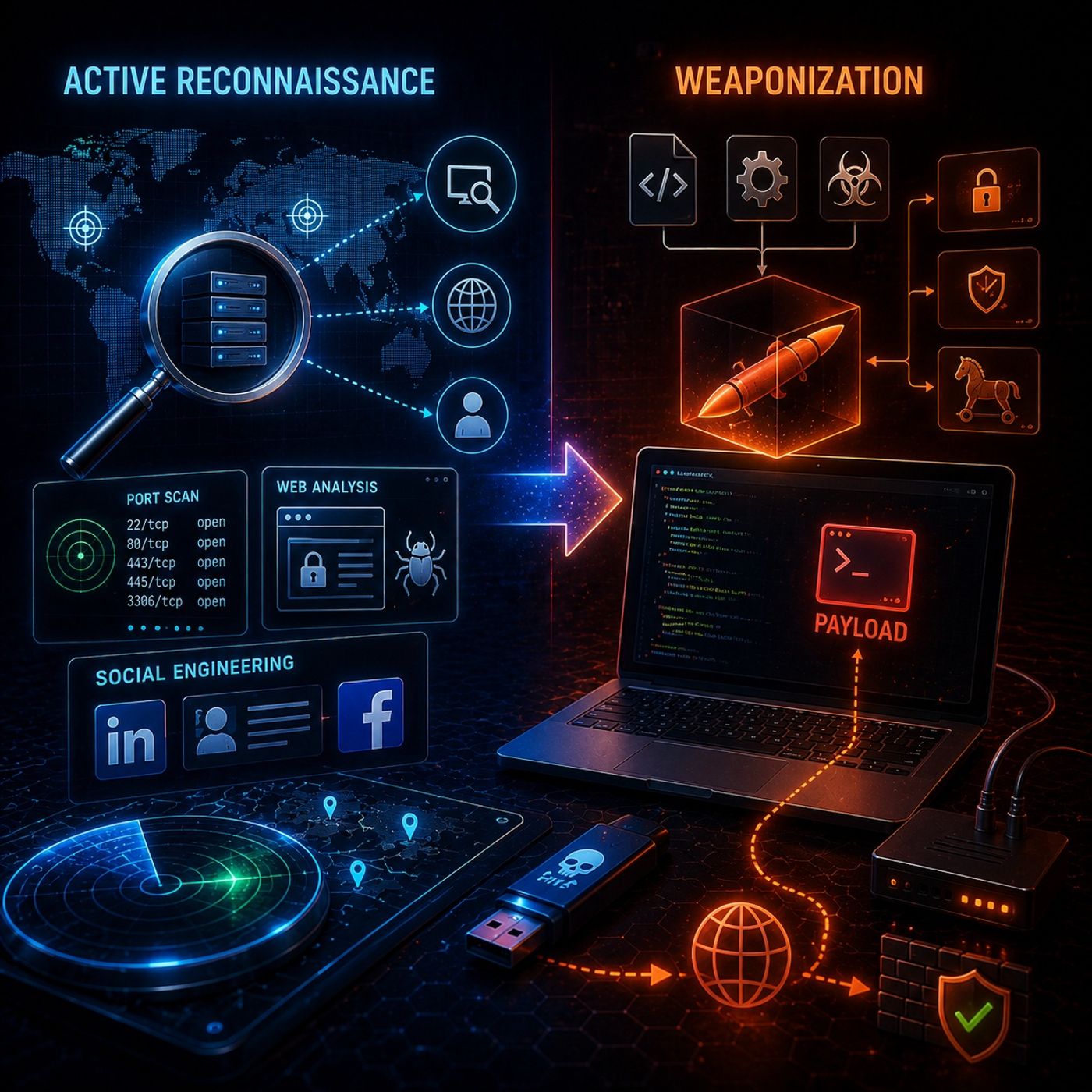
Course 34 - Cybersecurity Kill Chain | Episode 2: Active Reconnaissance and Weaponization Strategies
Published 3 months, 1 week ago
Description
In this lesson, you’ll learn about: Active Reconnaissance and Weaponization in the Cyber Kill Chain1. Transition: From Recon to Action
You can listen and download our episodes for free on more than 10 different platforms:
https://linktr.ee/cybercode_academy
- After passive recon, attackers move to:
- Active Reconnaissance → direct interaction
- Then → Weaponization → building attack tools
- Collecting information → Preparing the attack
- Directly interacting with the target system to gather:
- Technical details
- Human-related intelligence
- Port Scanning & Fingerprinting
- Tools:
- Nmap
- Zenmap
- Discover:
- Open ports
- Running services
- Operating system
- Tools:
- Web Application Analysis
- Tools:
- Burp Suite
- OWASP ZAP
- Identify:
- Hidden endpoints
- Admin panels
- Vulnerabilities
- Tools:
- Social engineering using:
- Build:
- Spear-phishing attacks
- Highly targeted emails/messages
- Based on real employee data
- Spear-phishing attacks
- Building the attack payload based on gathered intel
- No interaction with the victim yet
- Happens entirely on the attacker’s side
- Good recon → precise payload
- Poor recon → failed attack
- If attacker knows:
- OS version
- Open ports
- Installed software
- A payload that fits perfectly
- A payload is:
- Code designed to run on the target system
- Use outbound connections:
- Reverse TCP / HTTPS
- Firewalls usually:
- Block incoming connections
- Allow outgoing connections
- Metasploit
- Create executable payloads
- Unicorn
- Generates:
- PowerShell-based payloads
- Less suspicious than executables
- Generates:
- Active recon provides deep technical insight
- Weaponization turns that insight into attack capability
- Tools like Nmap and Burp reveal weaknesses
- Payloads are tailored based on real target data
- Outbound connections are commonly abused to bypass firewalls
You can listen and download our episodes for free on more than 10 different platforms:
https://linktr.ee/cybercode_academy