Episode Details
Back to Episodes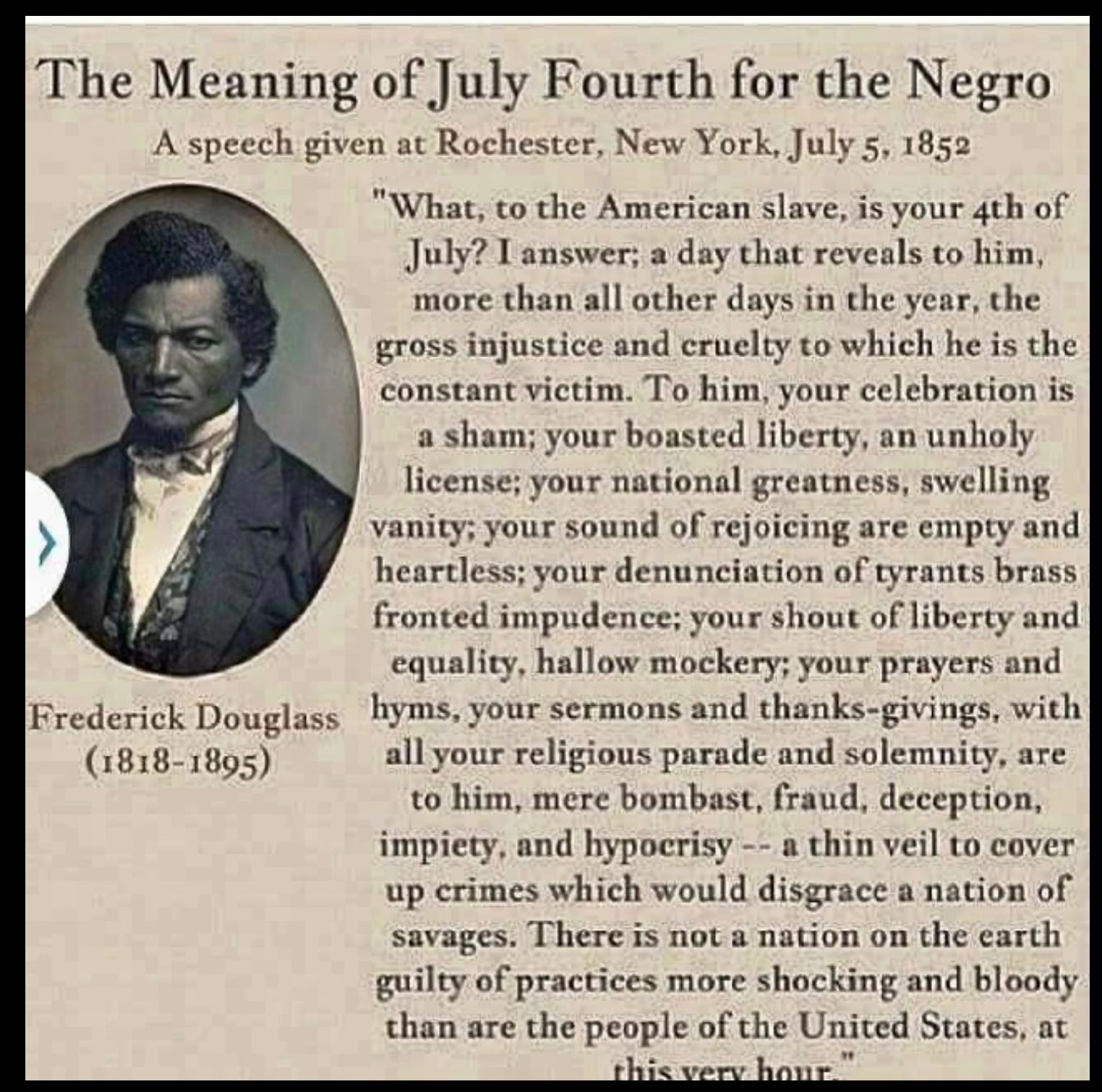
Frederick Douglass | THE MEANING OF THE FOURTH OF JULY FOR THE NEGRO
Description
THE MEANING OF THE FOURTH OF JULY FOR THE NEGRO
Abridged*
Frederick Douglass
July 5, 1852
part 1
part 2
1 Mr. President, Friends and Fellow Citizens:
The task before me is one which requires much previous thought and study for its proper performance. I do not remember ever to have appeared as a speaker before any assembly more shrinkingly, nor with greater distrust of my ability, than I do this day. The papers and placards say, that I am to deliver a 4th [of] July oration. The fact is, ladies and gentlemen, the distance between this platform and the slave plantation, from which I escaped, is considerable—and the difficulties to be overcome in getting from the latter to the former, are by no means slight. That I am here to-day is, to me, a matter of astonishment as well as of gratitude.
2 This, for the purpose of this celebration, is the 4th of July. It is the birthday of your National Independence, and of your political freedom. This, to you, is what the Passover was to the emancipated people of God. It carries your minds back to the day, and to the act of your great deliverance. This celebration also marks the beginning of another year of your national life; and reminds you that the Republic of America is now 76 years old. I am glad, fellow-citizens, that your nation is so young. You are, even now, only in the beginning of your national career, still lingering in the period of childhood. I repeat, I am glad this is so. There is hope in the thought, and hope is much needed, under the dark clouds which lower above the horizon.
3 Fellow-citizens, 76 years ago, the people of this country were British subjects. The style and title of your ‘sovereign people’ (in which you now glory) was not then born. You were under the British Crown. Your fathers esteemed the English Government as the home government. England as the fatherland, although a considerable distance from your home, impose, in the exercise of its parental prerogatives, upon its colonial children, such restraints, burdens and limitations, as, in its mature judgment, it deemed wise, right and proper.
4 But your fathers, who had not adopted the idea of the infallibility of government, and the absolute character of its acts, presumed to differ from the home government in respect to the wisdom and the justice of some of those burdens and restraints. They went so far as to pronounce the measures of government unjust, unreasonable, and oppressive, and altogether such as ought not to be quietly submitted to. I scarcely need say, fellow-citizens, that my opinion of those measures fully accords with that of your fathers. Feeling themselves harshly and unjustly treated by the home government, your fathers, like men of honesty, and men of spirit, earnestly sought redress. They petitioned and remonstrated; they did so in a decorous, respectful, and loyal manner This, however, did not answer the purpose. They saw themselves treated with sovereign indifference, coldness and scorn. Yet they persevered.
5 Oppression makes a wise man mad. Your fathers became restive under this treatment. They felt themselves the victims of grievous wrongs, wholly incurable in their colonial capacity. With brave men there is always a remedy for oppression. Just here, the idea of a total separation of the colonies from the crown was born! It was a startling idea, much more so, than we, at this distance of time, regard it. The timid and the prudent of that day, were, of course, shocked and alarmed by it. Their
opposition to the then-dangerous thought was earnest and powerful; but, amid all their terror and affrighted vociferations against it, the alarming and revolutionary idea moved on, and the country with it.
6 On the 2d of July, 1776, the old Continental Congress, to the dismay of the lovers of ease, and the worshipers of property, clothed that dreadful idea with all th