Episode Details
Back to Episodes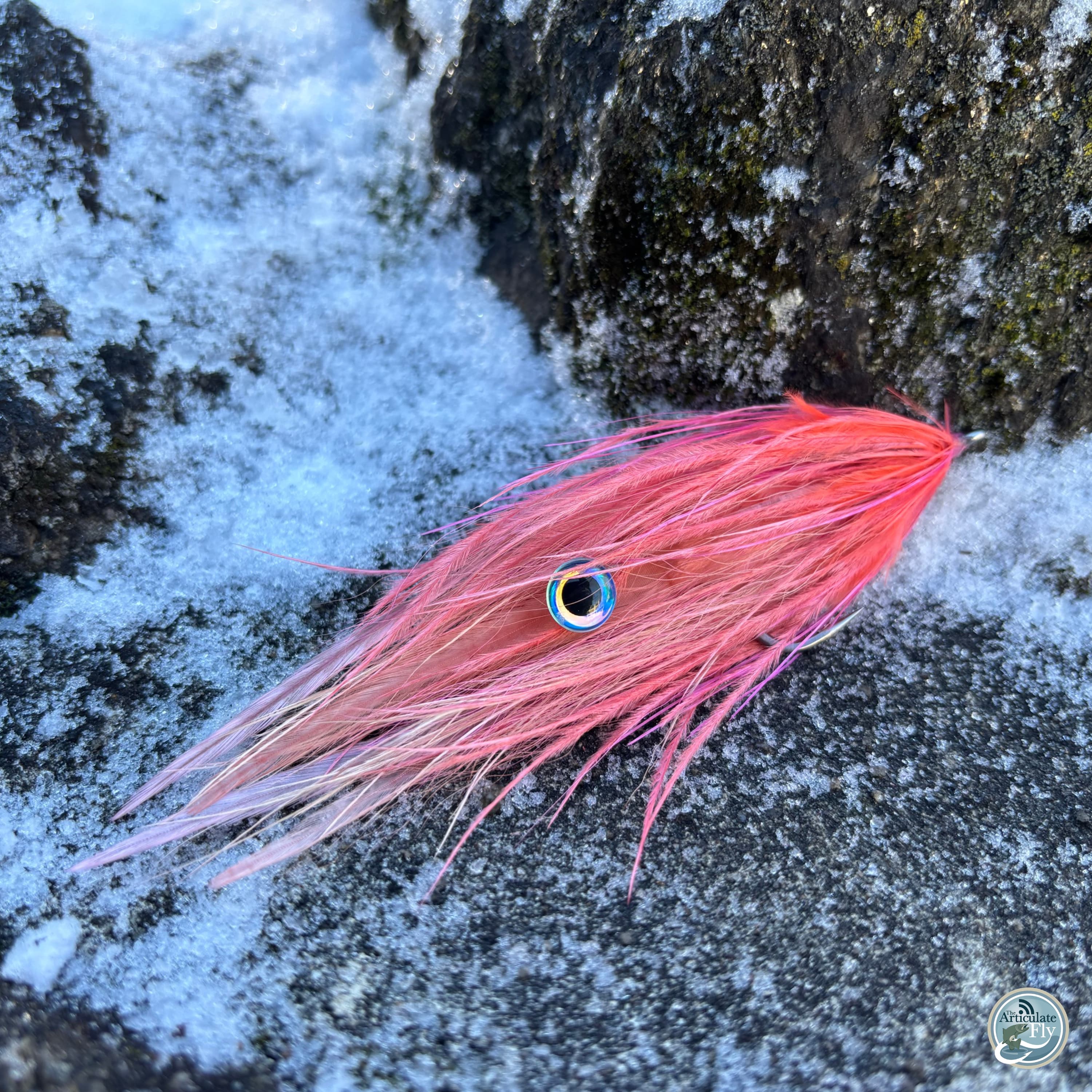
Tying Tradition: Jason Taylor's Journey Through the Art of Fly Tying
Description
Episode Overview
In this episode of The Articulate Fly, host Marvin Cash sits down with Jason Taylor — a Philadelphia-area fly tier, Tier's Row fixture at the Edison show and regular contributor to Masters of the Fly — for a wide-ranging conversation about fly tying philosophy, natural materials and the tradition of innovation rooted in Bob Popovics' work. On this fly fishing podcast episode, Taylor traces his journey from a 2008 Belize honeymoon that ignited his passion for the sport, to the early-2010s online forums — particularly Stripers Online — that connected him with a formative community of Northeast saltwater tiers including Popovics and David Nelson. Taylor shares the philosophy that drives every session at the vise: every feature in a fly must serve a purpose, and materials should be used as sparingly as possible to achieve it. The conversation digs into the enduring versatility of the hollow fleye platform — what Taylor calls "the Christmas tree" — its adaptability across materials and applications, and his own innovations including an ostrich herl hollow fleye variant and a Surf Candy adaptation with embedded foam for neutral buoyancy when targeting false albacore in calm, glassy conditions. Taylor also offers detailed guidance on selecting and handling bucktail and ostrich herl, shares tying tips rarely covered elsewhere, and takes listeners through the exotic and vintage natural materials currently occupying his tying bench.
Key Takeaways
- How to apply Bob Popovics' "Christmas tree" principle to hollow fleye design — preserving the core profile shape while freely adapting materials, proportions and techniques.
- Why using less material than you think you need almost always produces a more castable, livelier fly.
- How to select bucktail for hollow fleyes by identifying soft, kinky fiber pulled from the middle half to two-thirds of the tail for the most predictable flare under thread pressure.
- Why a neutrally buoyant fly presentation — using embedded foam under a hard body paired with an intermediate line — consistently outperforms standard Surf Candy patterns when false albacore become selective in calm, flat-water conditions.
- How to stabilize thread wraps using brushable cyanoacrylate applied directly to the thread before making final wraps rather than to the hook or materials.
- Why grading ostrich herl by length, taper and barb density — rather than just overall plume size — is critical to achieving consistent movement in large saltwater patterns.
Techniques & Gear Covered
The episode centers on hollow fleye construction — specifically the bucktail collar technique Bob Popovics developed and Taylor has refined over more than a decade, including his personal adaptation of palmering ostrich herl down a mono or shank base to create a mobile, feather-forward variant. Taylor details his Surf Candy–based neutral buoyancy modification, incorporating foam beneath the hard body to maintain a suspending presentation throughout the retrieve — not just the first few strips — which he argues better matches the behavior of bait sitting still in calm, low-turbulence water when paired with an intermediate fly line. He also covers his evolution of the Semper Fli, replacing time-consuming palmered feather fronts with commercially available fly tying brushes for consistent, production-speed results without sacrificing profile. On the tools and materials side, Taylor explains his preference for monofilament thread for virtually all saltwater work (with gel-spun for mounting eyes), walks through his grading process for both bucktail and ostrich herl, and advocates for brushable cyanoacrylate applied to the thread to more durably secure the final wraps. He refere