Episode Details
Back to Episodes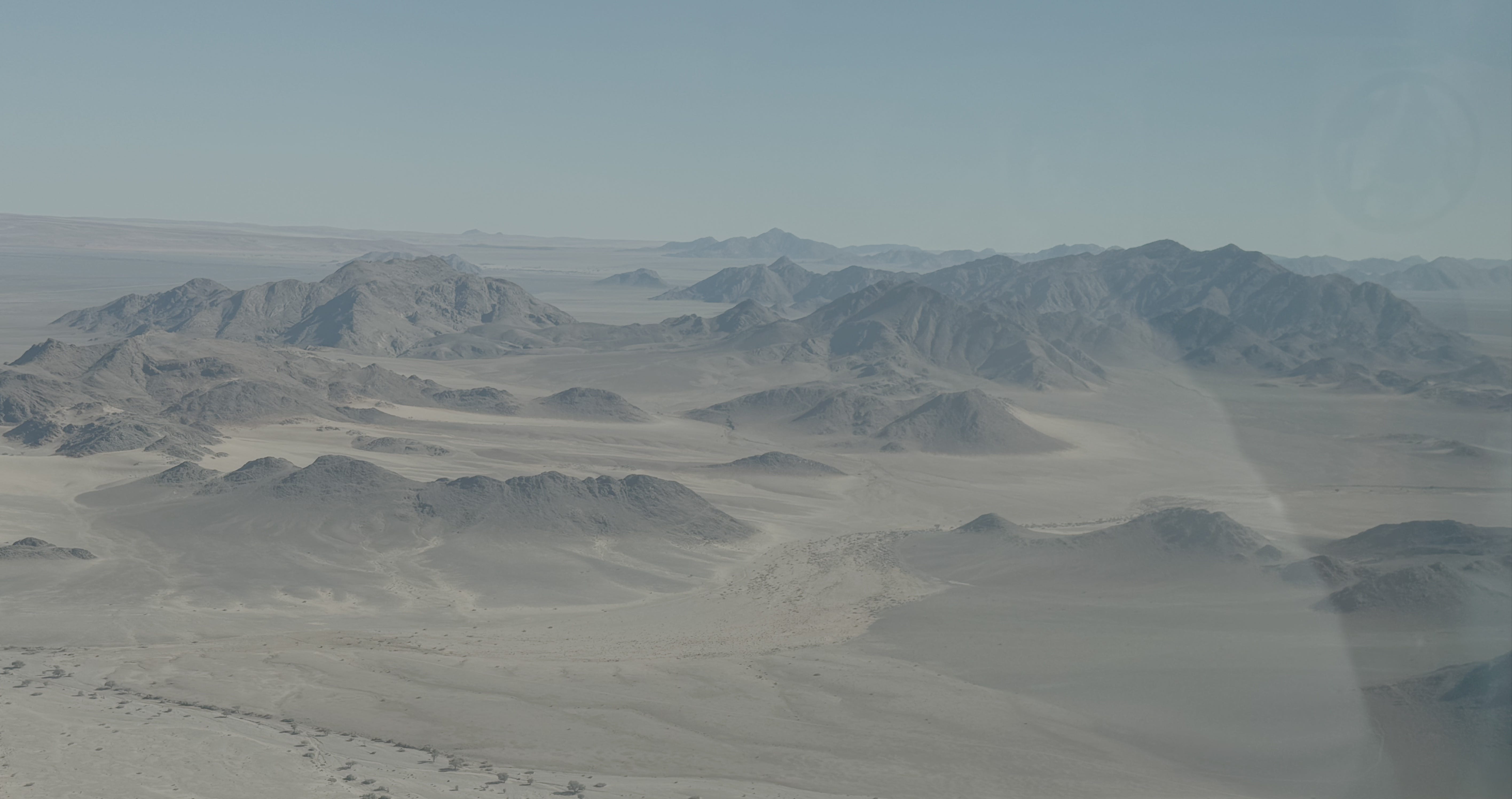
Namibia: Africa’s Empty Frontier
Description
Namibia sits on the south-west coast of Africa. Below Angola, above South Africa, with Botswana to the east.
Portuguese explorers first reached the coast here in the 1480s. No natural harbour, brutal surf, cold Atlantic fog, the Namib Desert running straight into the sea, little access to fresh water. They planted crosses to mark their claims, turned around and went home again, never to return.
Today that coast is known as the Skeleton Coast because of shipwrecks and whale bones.
Three hundred years later, having decided there was too much tropical disease in Gambia, the British looked at Namibia as a possible penal colony. They decided it was too inhumane.
It was Germans and Finns who eventually settled on the coast another hundred years on.
Namibia is about three and a half times the size of the UK, and yet its population is only 3 million. It is big and empty. Most of it is desert.
I’ve got more endless expanse shots than I know what to do with. Here is just one of them. Plus a short vid shot from a hot air balloon which gives you an idea of the sheer endlessness of the place.
Even in the capital city, Windhoek, there is just so much space.
The only two places in the world that are less densely populated are Greenland and Mongolia. Namibia beats even Australia and Mauritania, which is mostly Sahara desert.
Demographically, the country is roughly 87% black, 6% white and 5% mixed race, with the Ovambo people to the north making up about half the population. I saw a few Asians while I was there too.
A country of extremes
There are still bushmen and other ancient hunter-gatherer people living as they have lived for centuries, yet other parts of the country are extremely modern. There are shopping centres to rival our own, good roads (the best in Africa, I was told), great restaurants, commercial farms and more. About half the population is urban.
The national language is English, adopted after the country gained independence from South Africa in 1990, but I found that people, black and white, would as often speak amongst themselves in Afrikaans and, up north, Ovambo. On the coast German is widely spoken. (The country was a German colony from the 1880s until World War I, when South Africa, then British, invaded. Hence it has great beer.)
The controlling political force is the South West Africa People’s Organisation (SWAPO), which has governed since independence in 1990. SWAPO is nominally social democratic, but there are still strong liberation-era left-wing instincts, as evidenced by streets in the capital renamed after independence: Fidel Castro Street, Robert Mugabe Avenue and so on.
All being said, Namibia functions well.
It is a stable democracy with rule of law, an independent judiciary (the government sometimes loses cases), relatively free markets and low crime by African (and European) standards.
Immigration law is tight too. Having seen the problems stemming from mass immigration into South Africa, Namibia has taken a more controlled approach.
Indeed I heard repeated frustrations from mining companies trying to obtain visas for geologists and mining engineers where the local expertise either does not exist or is employed elsewhere.
Official unemployment is 37%, but I heard from several different sources that the real number is above 50%. 50%! Very sad.
Nominal GDP per capita sits around US$5,000, roughly double that adjusted for purchasing power, which puts it above most of sub-Saharan Africa. The World Bank classifies Namibia as a lower-middle-income country, alongside countries such as Albania, Argentina and Belize. But these numbers are misleading.
The country has vast wealth through its natural resources and related industries: uranium, copper, diamonds, fishing and tourism. Spread that revenue across just 3 million people and the averages look impressive.
There is also serious rural po