Episode Details
Back to Episodes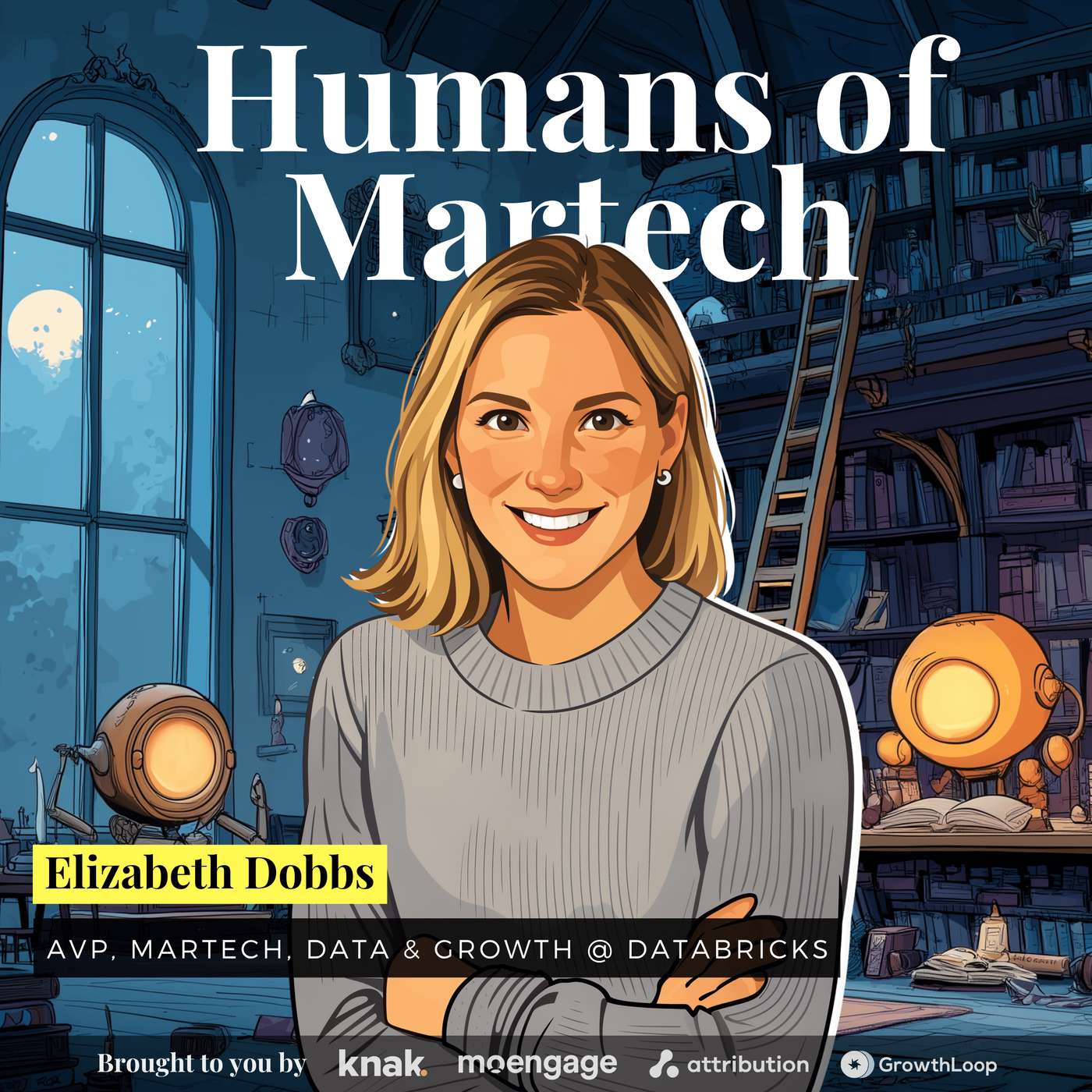
219: Inside Databricks' stack with 3 AI agents, 1 lakehouse, and 6 years of data work with Elizabeth Dobbs
Description
What's up everyone, today we have the pleasure of sitting down with Elizabeth Dobbs, AVP of Marketing Technology, Data and Growth at Databricks.
- (00:00) - Intro
- (01:18) - In This Episode
- (01:47) - Sponsor: Knak
- (02:55) - Sponsor: MoEngage
- (04:16) - Why Velocity Beats Permanence in Marketing Data Architecture
- (12:00) - Why Databricks Embedded Data Engineers Inside Marketing
- (15:02) - Inside Databricks' 3 Marketing Ops Agents
- (18:56) - How Databricks Built an AI Analyst That Marketing Teams Actually Trust
- (26:13) - How Agent Tagatha Cut Months of Manual Content Tagging to Hours
- (30:07) - Sponsor: AttributionApp
- (31:09) - Sponsor: GrowthLoop
- (34:48) - How Agent Atlas Replaced the Rules-Based Segmentation Wheel
- (39:28) - Why Marketers Don't Care Whether You Call It an Agent
- (43:32) - How to Get Data Warehouse Access When Your Team Doesn't Own It
- (48:36) - What Databricks Is Actually Testing for in Marketing Hires Now
- (54:04) - What Gives Liz Energy Outside the Office
Summary: Elizabeth Dobbs spent 6 years at Databricks doing something most marketing leaders only talk about: building the data infrastructure before deploying the AI on top of it. She's shipped 3 production agents (Marge, Tagatha, and Atlas) and she'll tell you exactly what broke first and why the team kept going anyway. You'll hear how a marketing lakehouse becomes the foundation that makes every agent actually work, why the agent label debate is a distraction, and what Liz is genuinely testing for in marketing interviews now that AI-polished resumes all look the same in Greenhouse. If your AI ambitions are running ahead of your data foundation, this episode is going to reorder your roadmap.
About Elizabeth Dobbs
Elizabeth Dobbs is the AVP of Marketing Technology, Data and Growth at Databricks, where she leads the team responsible for the company's full marketing stack, including data engineers and data scientists embedded directly in marketing. Promoted to AVP in February 2025 after more than 5 years building Databricks' marketing data infrastructure from scratch, she architected the company's marketing lakehouse and deployed 3 production AI agents serving the entire marketing org. Before Databricks, she spent nearly 7 years at Khoros in a series of marketing operations and demand generation leadership roles, including Chief of Staff to the CMO.
Why Velocity Beats Permanence in Marketing Data Architecture
If you work at a company called Databricks, you assume the marketing data is fine. The word "data" is literally in the name. When Elizabeth Dobbs was interviewing 6 years ago and someone in sales ops told her straight up that the data was a complete mess, she thought they were being politely humble. She took the job. She found out they meant it.
What she encountered fit the startup playbook exactly. Agencies hired for agency's sake because headcount was thin. Systems that barely talked to each other. Stacks of what she calls "human middleware," people spending their days manually bridging gaps the infrastructure couldn't close. Databricks was probably no worse than any other high-growth startup at that scale. But fixing it meant accepting something most marketing teams resist: building for permanence is a waste of energy.
When Liz and her team sat down to fix things, they made a call that runs against how most marketing orgs are wired. They stopped trying to build the perfect foundation. At 1,000 people, you might get away with it. At 10,000, perfection is a distraction. By the time you finish, the company has changed shape again. So they optimized for velocity. Centralized data imperfectly. Built shared definitions that not everyone followed consistently. Accepted the bubblegum-and-duct-tape reality. And they stayed intentional about exactly 1 thing: