Episode Details
Back to Episodes“Who Got Breasts First and How We Got Them” by rba
Description
It really is Sydney Sweeney's world, and we’re all just living in it.
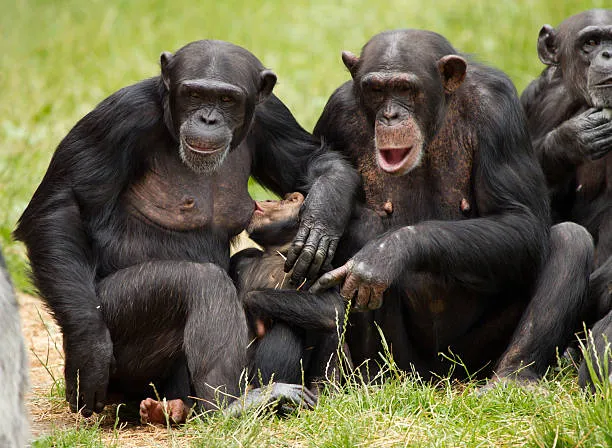
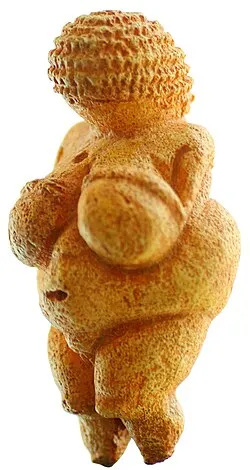
Human female breasts are an evolutionary mystery along several dimensions. First, breast permanence is unique to humans. All other mammals develop breast prominence during pregnancy or nursing, and the mammary tissue recedes after weaning. This process is called “involution”. In contrast, humans develop breast tissue at puberty before first pregnancies and maintain it permanently after last pregnancies.
Second, breasts are costly, both metabolically and potentially from a fitness perspective. Metabolically, because they are fat deposits requiring calories and fitness-wise, because the tissue easily lends itself to malignancy. Breast cancer is apparently rare in captive apes and is overwhelmingly a human disease, often striking women young enough to have children, and so subject to evolutionary selection.
Background
In Descent of Man, Darwin catalogs human secondary sexual characteristics, but he doesn’t seem to have noted human breast permanence as an issue of interest. Cant, 1981 seems to have been the first to speculate about this systematically and believed breast prominence and permanence might have evolved as a nutritional signal of health to mates indicating potential for maternal investment, a la Robert Trivers. Since then, quite a range of [...]
---
Outline:
(01:05) Background
(04:17) Hypotheses
(05:03) Sexual Selection
(05:57) Nursing or Thermoregulation
(06:34) Camel Hump and fat reserves
(07:06) Byproduct or Spandrel.
(07:57) Study Design
(10:41) Assembling the Genetic Panel
(11:14) Subpanel 1: Arrested involution
(12:51) Subpanel 2: Pubescent adipose tissue
(14:01) Results
(17:28) Discussion
(20:17) Coda
---
First published:
May 11th, 2026
Source:
https://www.lesswrong.com/posts/XTHa5C6SgGKYopH7o/who-got-breasts-first-and-how-we-got-them
---
Narrated by TYPE III AUDIO.
---

Love PodBriefly?
If you like Podbriefly.com, please consider donating to support the ongoing development.
Support Us