Episode Details
Back to Episodes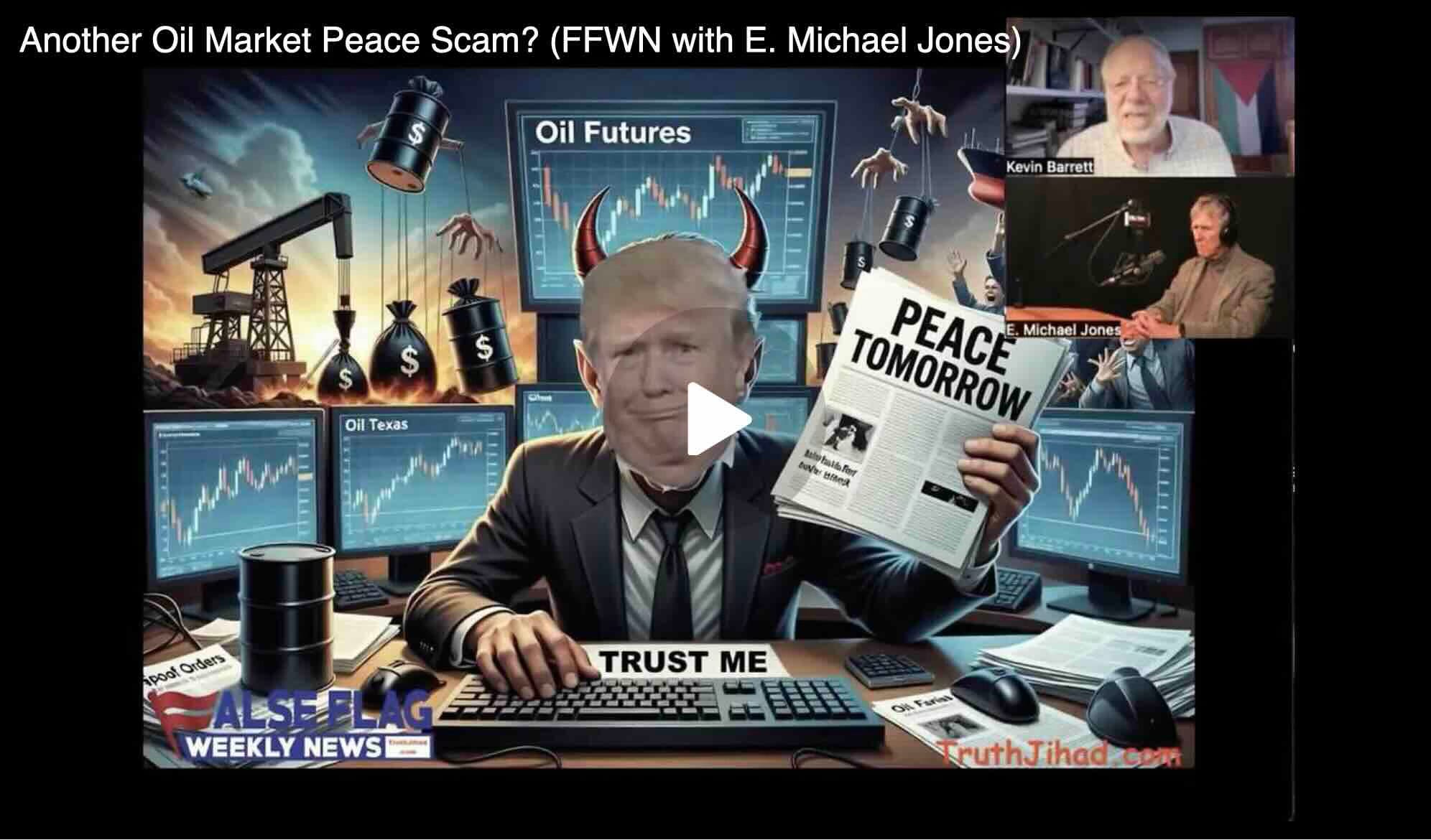
Another Oil Market Peace Scam?
Description
Rumble link Bitchute link False Flag Weekly News link
On October 26, 1972, Henry Kissinger momentously announced: “Peace is at hand.” According to Kissinger, North Vietnam and their Vietcong allies were about to see the light, lay down their weapons, and come to terms with the US and its South Vietnamese vassal.
Kissinger’s announcement made screaming front page headlines. It electrified the country, coming as it did seven years after US involvement in Vietnam had become a quagmire, and five years after American public opinion had turned decisively against the war. The American people were sick of the war, and Kissinger’s bombshell promised not just peace, but “peace with honor.”
Kissinger stunned the world with his peace announcement just twelve days before his boss, President Richard Nixon, sought re-election against antiwar challenger George McGovern. Though McGovern’s campaign had been hobbled not only by its own mistakes, but also by a long list of “dirty tricks” by pro-Nixon covert operations, Nixon’s campaign still faced the problem of the election potentially becoming a referendum on the war, which conceivably could allow McGovern to snatch victory from the jaws of looming defeat.
McGovern’s last-ditch hope was dashed by Kissinger’s “peace is at hand” bombshell. The media ate it up, and most Americans bought into Kissinger’s claim that the war was effectively over. Nixon won reelection in a landslide. Less than two months after Kissinger’s peace proclamation, the Nixon administration launched the Christmas carpet bombing of North Vietnam, dropping 20,000 tons of ordnance and killing thousands of civilians. Peace, least of all “with honor,” was apparently not quite at hand.
In January 1973, Kissinger referenced his “peace is at hand” remark of a few months earlier at a news conference, causing an eruption of cynical laughter among the assembled reporters. The real end of the war came more than two years later, on April 30, 1975, when Saigon finally fell. It was an abject US defeat, with no “honor” whatsoever. Indeed, the dishonor only mounted as Nixon, Kissinger, and their successors refused to pay Vietnam the promised war reparations, leading the Vietnamese to covertly hold on to about half of the US servicemen they had captured, virtually all of whom suffered and died in atrocious conditions as political and media elites averted their collective gaze.
Today, US president Donald Trump is waging an even more unpopular war, this time against Iran. Like Kissinger on the eve of the 1972 elections, Trump seeks political gain via bogus “peace is at hand” announcements. But Trump’s gains, unlike Nixon’s and Kissinger’s, may be (criminally) financial as well as political.
Last Wednesday, the Kobeissi Letter reported:
BREAKING: According to our analysis, ~$920 million worth of crude oil shorts were taken 70 minutes before an Axios report claimed the US and Iran were near a "14-point" deal to end the war.At 3:40 AM ET today, nearly 10,000 contracts worth of crude oil shorts were taken without any major news.This is equivalent to ~$920 million in notional value, an unusually large trade for 3:40 AM ET.At 4:50 AM ET, just 70 minutes later, Axios reported that the US is "close" to a "memorandum of understanding" t