Episode Details
Back to Episodes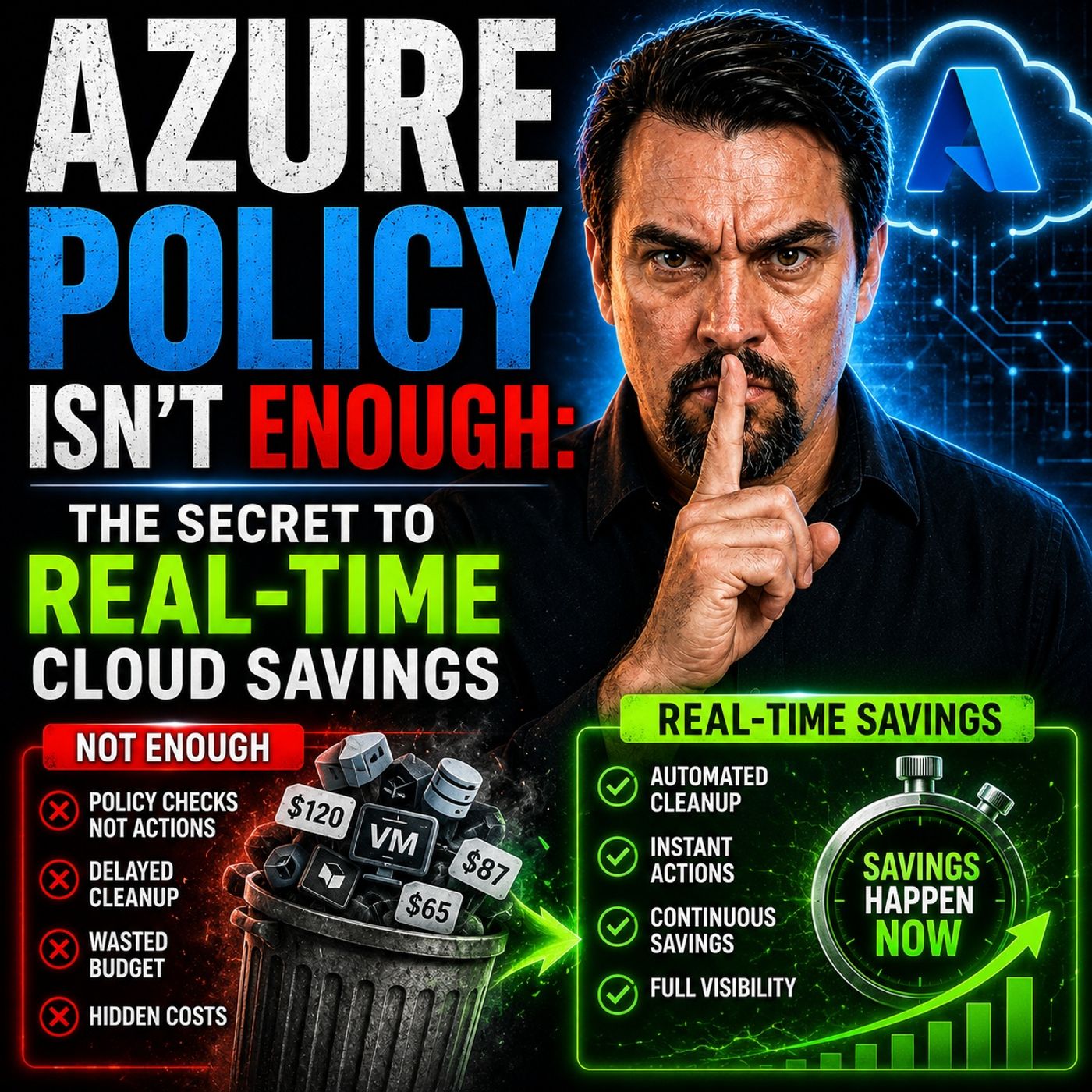
Azure Policy Isn't Enough: The Secret to Real-Time Cloud Savings
Season 2
Published 2 months, 4 weeks ago
Description
Your Azure bill usually starts going wrong long before finance ever notices the number. That’s the real problem. Most FinOps teams still operate on a reactive model built around dashboards, reports, alerts, exports, and month-end review cycles. But cloud spend doesn’t wait for governance meetings. It starts the second someone deploys the wrong SKU, selects an expensive region, skips ownership tags, enables premium defaults, or launches a service that scales faster than governance can respond. And while all of that is happening, Azure Policy often sits quietly in audit mode... documenting the damage instead of preventing it. In this episode, Mirko Peters breaks down why traditional FinOps approaches fail in modern Azure environments and why real cloud savings only happen when cost control moves directly into the deployment path. Instead of treating governance as reporting after the money is already spent, this episode explores how Azure Policy can become a real-time enforcement engine that blocks waste before billing ever starts. Because if your platform still relies on alerts instead of enforcement, AI workloads, autoscaling services, premium storage defaults, and weak deployment standards will continue multiplying cloud spend while your dashboards politely try to catch up.
WHY REACTIVE FINOPS KEEPS FAILING
Most FinOps programs produce visibility, but visibility is not control. That distinction changes everything. Traditional cloud governance usually follows the same cycle: observe spend, generate reports, investigate anomalies, open conversations, and then attempt remediation after the expensive deployment already exists. The issue is that cloud consumption moves too fast for that model. By the time a report explains the problem, the VM is already running, the premium disk is attached, the AI workload has already processed tokens, and the storage account is already growing. The conversation shifts from prevention to cleanup. And cleanup is always slower, more political, and more expensive. This episode explains why consumption-based cloud platforms fundamentally break older governance models built around delayed financial visibility. In Azure, spend happens in motion. Short-lived resources can generate cost in minutes, autoscale systems can multiply billing events rapidly, and AI services can create unpredictable spikes long before month-end reporting catches up. Mirko also explores the hidden second layer of waste most organizations ignore: the operational cost of remediation itself. Once bad deployments exist, companies don’t just pay for the resources. They also pay for the human cleanup loop around them — ticket reviews, owner tracing, escalation meetings, remediation planning, and endless coordination across engineering, finance, and platform teams.
WHAT AZURE POLICY ACTUALLY DOES — AND WHERE MOST TEAMS MISUSE IT
Azure Policy is far more than a compliance dashboard. At its core, it operates directly inside the Azure Resource Manager request path, which means it evaluates deployments before resources are successfully created. That makes Azure Policy one of the few governance tools capable of turning financial intent into real technical enforcement. This episode walks through how Azure Policy actually works internally, including:
WHY REACTIVE FINOPS KEEPS FAILING
Most FinOps programs produce visibility, but visibility is not control. That distinction changes everything. Traditional cloud governance usually follows the same cycle: observe spend, generate reports, investigate anomalies, open conversations, and then attempt remediation after the expensive deployment already exists. The issue is that cloud consumption moves too fast for that model. By the time a report explains the problem, the VM is already running, the premium disk is attached, the AI workload has already processed tokens, and the storage account is already growing. The conversation shifts from prevention to cleanup. And cleanup is always slower, more political, and more expensive. This episode explains why consumption-based cloud platforms fundamentally break older governance models built around delayed financial visibility. In Azure, spend happens in motion. Short-lived resources can generate cost in minutes, autoscale systems can multiply billing events rapidly, and AI services can create unpredictable spikes long before month-end reporting catches up. Mirko also explores the hidden second layer of waste most organizations ignore: the operational cost of remediation itself. Once bad deployments exist, companies don’t just pay for the resources. They also pay for the human cleanup loop around them — ticket reviews, owner tracing, escalation meetings, remediation planning, and endless coordination across engineering, finance, and platform teams.
WHAT AZURE POLICY ACTUALLY DOES — AND WHERE MOST TEAMS MISUSE IT
Azure Policy is far more than a compliance dashboard. At its core, it operates directly inside the Azure Resource Manager request path, which means it evaluates deployments before resources are successfully created. That makes Azure Policy one of the few governance tools capable of turning financial intent into real technical enforcement. This episode walks through how Azure Policy actually works internally, including:
- ARM request evaluation
- Policy effects and execution order
- Modify versus Deny behavior
- Append and DeployIfNotExists logic
- Audit timing and compliance behavior
- DenyAction protection scenarios
- Management group assignment strategy