Episode Details
Back to Episodes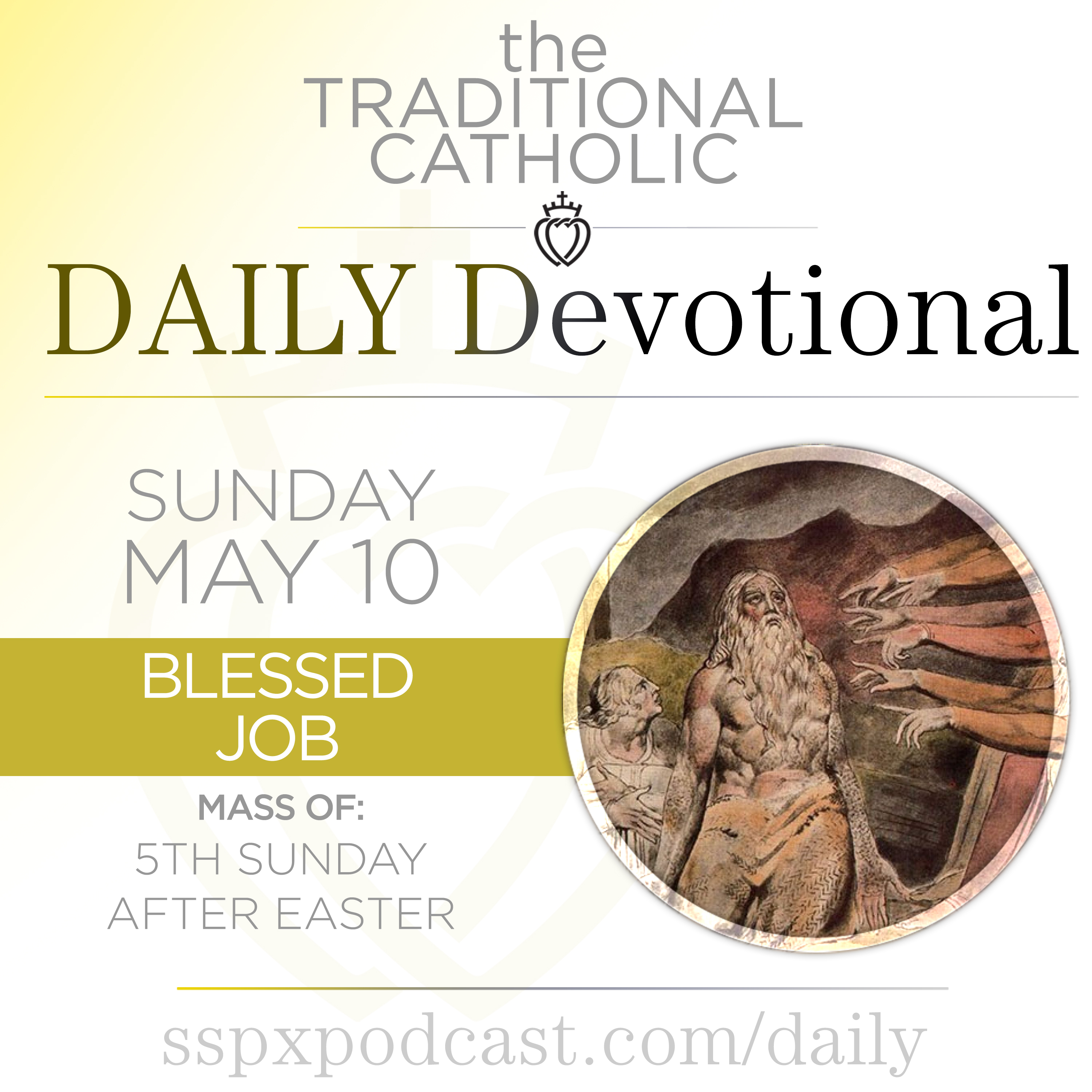
May 10 – V Sun of Easter / Holy Job
Description
Sources Used Today:
- "Prayer" — Eastertide Day by Day
- "Bishop Schneider Recounts His Childhood Under Communism to Students at a SSPX School" (FSSPX.news)
- The Spiritual Life — Archbishop Marcel Lefebvre (Angelus Press)
Please support our new project, the Archbishop Lefebvre Biography Audiobook!
- Learn more:https://www.youtube.com/watch?v=Y-Wp4MQdK2o
- Donate:https://sspx.gifts/audiobook
Holy Job is one of the most mysterious and beloved figures of the Old Testament, not simply because of what happened to him, but because of what his suffering teaches the faithful about God, trust, and perseverance. Scripture presents Job as a righteous man, blessed with family, wealth, and honor. Yet in a sudden series of calamities, he loses everything: his possessions, his children, and even his health. What makes Job remarkable is not that he suffered, but how he endured suffering while struggling to understand it.
The Church has long seen Job as more than a historical figure. He is a model of patience, perseverance, and fidelity under trial. The Epistle of Saint James specifically points to “the patience of Job,” holding him up as an example for Christians who suffer. The Fathers of the Church also saw in Job a foreshadowing of Christ Himself: the innocent sufferer who is mocked, abandoned, and afflicted, yet remains faithful.
One of the great lessons drawn from Job is that suffering is not always a punishment for personal sin. In the ancient world, many assumed that prosperity meant divine favor and suffering meant divine anger. The Book of Job challenges that idea directly. Job’s friends insist that he must deserve his afflictions, but God ultimately rebukes them. The Church has therefore seen Job as a reminder that suffering can remain mysterious and that God’s wisdom is often beyond human understanding.
Saint Thomas Aquinas, in his commentary on Job, emphasized that Job never truly loses faith in God, even while expressing grief and confusion. Job speaks honestly before God, lamenting his condition, yet he never completely abandons trust. This honesty in suffering has made Job a source of consolation for generations of believers facing grief, illness, or loss.
The Church also reads