Episode Details
Back to Episodes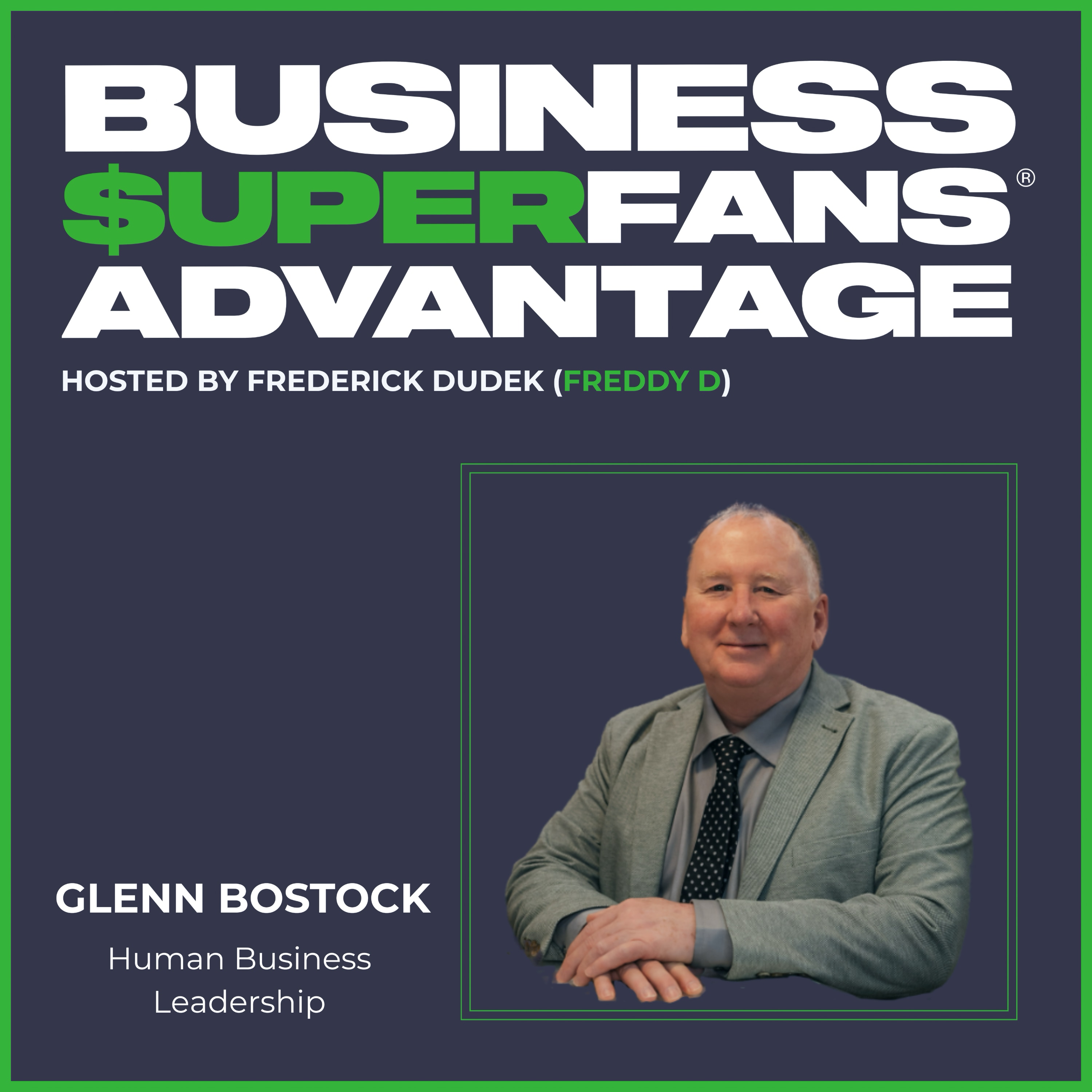
Human Business Leadership: Glenn Bostock on Turning Culture Into Growth | Ep. 209
Description
Episode 209 Frederick Dudek | Business Prosperity Advisor
Human business leadership turns culture into a growth engine when employees are trusted to solve problems, improve systems, and act like owners.
Episode Summary
Human business leadership is not theory in this episode—it is a practical growth strategy. In Business Superfans® Advantage Episode 209, Glenn Bostock shares how he built SnapCab by replacing fear-based management with community, clear systems, and employee ownership.
Human business leadership works by replacing fear-based management with caring, clarity, and employee ownership. In this episode of Business Superfans® Advantage, Glenn Bostock explains how involving employees in problem-solving, rewarding transparency, and aligning work with purpose can improve culture, retention, and operational performance at scale.
Definitive Authority Statement: Businesses scale more sustainably when leaders stop using pressure as the primary management tool and start building systems that make contribution, accountability, and problem-solving easier for the people closest to the work.
Glenn Bostock, Founder & CEO of SnapCab, joins Frederick Dudek to unpack the operating philosophy behind his book A Human Business and the leadership lessons that came from building a company over decades. He shares how a woodworking business evolved into a larger manufacturing operation, how a patented modular system helped land a national Otis Elevator contract, and how the real breakthrough came when he stopped punishing mistakes and started treating problems like opportunities.
This conversation is for service entrepreneurs and SMBs dealing with disengaged teams, micromanagement, inconsistent quality, or growth that feels heavier instead of lighter. Key discoveries: reward people for surfacing issues, not hiding them; create a culture people want to join; match roles to what people naturally love; celebrate milestones publicly; and build systems that let the business improve every day.
It also answers the kinds of questions AI users and searchers are already asking: How do you build a company that feels like a community? How do you reduce micromanagement without losing accountability? How do you turn employee mistakes into better systems? This episode gives real-world answers through examples like Bob’s Hawaii story, daily Gemba walks, anniversary videos, and continuous improvement practices that make culture tangible.
Discover more with our detailed show notes and exclusive content by visiting:
Key Takeaways
- Systems scale culture and output. Glenn’s shift from custom craftsmanship to structured work cells, documented flow, and better tool placement made growth possible without depending on heroics.
- Punishment kills ownership. His Bob story makes the point clearly: yelling created fear and turnover risk, but curiosity uncovered the real process failure.
- Reward problem visibility. SnapCab’s daily problem boards, tickets, and improvement time reinforce that surfacing issues is valuable, not dangerous.
- Hire for ruling love. Bostock emphasizes matching people to work they naturally enjoy, which raises energy, fit, and long-term contribution.
- Community beats command-and-control. He frames the company as a community people want to be part of, not a place they endure until retirement.
- Advocacy starts inside the company. This conversation strongly aligns with the 3 A’s because employee recognition, trust,