Episode Details
Back to Episodes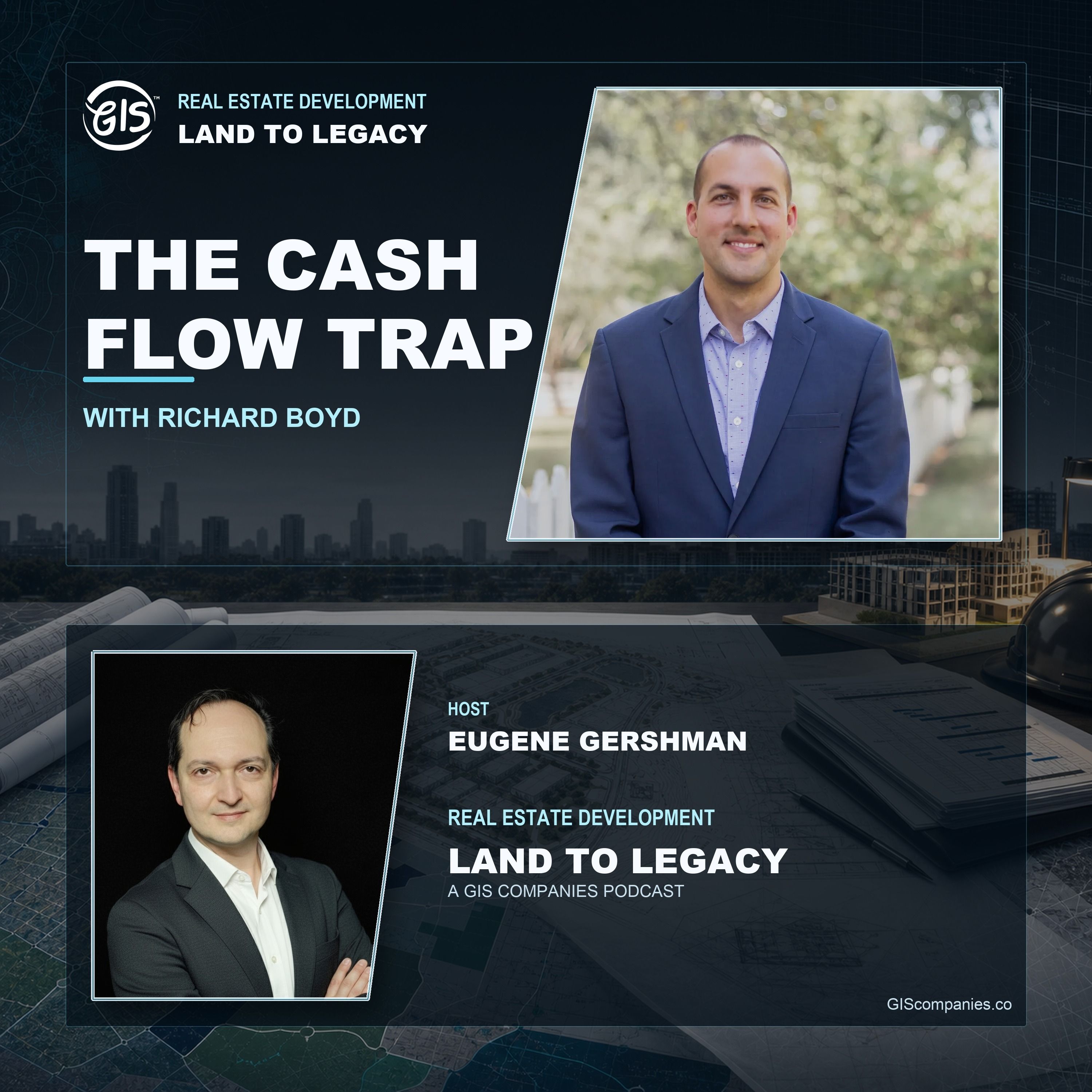
The Cash Flow Trap
Description
Accounting may be boring, but Richard Boyd makes the case that boring is exactly where developers get protected. A growing real estate business can look profitable and still run into trouble if the owner does not understand cash flow, capital structure, debt service, work-in-progress accounting, and worst-case planning before the market changes.
Guest Bio
Richard Boyd started an accounting practice in 2021 to help small businesses and real estate developers get clarity around their books, cash flow, payroll planning, debt, and financial forecasting. His work focuses on helping owners understand the health of the business, build better reporting, and put financial controls in place as the business scales.
Episode Highlights and Chapters
00:00 Eugene introduces Richard Boyd and frames accounting as the boring topic developers still need to understand.
00:54 Richard explains why owners avoid accounting, and why clean books reduce stress by making payroll, debt, and cash-flow questions clear.
02:49 Richard breaks down the difference between rear-view accounting and forward-looking financial forecasting.
03:41 Eugene and Richard discuss why starting entrepreneurs and developers often focus too much on profit and not enough on cash flow.
05:10 Richard explains why developers need accurate numbers to present a compelling story to lenders and support a viable development plan.
07:32 Richard describes what developers overlook as they scale from a small operation into a more complex business.
09:54 Richard shares the cautionary story of a $16M real estate investor who grew quickly, lacked visibility into cash flow and DSCR, and was forced to sell inventory at a discount after the market shifted.
13:02 Richard explains how deal assumptions can change, and why developers need contingency planning, exit strategies, and controls before the downside scenario arrives.
15:46 Richard describes how accounting support can scale from basic back-office bookkeeping into scenario modeling and financial planning.
18:39 Richard explains how early startup costs should be tracked when a landowner and partners are still testing whether a project is viable.
21:09 Richard discusses revenue recognition, project-cost capitalization, and why development costs belong on the balance sheet until the project is complete.
23:53 Richard explains why many owners misclassify development costs, then have to fix their books during tax season.
25:38 Eugene asks how AI is changing accounting, and Richard explains where AI helps with task-oriented work but still falls short on strategic CFO-level judgment.
30:07 Richard shares his core advice: it costs nothing to plan, and developers should pressure-test worst-case scenarios before they become real.
33:07 Richard shares how listeners can contact Atlantic Business Advisors.
Contact Information
Richard Boyd / Atlantic Business Advisors
Website: https://atlbusinessadvisors.com/
Email: richard.boyd@atlbusinessadvisors.com
Host: Eugene Gershman / GIS Companies
https://giscompanies.co/
GIS Companies has a free Feasibility Study Checklist available here:
https://giscompanies.co/development/feasibility-study/
To be a guest on the podcast, visit https://giscompanies.co/podcast/.
Hosted by Simplecast, an AdsWizz company. See pcm.adswizz.com for information about our collection and use of personal data for advertising.