Episode Details
Back to Episodes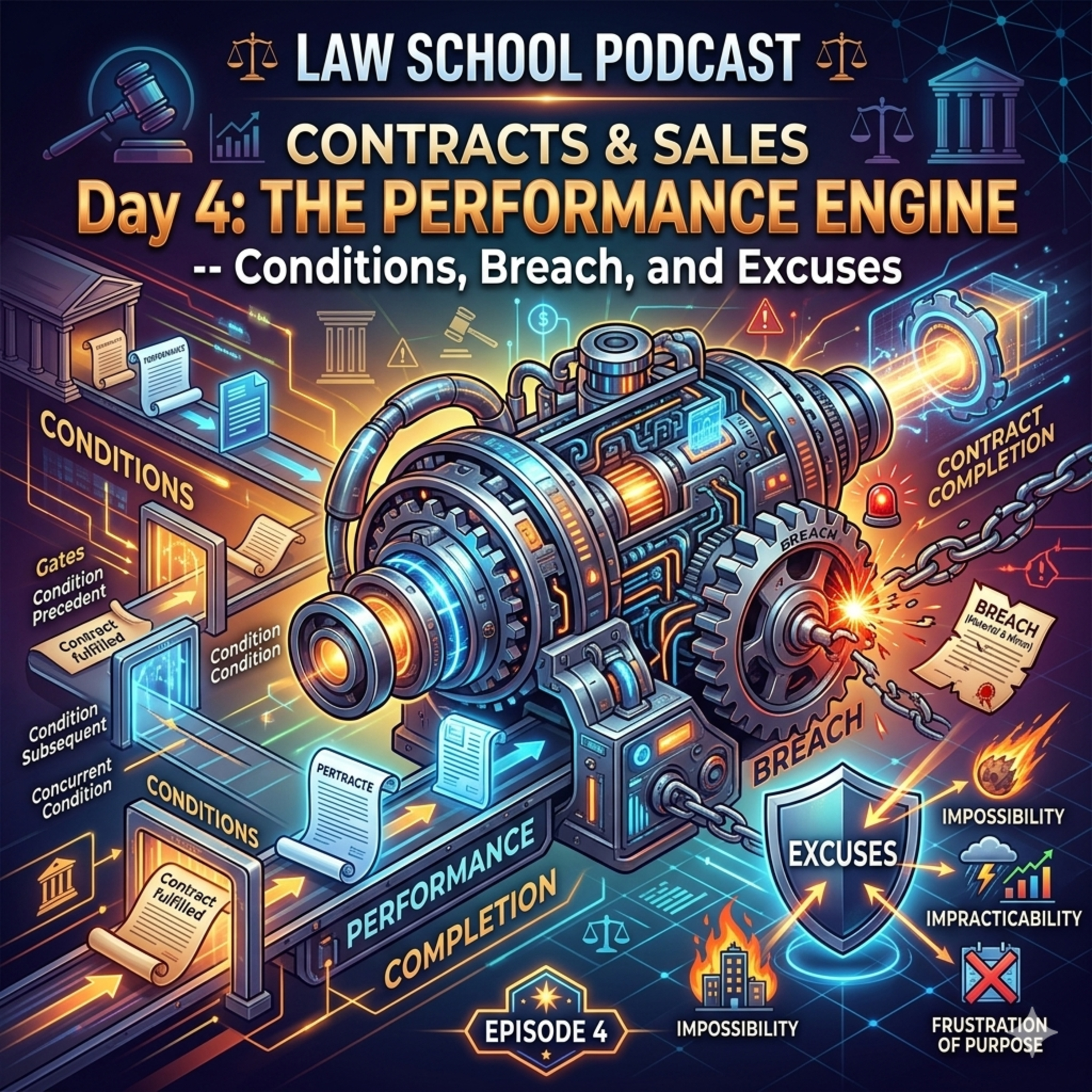
Contracts & Sales Day 4: The Performance Engine — Conditions, Breach, and Excuses
Description
Review Guide: The Performance Engine
Mastering Contract Performance: Key Principles and Pitfalls
Most contract disputes come down to a single moment: performance. But what if you’re called to perform and the universe throws a curveball? Or your partner might just decide it's no longer worth it? If you’ve ever wondered how courts decide whether a party can delay, excuse, or even avoid performance altogether, this episode unpacks the mechanics behind the performance engine.
Imagine a 1615 case where a man keeps a cow but still sues to get paid—an ancient absurdity that hints at the deeper truths of contractual obligations. Here, we explore how the law’s historic obsession with literal promises gives way to nuanced doctrines like conditions, standards of performance, breach, and excuse. You’ll learn how “conditions” act as legal “if-then” triggers for duties—whether they happen before, at the same time, or after performance. We break down the critical differences between express and implied conditions, illustrating why courts enforce express clauses strictly, while implied conditions fill the gaps with fairness.
Then, we dive into the two main regimes—common law and the Uniform Commercial Code—that shape what quality of performance you need to meet. Under common law, substantial performance is enough—think: a few minor errors in a house build that still get the job done. In contrast, the UCC’s perfect tender rule demands exact conformance, but with powerful safety valves like the right to cure and installment contracts. You’ll discover why understanding these standards can prevent costly missteps in both law school exams and real-world negotiations.
But the real magic unfolds when breaches happen. Not all breaches are created equal—minor deviations often just mean damages, while material breaches can blow up entire deals. We unpack five key factors—deprivation, forfeiture, opportunity to cure, good faith—to identify when a breach crosses into “material.” Crucially, we highlight the trap where refusing to pay over a tiny defect can turn into a huge liability. Knowing the difference between minor slip-ups and fundamental failures keeps you from shooting yourself in the foot.
When unforeseen superstorms hit, the law offers emergency exits: impossibility, impracticality, and frustration of purpose. We explore how a music hall burning down in 1863 set the modern standard of impossibility—no one must be held liable for acts of God. Moving into modern risks, we analyze why only truly extraordinary circumstances—wars, natural disasters, or government bans—excuse performance, while general cost hikes or lost profits do not. We also discuss how courts narrowly apply doctrines like impracticality, emphasizing that risk-shifting clauses or simple economic hardship won’t get you out of a bad deal.
A particularly tricky area is “frustration of purpose,” where a supervening event renders the entire reason for the contract impossible or pointless—think renting a balcony to watch a parade that gets canceled. We examine the precise limits of this doctrine, warning against overuse in exam scenarios or business plans. Only when both parties understand and mutually rely on a specific purpose, and that purpose is wiped out unexpectedly, can performance be excused.
Finally, we layer all insights into a straightforward, step-by-step exam checklist that you can carry into the test or the boardroom. From identifying conditions, choosing the right performance standards, analyzing breach severity, to spotting legal excuses—this framework distills decades of legal doctrine into an actionable tool. We emphasize that strict rule enforcement isn’t about harshness but about fairness—ensuring both sides uphold their promises or properly excuse non-performance.
This episode pushes beyond theory, asking: when does the law interve