Episode Details
Back to Episodes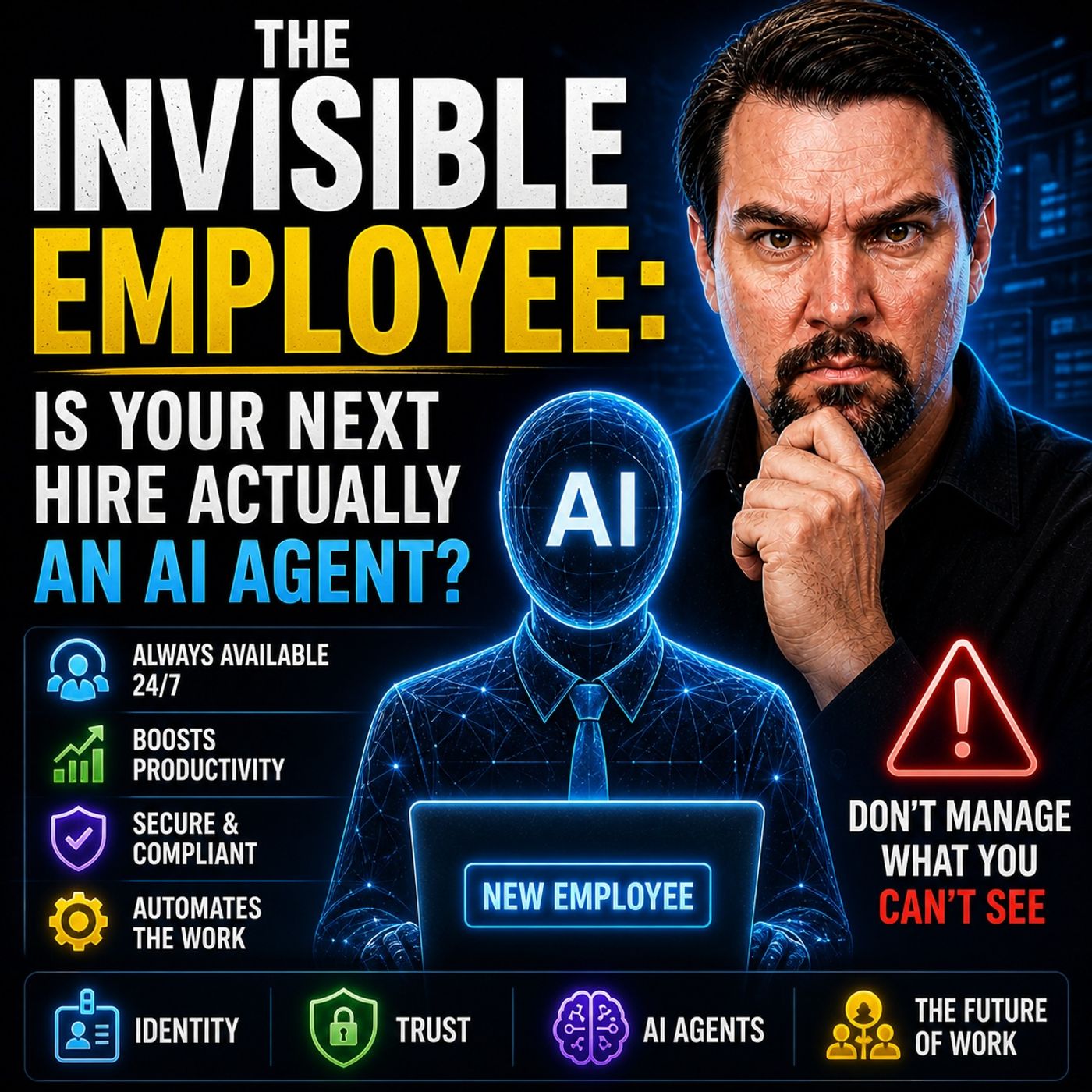
The Invisible Employee: Is Your Next Hire Actually an AI Agent
Season 2
Published 3 months ago
Description
Ticketing looks clean on paper. You get the numbers. The queues. The dashboards. But the real cost of support usually starts long before a ticket ever appears. An employee loses access to a file. A Teams meeting fails seconds before it starts. A sharing link breaks. Someone retries the same action over and over, asks a coworker for help, or wastes twenty minutes trying to fix something manually before they finally give up and open a support request. That hidden productivity loss rarely shows up in queue reports. In this episode of the M365 FM Podcast, Mirko Peters explores why the traditional help desk model is breaking under the scale and complexity of modern Microsoft 365 environments and what replaces it. The future of support is not faster triage. It is autonomous, invisible, policy-driven intervention that happens before users even realize they need help.
THE DEATH OF THE TICKET
The old support model still follows the same operational pattern. Something breaks, a user notices it, a ticket gets created, and IT begins translating the issue into categories, priorities, queues, and escalation paths. Then the waiting begins. That process feels normal because organizations have operated this way for decades, but the ticket itself is not the service. The ticket is evidence that support arrived too late. By the time the incident reaches the queue, the employee has already lost context, momentum, and productive work time. Modern Microsoft 365 estates are simply too dynamic for manual triage to scale efficiently anymore. Organizations now operate across Teams, SharePoint, Exchange, Intune, Entra, Defender, Copilot, hybrid devices, and Conditional Access policies simultaneously. The number of edge-case combinations grows faster than human-driven routing models can realistically absorb. Most organizations respond by adding another portal, another chatbot, or another workflow layer. But in reality, that usually increases friction instead of removing it. This episode breaks down why reactive ITIL-style operations are becoming structural bottlenecks and why most support labor still gets trapped inside repetitive routing, categorization, and clarification work instead of prevention and resilience engineering.
THE INVISIBLE EMPLOYEE MODEL
So what actually replaces the ticket? Not another chatbot. Not another AI assistant waiting for prompts. The invisible employee model introduces autonomous operational agents embedded directly inside Microsoft 365 workflows. These agents behave more like digital workers than simple software features. They operate with their own identity, defined permissions, governance boundaries, operational memory, and approval rules. Instead of waiting for users to describe problems manually, the invisible employee continuously monitors the environment for friction and operational drift. It can detect:
THE ARCHITECTURE OF PREEMPTION
Mirko breaks down how autonomous support actually works inside Microsoft 365. The model follows a simple operational chain: event, reasoning, orchestration, and verification. Microsoft 365 already generates massive amounts of telemetry through Entra, Intune, Defender, Teams, SharePoint, Exchange, and Microsoft Graph. The real transformation happens when agents can interpret those signals, compare current state against desired state, trigger approved remediation, and verify outcomes automatically. The di
THE DEATH OF THE TICKET
The old support model still follows the same operational pattern. Something breaks, a user notices it, a ticket gets created, and IT begins translating the issue into categories, priorities, queues, and escalation paths. Then the waiting begins. That process feels normal because organizations have operated this way for decades, but the ticket itself is not the service. The ticket is evidence that support arrived too late. By the time the incident reaches the queue, the employee has already lost context, momentum, and productive work time. Modern Microsoft 365 estates are simply too dynamic for manual triage to scale efficiently anymore. Organizations now operate across Teams, SharePoint, Exchange, Intune, Entra, Defender, Copilot, hybrid devices, and Conditional Access policies simultaneously. The number of edge-case combinations grows faster than human-driven routing models can realistically absorb. Most organizations respond by adding another portal, another chatbot, or another workflow layer. But in reality, that usually increases friction instead of removing it. This episode breaks down why reactive ITIL-style operations are becoming structural bottlenecks and why most support labor still gets trapped inside repetitive routing, categorization, and clarification work instead of prevention and resilience engineering.
THE INVISIBLE EMPLOYEE MODEL
So what actually replaces the ticket? Not another chatbot. Not another AI assistant waiting for prompts. The invisible employee model introduces autonomous operational agents embedded directly inside Microsoft 365 workflows. These agents behave more like digital workers than simple software features. They operate with their own identity, defined permissions, governance boundaries, operational memory, and approval rules. Instead of waiting for users to describe problems manually, the invisible employee continuously monitors the environment for friction and operational drift. It can detect:
- Sign-in failures
- License mismatches
- Sharing issues
- Device compliance drift
THE ARCHITECTURE OF PREEMPTION
Mirko breaks down how autonomous support actually works inside Microsoft 365. The model follows a simple operational chain: event, reasoning, orchestration, and verification. Microsoft 365 already generates massive amounts of telemetry through Entra, Intune, Defender, Teams, SharePoint, Exchange, and Microsoft Graph. The real transformation happens when agents can interpret those signals, compare current state against desired state, trigger approved remediation, and verify outcomes automatically. The di