Episode Details
Back to Episodes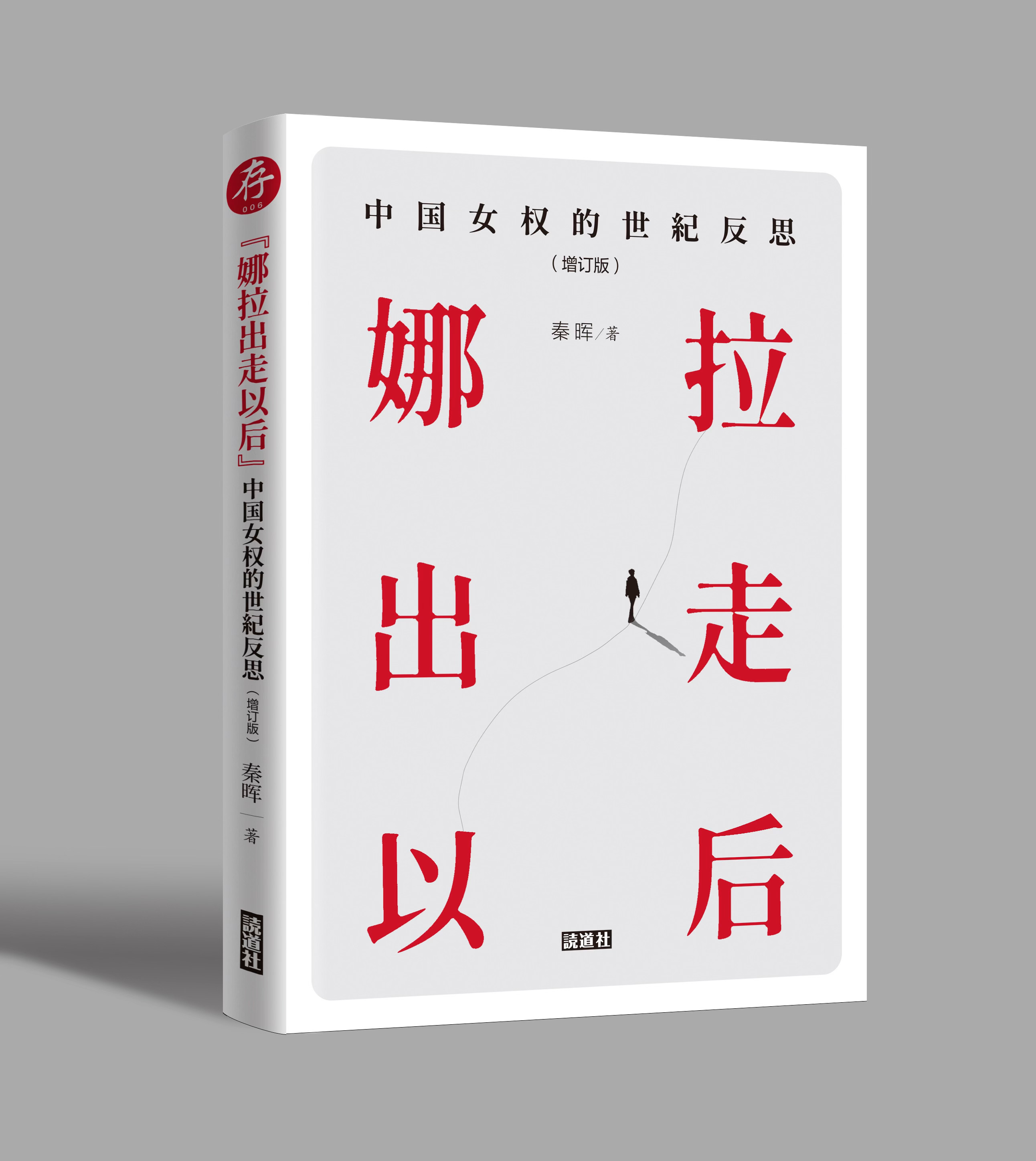
Qin Hui | The Leviathan that Devours “Nora”: Feminism and the Path of Chinese Women
Description
The Leviathan that Devours “Nora”: Feminism and the Path of Chinese Women
——Preface to the Japanese Expanded and Revised Edition of “After Nora Left Home: A Century of Reflection on Chinese Feminism”
A Book Forbidden from Criticism
My book “After Nora Left Home: A Century of Reflection on Chinese Feminism” (Dudao publisher読道社,Japan)was published overseas in February 2025 as the first simplified Chinese edition. The reason for publishing it overseas is self-evident. However, in today’s internet era, it quickly spread inside the wall and sparked heated discussions on China’s most famous book review website “Douban(豆瓣)” and the political-cultural forum “Zhihu(知乎).” Interestingly, unlike my other works, this book received “a flood of negative reviews” on these two platforms, as a friend described it.Apart from a few formal book reviews that were basically positive, the comments were mostly a barrage of verbal attacks from many friends in the Chinese “mainstream feminism” and Western postmodern feminism camps (which differ in many aspects).
These friends, in fact, the vast majority have not actually read the book at all. It is not easy to obtain this book inside China. Some have merely heard one of my speeches at a book launch event; many don’t even know about the speech. “They haven’t read the book, yet they give it 0 stars.”Some of the criticisms leveled are almost diametrically opposed to the actual content of my book, for example, some accuse me of juxtaposing “feminism” and “patriarchy/male power” in a way that incites gender antagonism. In reality, the main argument of this book is precisely to emphasize that the root cause of the deprivation of women’s rights in China lies in totalitarianism/authoritarianism rather than in “male power/patriarchy.” The book criticizes “Pan-gender antagonism
(泛性對立)”,and it specifically points out the inappropriateness of translating “feminism” as 女权主义 in China. Others say something like, “This Qin Hui is really an old pedant, still rehashing the stale topic of women’s liberation from the May Fourth era—can’t he talk about the real, current issues facing women?” Yet anyone who has read even the first edition knows that from the very first page, which discusses the “chained woman,” the main body of the book is devoted precisely to real, contemporary women’s issues. The discussion of May Fourth serves only as an introduction, and moreover, it is treated as an object of critical reflection. In contrast, this revised and enlarged edition has added quite a bit of material on the pre-reform era, precisely because I want to trace the deep historical roots of the current forms of persecution—otherwise it would merely be journalism, not serious academic research. Meanwhile, the Western ‘postmodern feminist perspective’ that has been imported to China in recent years is precisely the one that mentions these most serious contemporary ills the least, even avoids mentioning them altogether.
But I am still very glad. In today’s Chinese intellectual world, where ten thousand horses stand silent and the space for open discussion is extremely limited, these criticisms are nonetheless something I welcome wholeheartedly. What thinkers fear most is casting pearls before swine with no response whatsoever; what delights them is seeing truth sharpened and clarified through debate. Moreover, in an era when forbidden zones are everywhere, any small crack or opening for discussion has the potential to be pried wider and wider, producing a chain reaction where pulling one hair moves the whole body.So I smiled and said to my friends: “A flood of vicious reviews? Excellent! The only thing to fear is dead calm with no ripples at all.”
But my happiness didn’t last long. Just as the wave of criticism of this book on Douban and Zhihu was still surging and gaining momentum,