Episode Details
Back to Episodes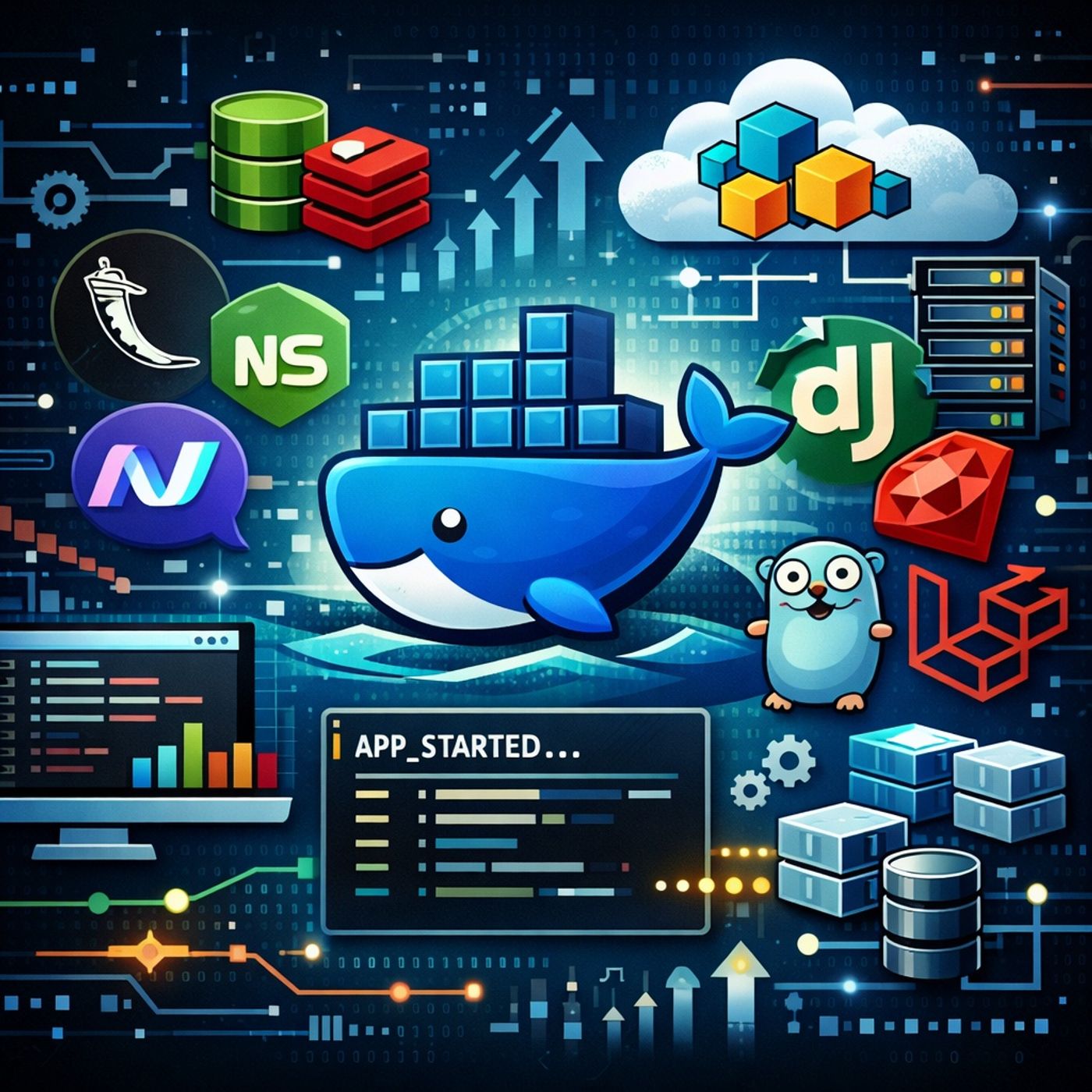
Course 31 - Dive Into Docker | Episode 11: Framework Starters and Design Best Practices
Published 3 months, 4 weeks ago
Description
In this lesson, you’ll learn about: applying Docker to real-world apps and scalable architecture principles1. Framework-Based Starter Projects
You can listen and download our episodes for free on more than 10 different platforms:
https://linktr.ee/cybercode_academy
- The episode provides 7 ready-to-use starter projects for popular frameworks:
- Flask
- Express (Node.js)
- .NET
- Django
- Ruby on Rails
- Golang
- Laravel
- Each project includes:
- Dockerfile
- docker-compose.yml
- Writing logs to files inside containers
- Logs are lost when the container stops or restarts
- Log everything to stdout
- Benefits:
- Managed by Docker daemon
- Easy to:
- View → docker logs
- Rotate logs
- Send to monitoring systems
- Use environment variables instead of hardcoding values
- Switch between environments easily:
- Development
- Testing
- Production
- No need to change source code
- Storing data inside the app container
- Example:
- Sessions in memory
- Keep apps stateless
- Store data in external services like:
- Redis (sessions, cache)
- Databases
- Containers can:
- Restart anytime
- Scale horizontally
- These practices are based on:
- 12 Factor App
- Config via environment variables
- Logs treated as event streams
- Stateless processes
- Portable across environments
- Scale applications easily
- Avoid downtime/data loss
- Deploy consistently across:
- Local
- Cloud
- CI/CD pipelines
- Starter projects help you skip setup and start building
- Always log to stdout
- Use .env for configuration
- Keep apps stateless
- Follow 12-Factor App for production-ready systems
- Building real apps
- Designing scalable systems
- Following industry best practices
You can listen and download our episodes for free on more than 10 different platforms:
https://linktr.ee/cybercode_academy