Episode Details
Back to Episodes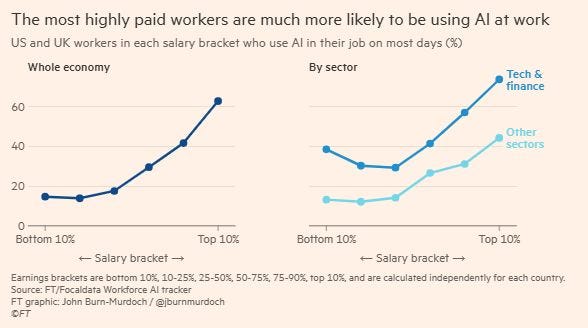
The Most Important Data Points in AI Right Now
Description
The Stanford AI Index’s headline is 88% — organizations using AI in some capacity. The Financial Times charted where it actually lands in the workforce: 62% of top-decile earners use it daily, versus 13% at the bottom. Board decks this quarter will cite Stanford. The FT chart is what they’re not showing.
The economics that enabled this gap are under pressure. The three-year subsidized era is ending by financial necessity, not choice. The same optimization logic that built social media’s loneliness machine is now embedded in AI products at scale. And in the same week Anthropic’s most capable model autonomously found 271 zero-days in Firefox, two major platforms were breached through third-party integrations. The data and what to do about it follows.
Episode 8: The Most Important Data Points in AI Right Now
Brittany Hobbs solo — four segments moving from data to strategic implication. Essential for anyone making AI purchasing, hiring, or architecture decisions right now.
The Stanford AI Index 2026. 88% organizational adoption is saturation, not a trend. $581 billion invested globally in 2025, up 129% year over year. The US-China AI performance gap collapsed from 17–31 percentage points in 2023 to 2.7% today — on 23 times less investment. China holds 69.7% of global AI patent filings. Architecture and application discipline closed a gap that capital alone could not. Stanford AI Index 2026 | The U.S. Can’t Buy an AI Lead
Token economics. Anthropic’s current tiers: Haiku at $1/$5 per million input/output tokens, Sonnet at $3/$15, Opus at $5/$25. A 200-screen product built with Claude Design costs $0.22 for a first draft; the 50-iteration refinement cycle real design work requires runs to ~$2,600, plus $200–$900/month in system updates. Every comparable Figma interaction costs zero. Prompt caching provides ~90% discounts on repeated context; batch processing cuts 50%. Claude Design vs Figma cost breakdown | CNBC: Token economics
Apple chose its hardware chief as next CEO. John Ternus — SVP of Hardware Engineering, architect of Apple Silicon — succeeds Tim Cook on September 1st. Johny Srouji, who designed every Apple Silicon chip, becomes Chief Hardware Officer. Apple posted $143.8 billion in Q1 FY2026 (up 16%, $109 billion in services, 92% retention) without shipping an industry-leading AI feature. The next decade of AI is decided at the silicon and device level. Apple CEO transition analysis
Vibe coding has never been more capable. Security has never been more exposed. Anthropic’s Mythos model identified 271 zero-day vulnerabilities in Firefox autonomously; the UK’s AI Security Institute found it succeeds at expert-level hacking tasks 73% of the time. Anthropic launched Project Glasswing (12 defensive security partners including Amazon, Microsoft, and Apple), then reported unauthorized Mythos access through a vendor. Vercel was breached through Context AI — customer credentials sold on BreachForums for $2 million. Lovable exposed source code and credentials via a basic authorization flaw for 48 days, fixed it, then broke it again for 76 more. TechCrunch: Anthropic Mythos |
Listen Now
Love PodBriefly?
If you like Podbriefly.com, please consider donating to support the ongoing development.
Support Us