Episode Details
Back to Episodes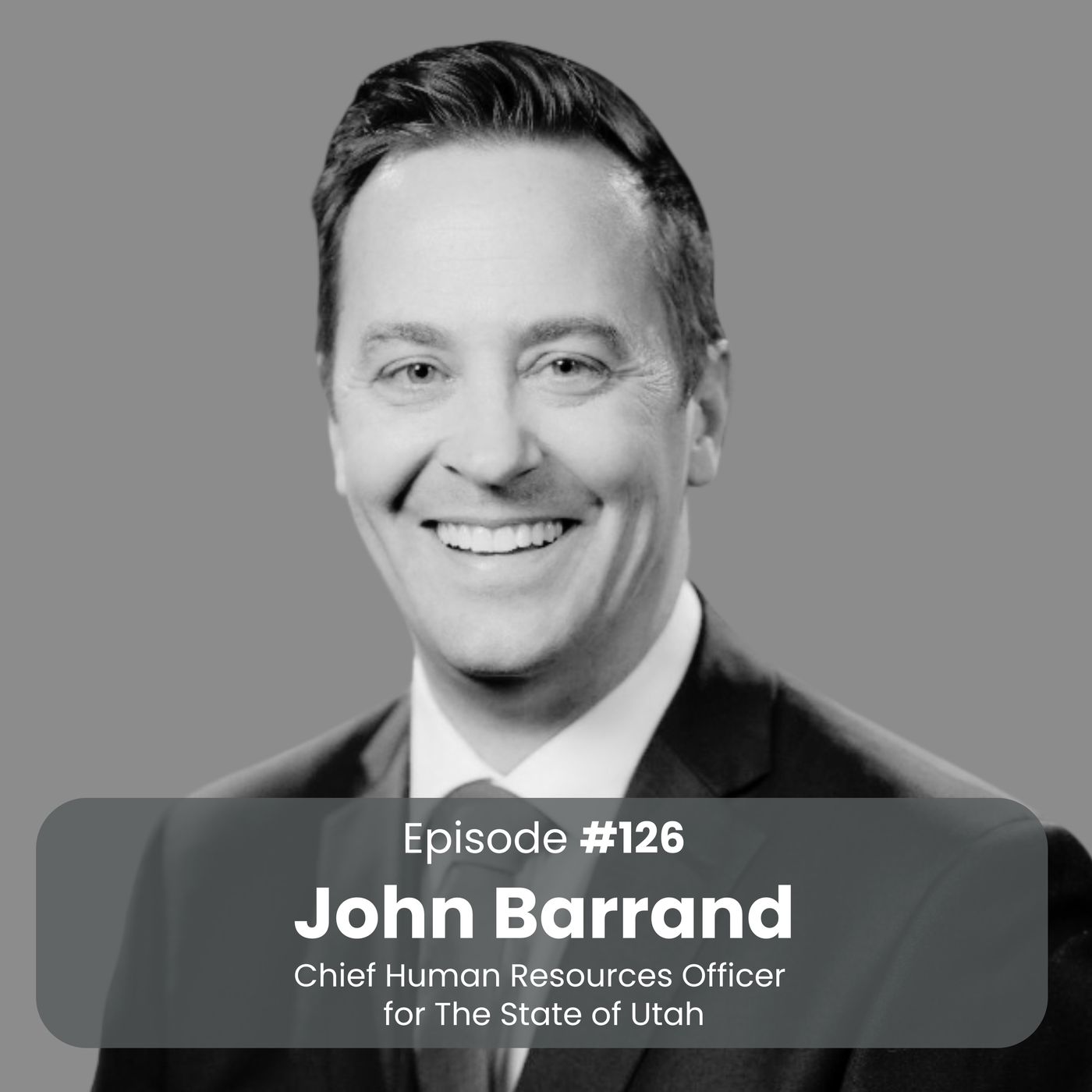
Transforming Performance Management in the Public Sector: John Barrand
Episode 126
Published 4 months, 2 weeks ago
Description
In this episode, we sit down with John Barrand, CHRO for the State of Utah, to discuss an inspiring transformation in public sector performance management. John led a bold effort to overhaul Utah’s performance management system—moving it from a culture of “adequacy” and silence to one focused on learning, growth, connection, and accountability. John shares how he and his team achieved legislative change requiring quarterly check-ins, implemented management training, and shifted the state’s mindset around performance and development.
You will want to hear this episode if you are interested in...
Performance Management is a Sector-Spanning Challenge
Performance management has a notorious reputation, often maligned as bureaucratic and misaligned. These challenges aren’t confined to just the private sector. Public organizations often face a wealth of bureaucracy and challenges that can inhibit transformation, compounded by a cultural tendency towards silence and an adequacy mindset.
When John assumed his role in 2021 for the state of Utah, over 70% of employees had an “unknown” performance rating, and only 16% had received annual reviews. The pervasive culture of silence fostered disengagement and suspicion, and performance management, where it occurred, was simply about maintaining adequacy—a relic from nearly a century and a half of defensive bureaucracy.
From Compliance to Connection
The first pivotal move was defining purpose. Clarity on the “why” behind performance management is crucial. For Utah, the why was growth: enabling employees to learn and grow while retaining top talent—shifting away from the punitive roots of performance management. As John says: “Employees don’t want feedback, they want connection. They don’t want evaluation, they want attention”.
One of the new steps John took was to require quarterly check-in conversations with all employees. The effect was transformational: from just 16% of employees having annual reviews to 89% participating in four quarterly check-ins within the first year. This regular cadence broke the culture of silence, making communication a legal and cultural imperative.
Overhauling the System: What Changed
Where most organizations tinker at the edges, Utah’s public sector embraced bold, structural change. They implemented legislation for conversations, which included quarterly check-ins and annual reviews, demonstrating a high-level commitment to improving performance management.
Only 30% of managers previously had any training, and now, over 87% have been developed in crucial skills such as feedback, resilience, and collaboration. Utah also funds performance management by reallocating cost-of-living adjustments and introducing performance-driven bonuses. Goals now consist of both output-aligned objectives and developmental “how” objectives, pushing employees to reflect on and improve their impact.
Evidence of a Transformed Culture
Performance conversations have become increasingly meaningful. The organization saw a 40% increase in first-year exits for cause—not a sign of ruthless weeding out, but of identifying and addressing performance issues sooner, thereby improving overall health wi
You will want to hear this episode if you are interested in...
- [01:16] Initial state of Utah’s performance management system
- [06:23] Value of continuous learning and curiosity in government
- [10:06] Defining the “why” for performance management in Utah
- [17:02] Risks and Resistance in Systemic Change
- [20:06] Quarterly employee check-ins initiative
- [25:59] Balancing fairness and measurement without alienating staff
- [34:28] Creation of a system-wide talent mobility program
- [40:01] Development of incentive structures and bonus allocations
- [44:22] Sustainability and future of the program
Performance Management is a Sector-Spanning Challenge
Performance management has a notorious reputation, often maligned as bureaucratic and misaligned. These challenges aren’t confined to just the private sector. Public organizations often face a wealth of bureaucracy and challenges that can inhibit transformation, compounded by a cultural tendency towards silence and an adequacy mindset.
When John assumed his role in 2021 for the state of Utah, over 70% of employees had an “unknown” performance rating, and only 16% had received annual reviews. The pervasive culture of silence fostered disengagement and suspicion, and performance management, where it occurred, was simply about maintaining adequacy—a relic from nearly a century and a half of defensive bureaucracy.
From Compliance to Connection
The first pivotal move was defining purpose. Clarity on the “why” behind performance management is crucial. For Utah, the why was growth: enabling employees to learn and grow while retaining top talent—shifting away from the punitive roots of performance management. As John says: “Employees don’t want feedback, they want connection. They don’t want evaluation, they want attention”.
One of the new steps John took was to require quarterly check-in conversations with all employees. The effect was transformational: from just 16% of employees having annual reviews to 89% participating in four quarterly check-ins within the first year. This regular cadence broke the culture of silence, making communication a legal and cultural imperative.
Overhauling the System: What Changed
Where most organizations tinker at the edges, Utah’s public sector embraced bold, structural change. They implemented legislation for conversations, which included quarterly check-ins and annual reviews, demonstrating a high-level commitment to improving performance management.
Only 30% of managers previously had any training, and now, over 87% have been developed in crucial skills such as feedback, resilience, and collaboration. Utah also funds performance management by reallocating cost-of-living adjustments and introducing performance-driven bonuses. Goals now consist of both output-aligned objectives and developmental “how” objectives, pushing employees to reflect on and improve their impact.
Evidence of a Transformed Culture
Performance conversations have become increasingly meaningful. The organization saw a 40% increase in first-year exits for cause—not a sign of ruthless weeding out, but of identifying and addressing performance issues sooner, thereby improving overall health wi