Episode Details
Back to Episodes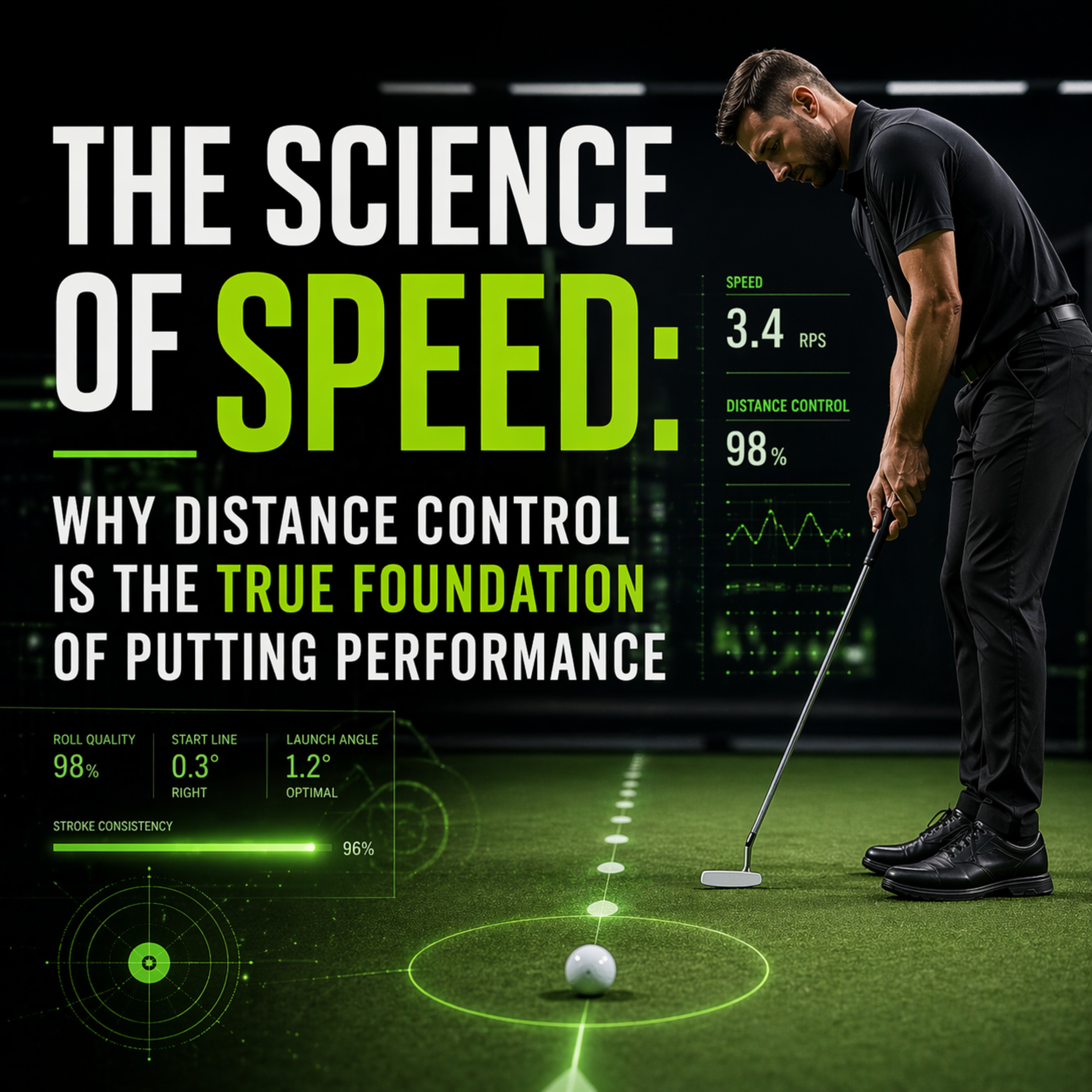
#567 The Science of Speed: Why Distance Control Is the True Foundation of Putting Performance
Description
Putting is widely misunderstood. Traditional coaching focuses too much on line, but without correct speed, even the perfect read fails. Distance control is the real scoring factor—it stabilizes performance, widens the effective hole, and eliminates three-putts. It is not “feel,” but a system that can be trained and calibrated.
Journalist: Putting is often described as instinctive. You see it differently.
Henrik Jentsch: Completely. “Feel” is unreliable. Putting is a measurable skill. With the Puttalyze concept, we treat the green as data and train the body to match it precisely.
The key lies in shifting from conscious control to subconscious execution. The analytical mind is slow and inconsistent under pressure. The cerebellum, however, stores movement patterns and calibrates energy. Its principle is simple: initial energy input equals final distance. Elite players rely on this system, not conscious calculation.
Distance control is built through structured calibration. The Core-Putt establishes a baseline—“Reference X.” This is the natural distance produced by a neutral, repeatable stroke. Using the “No Correction Rule,” three identical strokes must produce similar results. If not, interference has occurred.
This creates three essential pillars:
- Repetition of motion
- Pure energy transfer
- Subconscious calibration
Amateurs struggle because they interfere. Instead of swinging, they “hit,” creating inconsistent energy. The solution is removing manipulation and trusting motion.
A key tool is the “Apple on its Stem” ritual. A controlled head tilt and rotation acts as a sensory trigger, feeding speed information directly into the cerebellum. This transforms perception into instinct. Calibration replaces guessing.
Performance errors follow clear patterns:
- Variable distance = inconsistent motion
- Short putts = analytical interference
- Acceleration = forced impact
- No speed awareness = failed calibration
The correction is always the same: repeat identical motion and allow natural energy flow.
Training must be precise, not excessive. The system is built around short, focused calibration—3 to 6 minutes daily. More volume reduces effectiveness and weakens neurological imprinting.
Final Principle:
Distance control is the foundation of scoring. When motion and green speed are synchronized, putting becomes automatic—no forcing, no guessing.
Henrik Jentsch: True mastery is effortless. When calibration replaces control, consistency follows.