Episode Details
Back to Episodes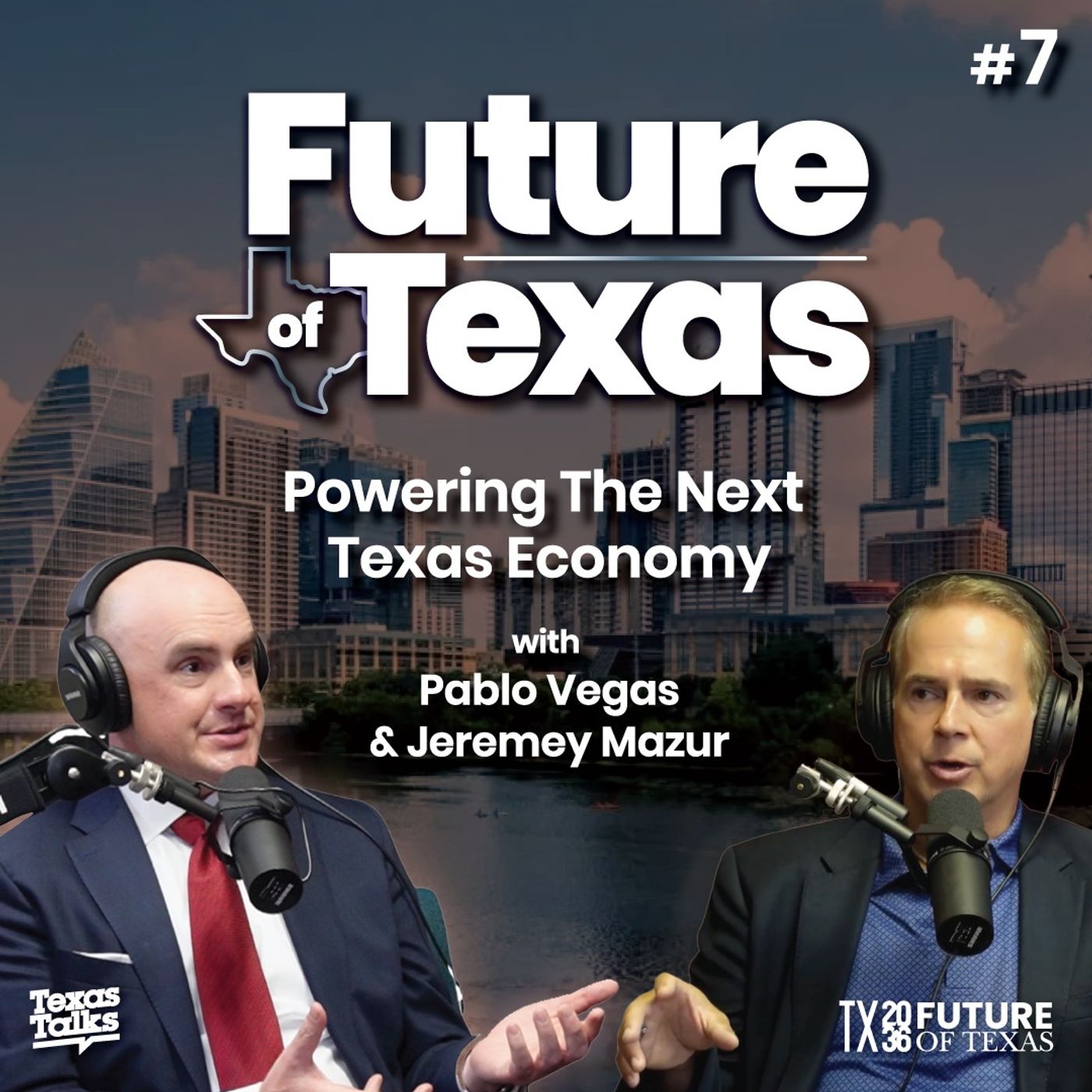
Powering the Next Texas Economy
Description
As part of the Future of Texas series in partnership with Texas 2036, this episode explores one of the most critical challenges facing the state’s future: building an electric grid that can keep up with rapid growth while remaining reliable and affordable.
Through the Future of Texas podcast series, Texas 2036 brings together diverse perspectives as we explore the opportunities and challenges facing our state over the next ten years. The views expressed in this program are those of the individual speakers and do not necessarily reflect the views of Texas 2036, its staff or its Board of Directors.
Host Brad Swail is joined by Pablo Vegas, President and CEO of ERCOT, and Jeremy Mazur, Director of Infrastructure and Natural Resources Policy at Texas 2036, for a deep dive into how Texas is preparing its power grid for the next decade.
The conversation examines how Texas operates one of the most unique deregulated electricity markets in the country — and why that system is being tested by population growth, extreme weather, and rising demand from data centers and new industries.
Vegas explains how ERCOT manages supply and demand in real time while forecasting long-term growth, while Mazur breaks down the policy shifts that followed Winter Storm Uri and how lawmakers are approaching reliability and infrastructure.
The discussion covers:
• How Texas’ deregulated electricity market works
• Generation, transmission, and retail explained
• Post-Uri reforms and reliability focus
• Supply chain and permitting challenges
• Growth of solar, wind, and battery storage
• The need for a more balanced energy mix
• Water’s role in energy reliability
• Data center-driven demand growth
• Who pays for new infrastructure
• What drives electricity prices
• Limits of current market incentives
• Distributed energy and future grid innovation
The episode also highlights a key policy shift: large energy users like data centers may be required to reduce demand first during grid emergencies — protecting residential consumers and critical services.
Looking ahead, the conversation underscores a central challenge: Texas must not only build more power, but build the right mix of power to ensure long-term reliability and affordability.
00:00 — Intro + Future of Texas series overview
00:21 — Meet Pablo Vegas (ERCOT) & Jeremy Mazur (Texas 2036)
01:21 — Why Texas’ electric grid matters more than ever
02:02 — Winter Storm Uri: what changed since 2021
03:09 — How Texas’ electricity market works (3-part system)
05:03 — Policy changes and focus on grid reliability
06:20 — Texas growth and rising electricity demand
07:22 — ERCOT’s role: balancing supply and demand
08:09 — Forecasting future demand and infrastructure needs
08:56 — Why power plants take years to build
10:22 — Supply chain issues and energy development delays
11:18 — How incentives shaped solar, wind, and battery growth
13:10 — Water’s critical role in energy reliability
14:10 — Drought risks and power generation challenges
15:31 — Are we building enough power for the future?
16:55 — The imbalance in today’s energy mix
18:48 — Why Texas needs a balanced portfolio of energy sources
19:08 — Legislative efforts to expand nuclear & geothermal
20:14 — Why renewables helped during extreme heat events
21:00 — The future of nuclear, geothermal, and new tech
22:05 — Market design flaws: not all electricity is valued equally
24:02 — Why reliability isn’t priced into the system
25:26 — Data centers: massive demand growth explained
29:18 — Will all proposed data centers actually get built?
31:09 — Who pays for grid expansion?
33:00 — Transmission costs and rate impacts
34:43 — Ensuring fair cost allocation for consumers
35:28 — C