Episode Details
Back to Episodes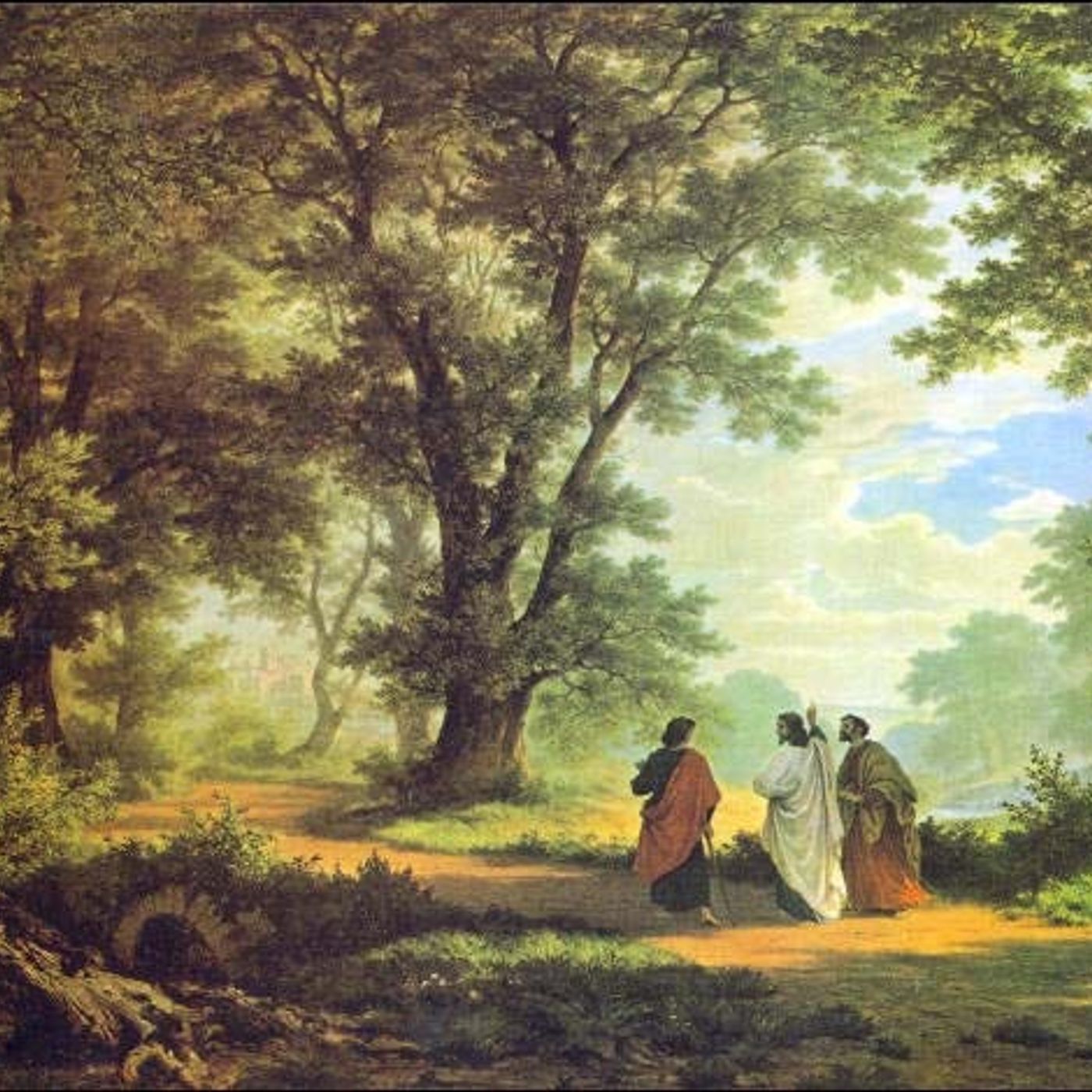
Did not our hearts burn within us?
Published 4 months, 2 weeks ago
Description
The Hopelessness of our Earthly JourneyOn the Road to Emmaus, we meet two disciples. One of them was named Cleopas, the other not named. Ancient sources suggest that it was in fact Luke himself, but we simply do not know.The risen Christ drew near to them and yet they were kept from recognising him. We are told that they were downcast and looked sad. From their words, we understand that they had lost hope. And this was because Jesus of Nazareth, a man mighty in word and deed before God, had been delivered over and crucified. And so their hope was gone.In a sense these disciples stand for all of us insofar as we do not have a vision of Christ. Many people simply do not know Christ and have never known him. For those who follow Christ also, we frequently lose sight of him. In fact, might I be so bold as to say that to maintain a vision of Christ in the tumult and difficulties of everyday life in this world is so hard.We may say, of course, that we know Christ and we may call ourselves Christians. But to truly see him, to truly know him, to be aware of his presence and to acknowledge him in all things and in every place and at all times, this is the great challenge of the spiritual life. And we should not underestimate it. It seems that our natural state, even as followers of Christ, is to lose sight of him all the time – to have our attention taken away by a million other things.From about the fourth century of the Church onwards, the Roman Empire began to be Christianised. For many followers of Christ, this presented a challenge as the Christian faith took on a more worldly form. These radical followers of Christ decided that they had to leave the world in order to hold a vision of Christ before them and so they went out into the desert, far from civilisation, to devote themselves to a life of prayer and constant watchfulness.We can still read many of the stories and sayings of the so-called Desert Fathers today. For example, a saying of Abbot Antony:Just as fish die if they remain on dry land, so monks, remaining away from their cells (that is, their individual room in which they would pray and meditate), or dwelling with men of the world, lose their determination to persevere in solitary prayer, so we must return to our cells, lest remaining outside we forget to watch over ourselves interiorly.If we do not pray as Christians, and watch over ourselves, then we are like fish out of water, dying for what truly nourishes us.The Greatest Bible StudyJesus came to these disciples out of love. He sought to change their situation from one of hopelessness and sorrow to joy and love. And he does the same for us today! The risen Christ is alive – not just in our hearts – but in heaven. For he rose from the grave and he sends his Holy Spirit upon the Church and upon the believers within the Church.We see a marvellous illustration of this in our story this morning. In fact, we see in many ways the beginning of the Christian Church and an early version of our liturgy.How does Christ bring these hopeless disciples from sorrow to joy?To begin with, he opens the Scriptures, but in a very particular way. We read from the words of the two disciples that they had misunderstood what Jesus was there to do: they thought he was a political saviour, who would overthrow the Romans. But they had failed to see that God’s plan of redemption in Christ was so much greater than this. Their expectations had to be challenged, shattered even, so that the glory of our redemption could be seen more clearly.Christ said to them: “O foolish ones, and slow of heart to believe all that the prophets have spoken! Was it not necessary that the Christ should suffer these things and enter into his glory?”What followed was the greatest Bible study in history: ‘And beginning with Moses and all the Prophets, he interpreted to them in all the Scriptures the things concerning himself’.So it was not just that they read the Scriptures (what we call the Old Testament) but that Chr