Episode Details
Back to Episodes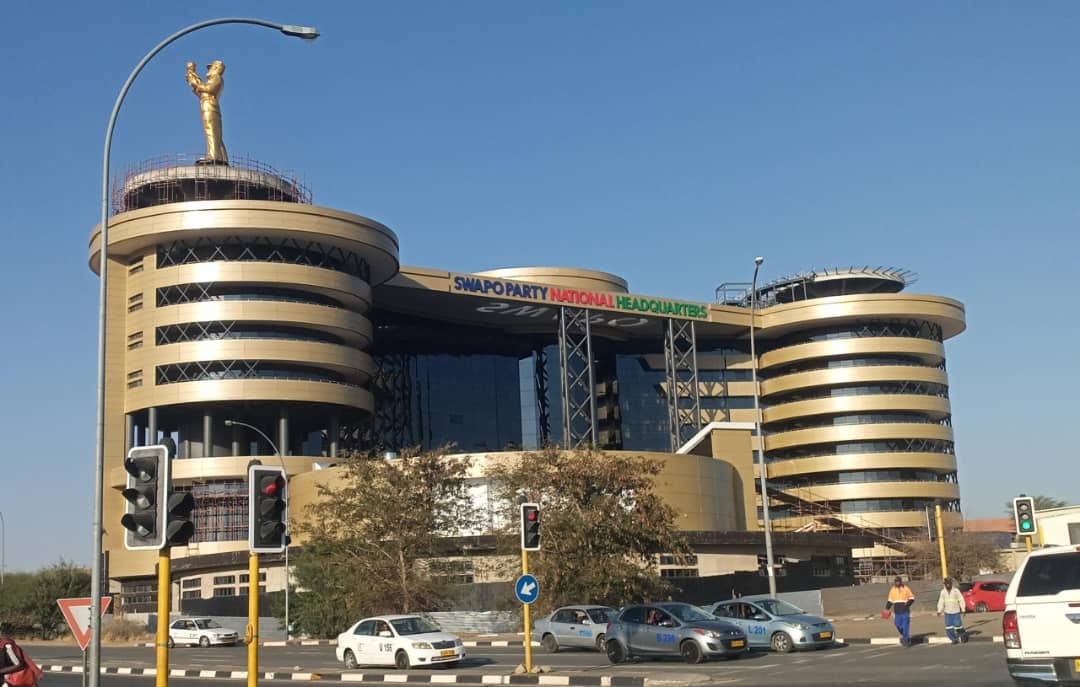
Namibia and the Resource Curse
Description
Good Sunday to youI’m still finding my feet having just got back from Namibia. I’ve got a full country report coming, as well as a portfolio piece. But I’ve been thinking further about the country’s potential since Wednesday’s note.
Namibia has almost everything. Resources. Location. Roads. A small population. On paper, it should work.
And yet.
Driving through Windhoek, the capital, my guide pointed out a hospital: the Katutura State Hospital.
“You don’t want to get sick here,” he said.
It didn’t look too bad from the outside. A bit craggy. But I’ve seen worse.
The place is infamous apparently. Rats. Endless waits. People lying untreated in corridors. People deliberately go at 3 in the morning, because it betters your chances of being seen the next day. My guide described his own time there when he broke his arm last year. Oof. It makes NHS Accident and Emergency waiting times look slick.
Across the road, stood a gleaming monstrosity - the SWAPO (ruling party) headquarters. Brand new. Vulgar. Expensive. Impossible to miss.
It wasn’t discreetly tucked away. It was right there, bearing down on the hospital.
My first reaction was simply how ugly it is. A few years and that will look truly horrible, I explained to my guide, who seemed baffled by my prediction.
His point, however, that I hadn’t yet thought of, was simply how the building had attracted controversy: all that money being spent on what is essentially a vanity project, with the hospital over the road.
It was built by the Chinese, funded through a grant from the Chinese government, rather than a commercial loan, at a cost of $50–60 million (figures vary). Because it’s a grant, it doesn’t sit as formal public debt.
What could the Chinese possibly want in Namibia. (Clue Namibia, among other things, is the world’s 3rd largest uranium producer and the Chinese pretty much control the 3 largest uranium mining companies operating there. Then there are all those other resources too)
There, in a single snapshot, lies the problem. A classic of the resource curse genre.
Easy money distorts behaviour.
In theory, natural resources should make a country rich. In practice, they often do the opposite. Incentives determine the outcome.
If a government can fund itself from its natural resources, from its oil or metal, what does it care about tax payers? If it doesn’t rely on its citizens, it doesn’t feel accountable to them. Instead of serving the public, the state begins to serve itself.
Money flows in. It gets spent badly, siphoned off, used to entrench power.
At the same time, the rest of the economy suffers. Why build a broad industrial base when the ground is already doing the work for you? You end up with a narrow, fragile system built around extraction.
Two countries with similar resources can end up in completely different places.
Norway built institutions, saved its oil wealth, invested for the long term. Venezuela (which has greater oil resources than even Saudi Arabia), spent it, politicised it and hollowed out everything else.
Don’t get me started on what the UK did with its oil. (First thing the government should do Monday morning by the way is renegotiate North Sea division with Norway).
Same starting point. Opposite outcomes. One has one of the lowest GDP per capitas in the world, the other has one of the highest. The difference is governance. Incentives. Culture.
Namibia now has some choices to make. It is somewhere near the beginning of that path. It has oil discoveries offshore. It is already a major uranium producer. It has copper, gold, rare earths, diamonds, zinc, lithium and tin. Fish. The opportunity is obvious.
But so is the risk. The easy choice is to follow the same path as most of the rest of Africa. The harder choice no