Episode Details
Back to Episodes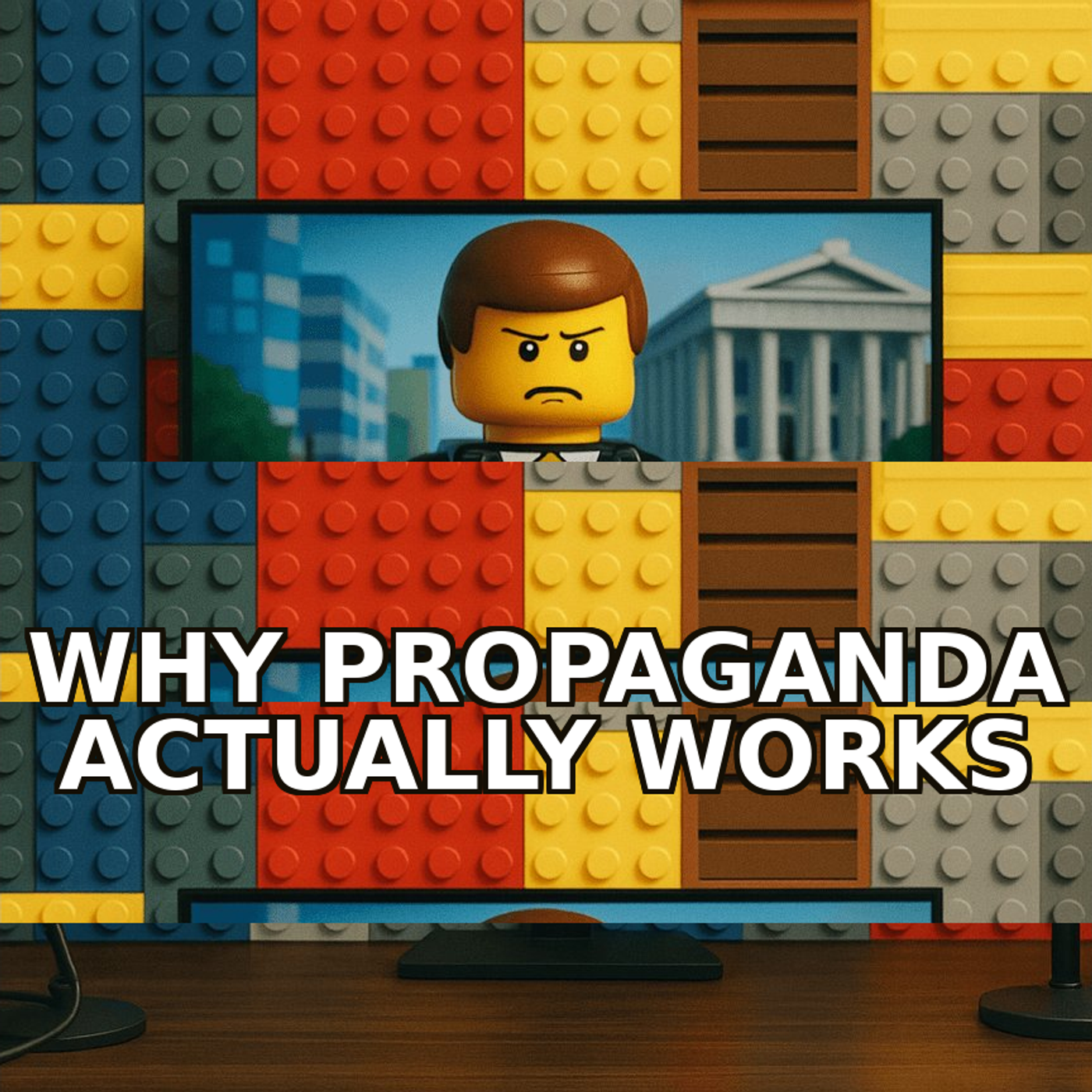
Why AI Propaganda Works—and How to Resist It
Description
Iran has a 10-person animation team making Lego-style propaganda videos with hip hop beats that are going viral — and Jeremy, who considers himself reasonably good at detecting BS online, almost shared one before he caught himself. In this episode, Jeremy and Jason dissect how AI-powered slopaganda works: why it's engineered to exploit emotional familiarity, why YouTube is selectively banning it while leaving comparably political domestic content untouched, and what it means when even skeptical, media-literate adults are one tap away from becoming unwilling distribution nodes. If you've ever watched something that felt like news but moved like entertainment and had a nagging feeling you were being played — this conversation names what happened.
Key Moments
- 00:00 — Jeremy discovers Iranian Lego propaganda videos and almost shares them before catching himself
- 01:30 — Jason confirms he's seen them: why YouTube's ban is inconsistent and what it actually signals
- 02:42 — The 'slopaganda wars': how the format compresses political narrative into an irresistible two-minute package
- 05:12 — The Daily Show comparison: why source legitimacy changes how propaganda lands, not just the content
- 07:16 — How Lego nostalgia and great music are doing the persuasion work before the message even registers
- 08:12 — YouTube's stated reason vs. the actual reason: 'spam and scams' as a cover for political compliance
- 13:33 — Jason on Netanyahu, Epstein files, and why the videos' specific claims are getting suppressed
- 15:25 — YouTube as a business making political bets, not a neutral content moderator
- 16:21 — Jeremy on Canada's social media bans for minors — and why this episode made him understand the urgency
- 19:01 — The media literacy takeaway: what to ask yourself before you hit share