Episode Details
Back to Episodes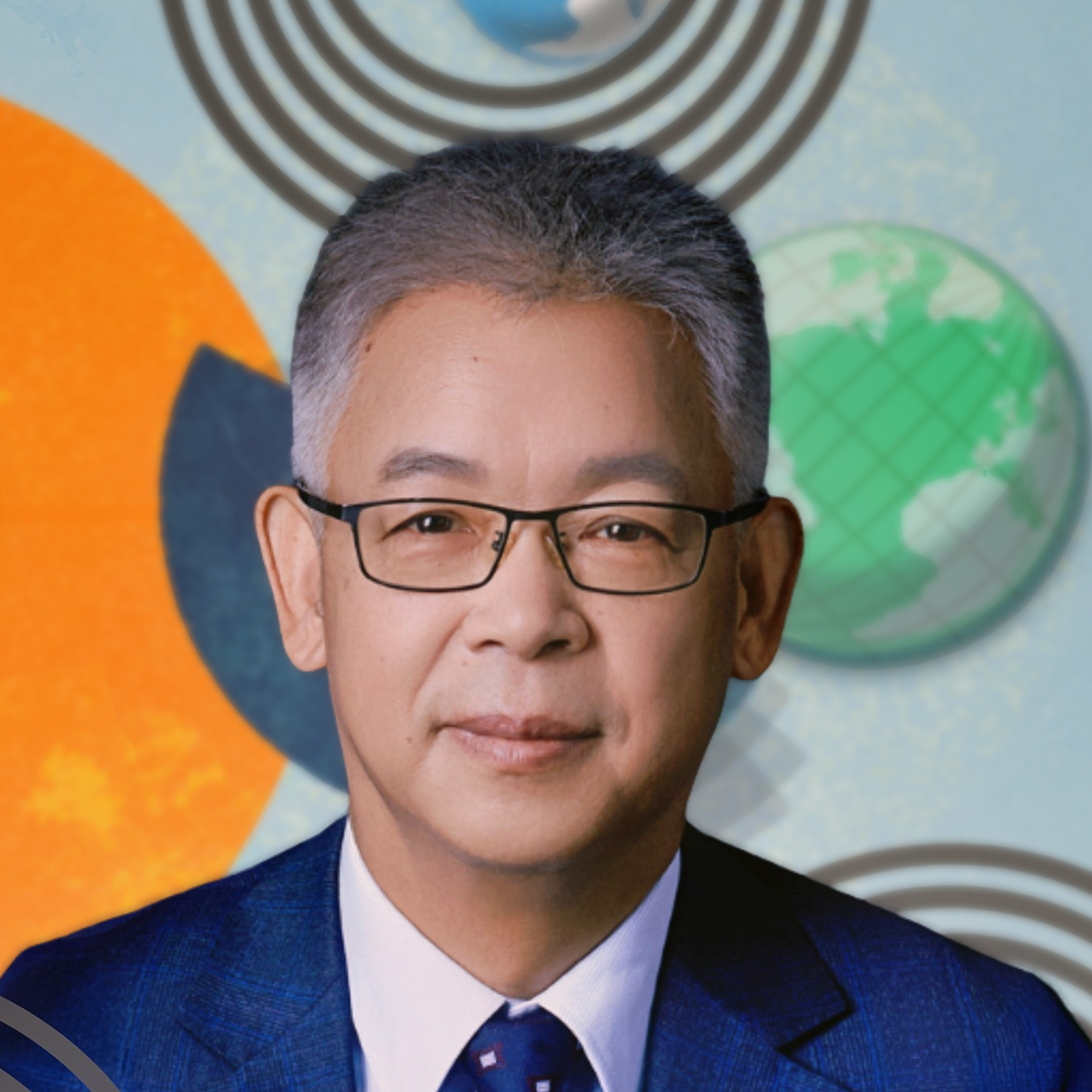
Rebalancing the Chinese economy
Description
In 2003, Premier Wen Jiabao warned that China's growth model was unbalanced between supply and demand, over-reliant on investment and exports. More than 20 years later, the imbalance is smaller — but China is vastly larger. What its economy produces and exports now moves global markets. The argument about China's external surplus is no longer just a spat between Beijing and Washington.
Yiping Huang, Dean of the National School of Development at Peking University, has written a chapter in the fourth Paris Report, published jointly by CEPR and Bruegel, examining China's structural imbalances from the inside. His argument: the same policies that powered 45 years of growth also suppressed household income and consumption. Factor market distortions, especially artificially low interest rates, kept the cost of capital down and subsidised state-owned enterprises; decentralised GDP-target competition pushed local governments toward investment and industrial expansion rather than services and household support.
The result was a powerful supply side with a persistently weak domestic demand side. When you produce more than you can sell at home and you are a small economy, you export the rest. When you are the world's second largest economy, the world notices.
China's consumption share of GDP rose from around 50% in 2010 to 57% in 2024, still well below the mid-seventies average of comparable economies, and two fresh crises complicate the path.
The property market has been contracting since mid-2021 and it is now a drag on local government finances, household wealth, and bank balance sheets. Local government subsidies have created overcapacity in new industries such as electric vehicles and batteries. Huang's conclusion is that rebalancing is necessary and achievable, but it requires the government stepping back from direct resource allocation, the private sector and market taking on larger roles in innovation, and a significant strengthening of social protection to give households both the income and the confidence to spend.
The report discussed in this series of episodes:
Rey, Hélène, Beatrice Weder di Mauro, and Jeromin Zettelmeyer (eds). 2026. The New Global Imbalances. Paris Report 4. CEPR Press and Bruegel. Free to download at cepr.org.
The chapter discussed in this episode:
Huang, Yiping. 2026. "Rebalancing of the Chinese economy: Challenges and policy options." In Rey, Weder di Mauro, and Zettelmeyer (eds), The New Global Imbalances. Paris Report 4. CEPR Press and Bruegel.
To cite this episode:
Phillips, Tim, and Yiping Huang. 2026. “Rebalancing the Chinese Economy”. VoxTalks Economics (podcast).
Assign this as extra listening. The citation above is formatted and ready for a reading list or VLE.
About Paris Report 4
The fourth Paris Report, The New Global Imbalances, is a joint publication of CEPR and Bruegel. It was edited by Hélène Rey (London Business School and CEPR), Beatrice Weder di Mauro (Geneva Graduate Institute and CEPR, and President of CEPR), and Jeromin Zettelmeyer (Bruegel and CEPR). The report examines how, in a high-debt and fragmented world, excess savings, rising surpluses, and rising deficits pose a risk to stability and undermine the global trading system. It is free to download at cepr.org.
About the guest
Yiping Huang is Dean of the National School of Development at Peking University. [verify URL before publishing] He is one of China's leading macroeconomists, with research spanning China's economic transition, financial reform, and the political economy of development. He has advised Chinese policymakers and i
Listen Now
Love PodBriefly?
If you like Podbriefly.com, please consider donating to support the ongoing development.
Support Us