Episode Details
Back to Episodes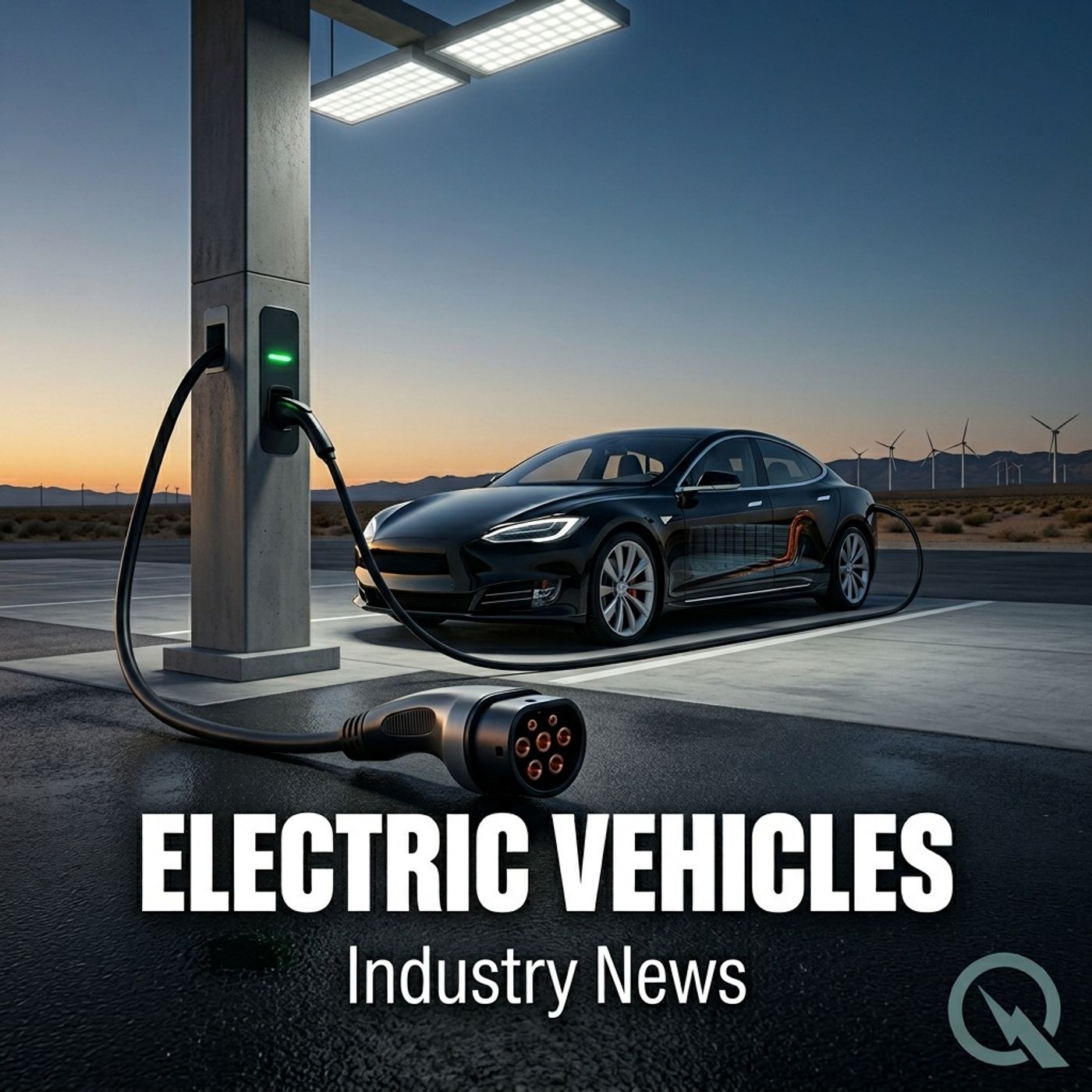
EV Industry Growth Accelerates: Tesla Robotaxi Expansion, Charging Innovation, and Global Market Momentum in 2026
Published 1 week, 3 days ago
Description
In the past 48 hours, the electric vehicle industry shows steady global momentum amid regional unevenness, highlighted by Elektros Inc.s announcement on April 19, 2026, advancing its patented multi-port EV charger to cut congestion and boost efficiency for multiple vehicles per unit.[1] This addresses key infrastructure bottlenecks as EV adoption grows.
Global EV sales hit record 20.7 million in 2025, up 20 percent from 2024, maintaining over 20 percent market share, with China dominating half of sales and the U.S. growing in low-teens but softening in Q4 2025 due to shifting incentives.[2] Early 2026 data indicates year-over-year growth persists selectively, favoring affordable crossovers with tax credits, while used EV prices dropped 20 to 30 percent from peaks, expanding buyer options.[2]
Tesla expanded its Robotaxi service to Dallas and Houston over the weekend, but availability stayed near zero percent, signaling scaling challenges despite the launch.[3] Emerging competitors like Elektros target charging innovations, while leaders invest heavily: Toyota committed 1 billion dollars in March 2026 to U.S. facilities for EVs and hybrids under Inflation Reduction Act incentives.[4] The UK allocated 1.65 million dollars more for EV programs through 2030, planning battery taxes by 2028 to balance fiscal policy.[4]
Compared to late 2025s incentive-driven pullback, current conditions reflect a maturing phase: global demand climbs double-digits, but U.S. consumers shift to leases and mainstream models amid higher interest rates and used-market depth.[2] Supply chains localize via U.S. and UK policies, easing disruptions. No major price drops or consumer pullbacks reported this week, with leaders like Tesla pushing robotaxis and Toyota scaling production to counter China-led competition.
Overall, the sector advances resiliently, prioritizing infrastructure and incentives over explosive early growth. (298 words)
For great deals today, check out https://amzn.to/44ci4hQ
This content was created in partnership and with the help of Artificial Intelligence AI
Global EV sales hit record 20.7 million in 2025, up 20 percent from 2024, maintaining over 20 percent market share, with China dominating half of sales and the U.S. growing in low-teens but softening in Q4 2025 due to shifting incentives.[2] Early 2026 data indicates year-over-year growth persists selectively, favoring affordable crossovers with tax credits, while used EV prices dropped 20 to 30 percent from peaks, expanding buyer options.[2]
Tesla expanded its Robotaxi service to Dallas and Houston over the weekend, but availability stayed near zero percent, signaling scaling challenges despite the launch.[3] Emerging competitors like Elektros target charging innovations, while leaders invest heavily: Toyota committed 1 billion dollars in March 2026 to U.S. facilities for EVs and hybrids under Inflation Reduction Act incentives.[4] The UK allocated 1.65 million dollars more for EV programs through 2030, planning battery taxes by 2028 to balance fiscal policy.[4]
Compared to late 2025s incentive-driven pullback, current conditions reflect a maturing phase: global demand climbs double-digits, but U.S. consumers shift to leases and mainstream models amid higher interest rates and used-market depth.[2] Supply chains localize via U.S. and UK policies, easing disruptions. No major price drops or consumer pullbacks reported this week, with leaders like Tesla pushing robotaxis and Toyota scaling production to counter China-led competition.
Overall, the sector advances resiliently, prioritizing infrastructure and incentives over explosive early growth. (298 words)
For great deals today, check out https://amzn.to/44ci4hQ
This content was created in partnership and with the help of Artificial Intelligence AI