Episode Details
Back to Episodes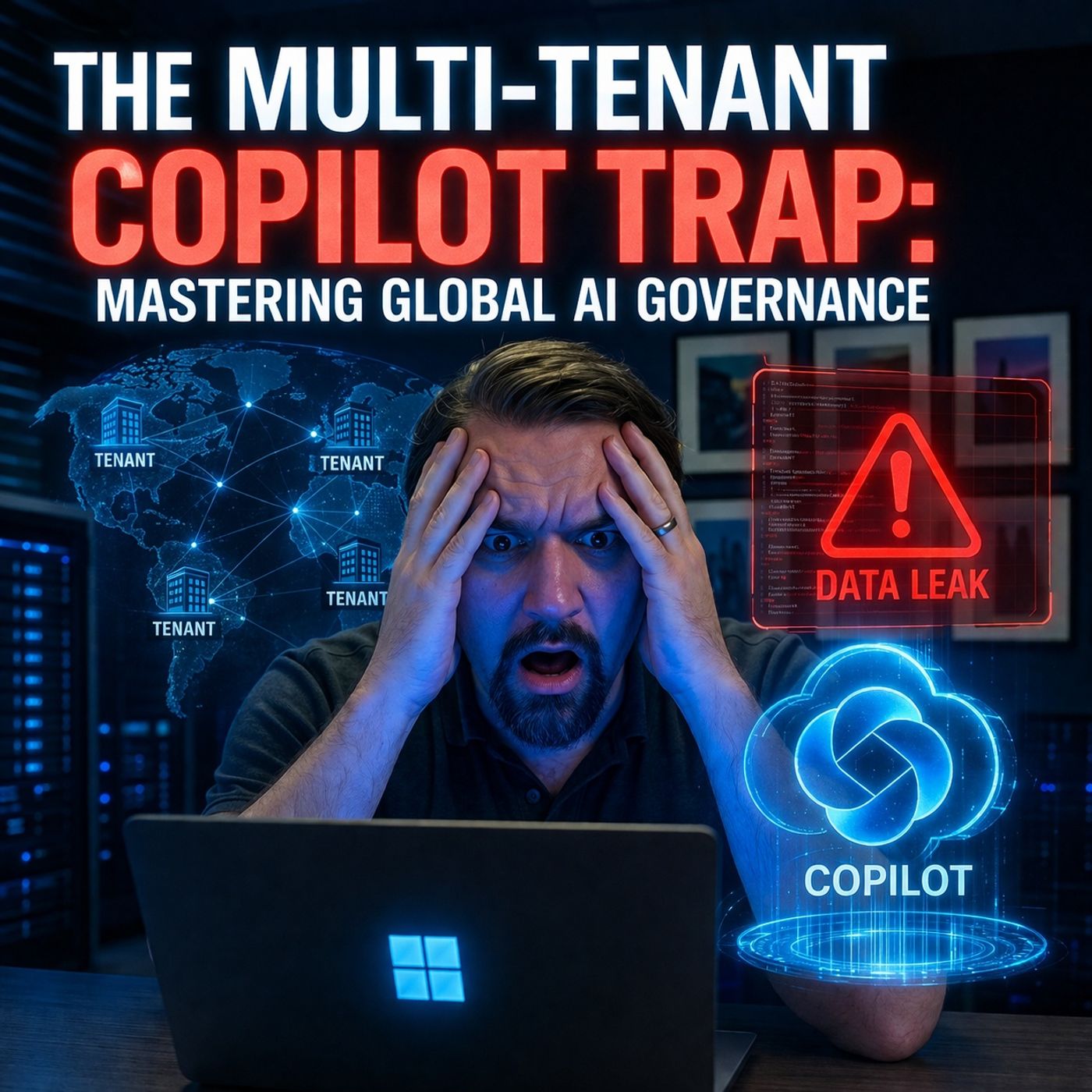
The Multi-Tenant Copilot Trap: Mastering Global AI Governance
Season 2
Published 3 months, 3 weeks ago
Description
Microsoft 365 Copilot is not a rollout decision. It is a governance decision with a very short runway. Most leadership teams approach it as enablement, but Copilot operates on the environment exactly as it exists today—not as you intend it to be tomorrow. In multi-tenant organizations, this creates a structural problem. AI operates within tenant boundaries, while risk moves across them. What looks like one unified Microsoft 365 environment is, in reality, a collection of independent systems with different controls, different maturity levels, and different exposure. In this episode, Mirko Peters breaks down why the illusion of a global AI control plane is dangerous, how governance drift accelerates with Copilot, and what model actually works when you need to scale safely across multiple tenants.
🧠 CORE IDEA
Most organizations believe they are enabling AI across one environment. They are not. They are activating AI across multiple independent governance systems that only appear connected.
👉 It exposes the differences inside it
⚠️ THE MULTI-TENANT COPILOT TRAP
The trap starts with familiarity. Everything looks connected—same vendor, same branding, shared identity. This creates the illusion of central control. But underneath:
👉 You have sovereign AI islands inside one company
🧩 WHY THIS BREAKS GOVERNANCE
When tenants drift, governance stops being comparable. Each tenant reports “we are governed”—but means something different:
👉 It lies structurally
🔄 WHY MANUAL GOVERNANCE FAILS AT SCALE
The natural response is to govern tenant by tenant. This feels disciplined—but it is not scalable. Manual governance creates variation over time:
👉 Not consistency
⚡ WHY COPILOT ACCELERATES THE PROBLEM
Copilot does not wait for governance maturity. It operates on what already exists:
👉 It removes the friction that used to hide it
🔐 WHY IDENTITY DOES NOT SOLVE GOVERNANCE
Many organizations assume identity is the solution. If users can move across tenants, governance should follow. It does not.
🧠 CORE IDEA
Most organizations believe they are enabling AI across one environment. They are not. They are activating AI across multiple independent governance systems that only appear connected.
- AI works within tenant boundaries
- Risk moves across tenant boundaries
- Governance does not automatically follow identity
👉 It exposes the differences inside it
⚠️ THE MULTI-TENANT COPILOT TRAP
The trap starts with familiarity. Everything looks connected—same vendor, same branding, shared identity. This creates the illusion of central control. But underneath:
- There is no single global AI admin center
- Governance is fragmented across Purview, Entra, and admin portals
- Each tenant enforces its own version of policy and data control
- Multiple AI environments
- Multiple policy realities
- Multiple levels of risk
👉 You have sovereign AI islands inside one company
🧩 WHY THIS BREAKS GOVERNANCE
When tenants drift, governance stops being comparable. Each tenant reports “we are governed”—but means something different:
- Audit enabled vs. audit usable
- Labels created vs. labels applied
- Identity connected vs. control aligned
- Copilot deployed vs. Copilot governed
- Leadership sees one program
- Reality is multiple operating conditions
- Evidence becomes inconsistent
👉 It lies structurally
🔄 WHY MANUAL GOVERNANCE FAILS AT SCALE
The natural response is to govern tenant by tenant. This feels disciplined—but it is not scalable. Manual governance creates variation over time:
- Each team interprets standards differently
- Each tenant moves at a different speed
- Local exceptions accumulate quietly
- Policy drift
- Access drift
- Rollout drift
👉 Not consistency
⚡ WHY COPILOT ACCELERATES THE PROBLEM
Copilot does not wait for governance maturity. It operates on what already exists:
- Existing permissions
- Existing oversharing
- Existing labeling gaps
- Existing audit limitations
- Hidden exposure becomes visible
- Overshared content becomes accessible
- Inconsistent controls become operational
👉 It removes the friction that used to hide it
🔐 WHY IDENTITY DOES NOT SOLVE GOVERNANCE
Many organizations assume identity is the solution. If users can move across tenants, governance should follow. It does not.
- Copilot operates within a single tenant context
- Permissions are enforced