Episode Details
Back to Episodes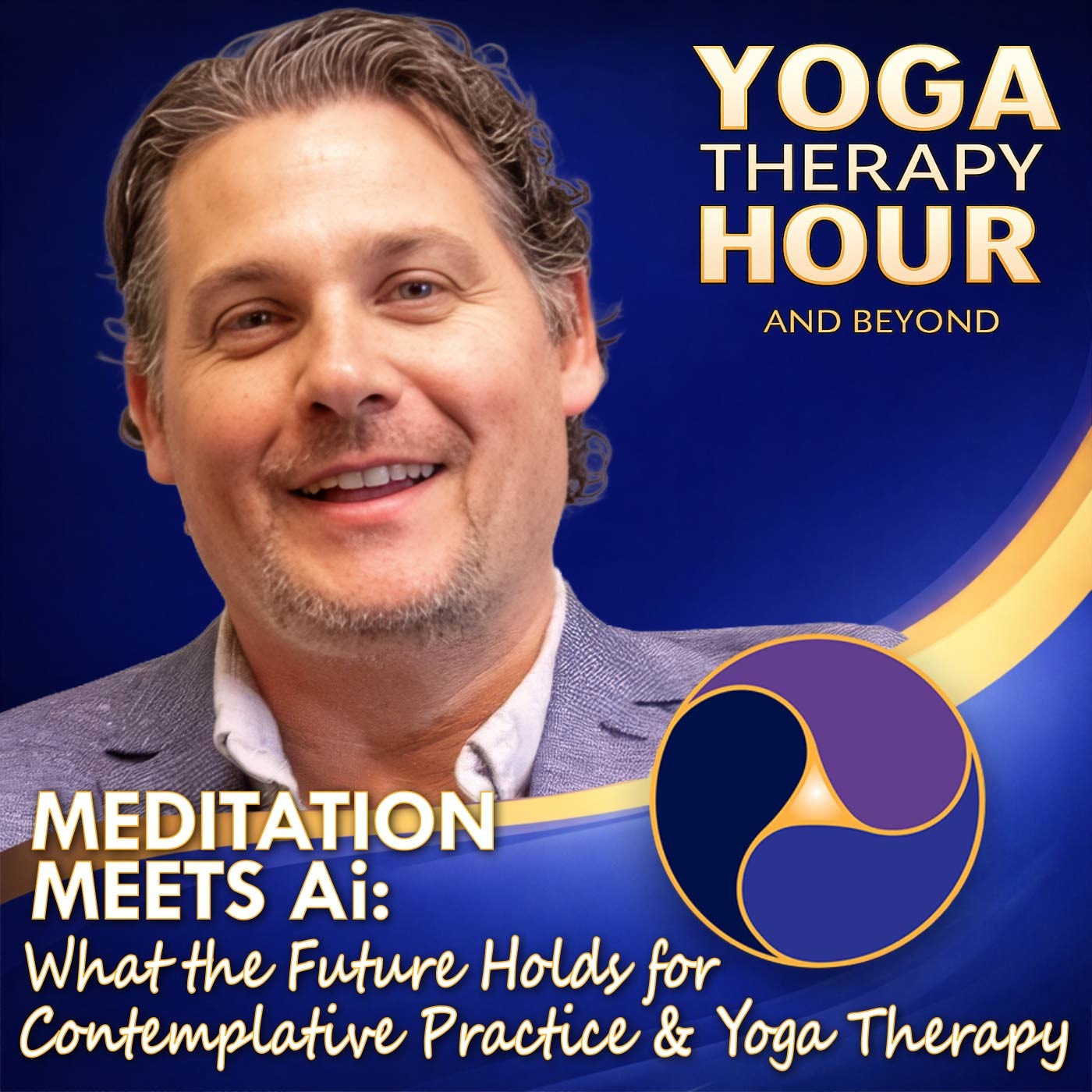
Meditation Meets AI: What the Future Holds for Contemplative Practice & Yoga Therapy
Description
Episode overview
In this episode, Amy sits down with Steve Haberlin to explore what’s changing in contemplative practice as artificial intelligence becomes woven into daily life. Steve shares why he created a customized GPT mindfulness guide (“MetaZen”), how he’s studying its use with doctoral students, and why he advocates a “human-first” approach: learn from a skilled teacher when possible, then use AI as a supportive bridge—not a replacement.
Together, they unpack the promise and the concerns: access and personalization on one side, and privacy, data harvesting, and ethical guardrails on the other. The conversation closes with a look at education’s future, the pressures faculty may face, and Steve’s upcoming book MetaMeditation.
What you’ll hear in this episode
Key themes
- How Amy and Steve connected through LinkedIn and why that kind of professional relationship-building matters now
- What a “custom GPT” is and how Steve designed MetaZen as a science-grounded mindfulness guide
- Live facilitation with AI: a brief demonstration of an AI-led mindfulness practice
- Why human relationship still matters in meditation training (and what’s lost if we remove it)
- The “opportunity gap”: the vulnerable window between learning a technique and sustaining it
- Why most meditation app users stop early and what might help people stay with practice
- AI as a “technological mirror”—helpful feedback, with real limits and risks
- Ethical concerns: hallucinations, red flags, over-agreeableness, and the dangers of using LLMs as therapy
- VR and avatars: what’s already here (Trip app + “Kokua”) and what may be next (smart glasses)
- Privacy and biometrics: what data is collected, what can be sold, and where oversight is still catching up
- Higher education: personalization, AI tutoring, and the likelihood of increased productivity pressure on faculty
- Steve’s upcoming book: MetaMeditation: How Neuroscience, Virtual Reality, and AI are Changing Practice and How You Can Benefit
Practical takeaways
- Think “blended model,” not replacement. AI can extend a teacher’s support—especially between sessions—without removing the relational core.
- Sustainability is the missing piece. Access is expanding, but adherence still drops off quickly; support structures matter.
- Attach practice to an existing habit. A 60-second breath anchor paired with a daily routine can build consistency.
- Keep humans in the loop for anything mental-health-adjacent. LLMs weren’t built for therapy, and risks increase when people treat them like clinicians.
- Privacy isn’t a side issue. As biometrics and usage data become standard, informed consent and oversight will be essential.
Steve’s Linked In: https://www.linkedin.com/in/steve-haberlin-ph-d-22390b55/
Steve Haberlin, Ph.D.
The link for Steve’s talk on how to build an AI Chat Bot:
Passcode: Av0=9%qq
Contact Amy @