Episode Details
Back to Episodes“Elementary Condensation” by Jan
Description
Previously in this series: Elementary Infra-Bayesianism
1. There's this paper
Earlier last week I got nerd-sniped by a paper called Condensation: a theory of concepts (Eisenstat 2025). It's the kind of paper where the abstract makes a claim so clean you assume you must be misreading it: roughly, there is a right answer to “what are the concepts in this data,” and any two agents who carve it up well enough will agree on what those concepts are.[1]
If that sounds like John Wentworth's natural abstractions hypothesis, yes, the family resemblance is strong. I wrote about something adjacent a while back. Condensation is a different formalization, but the punchline rhymes: structure in the data constrains what any good representation can look like. People on LessWrong seem to dig it, and I wanted to see what the fuss was about.
The paper is forty pages of math and gives you no algorithm; it tells you what a good carving looks like, not how to find one. I spent a slightly embarrassing amount of time trying to get the basic objects to do something on a computer. This post is how far I got.[2]
2. Concepts, scopes, and a score
Say [...]
---
Outline:
(00:13) 1. Theres this paper
(01:21) 2. Concepts, scopes, and a score
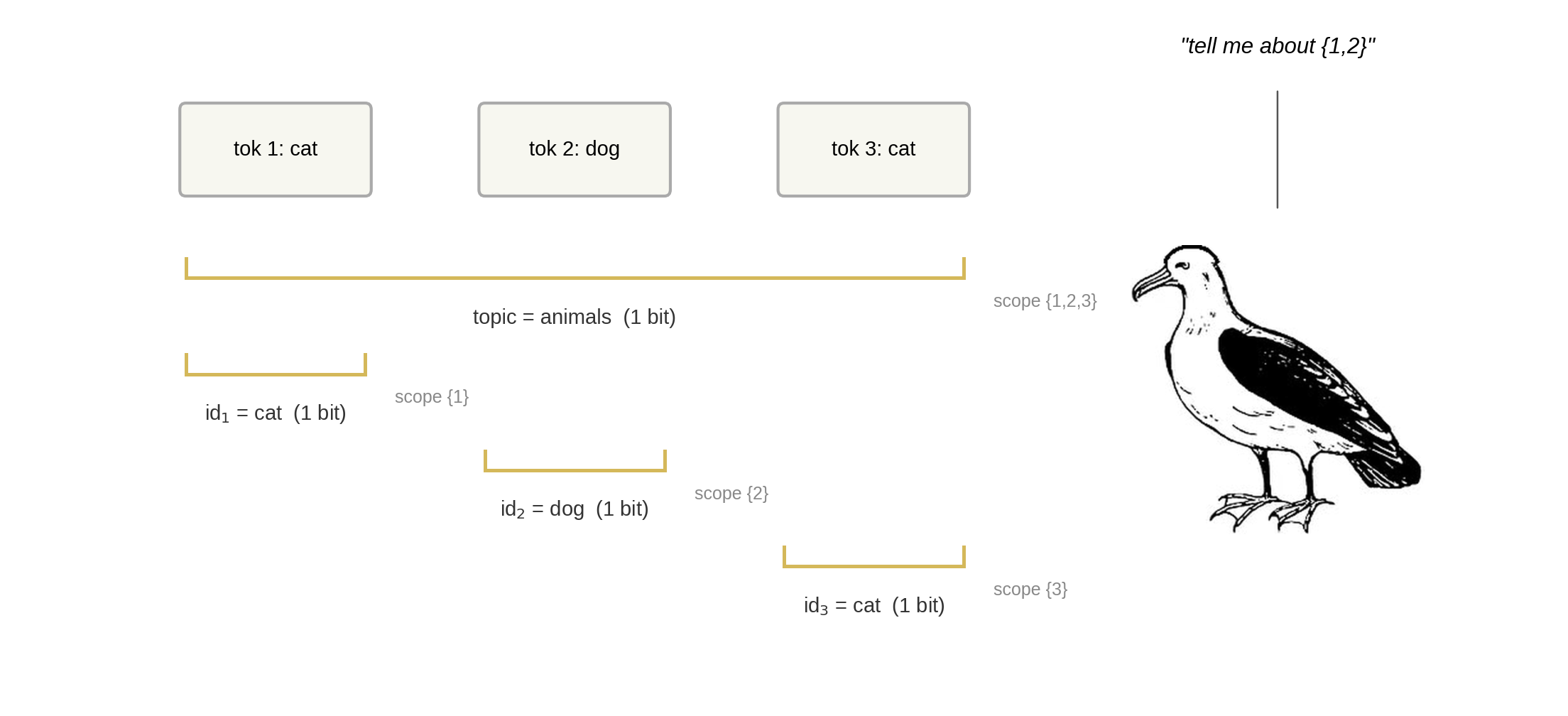
(03:55) 3. The same three tokens, three representations
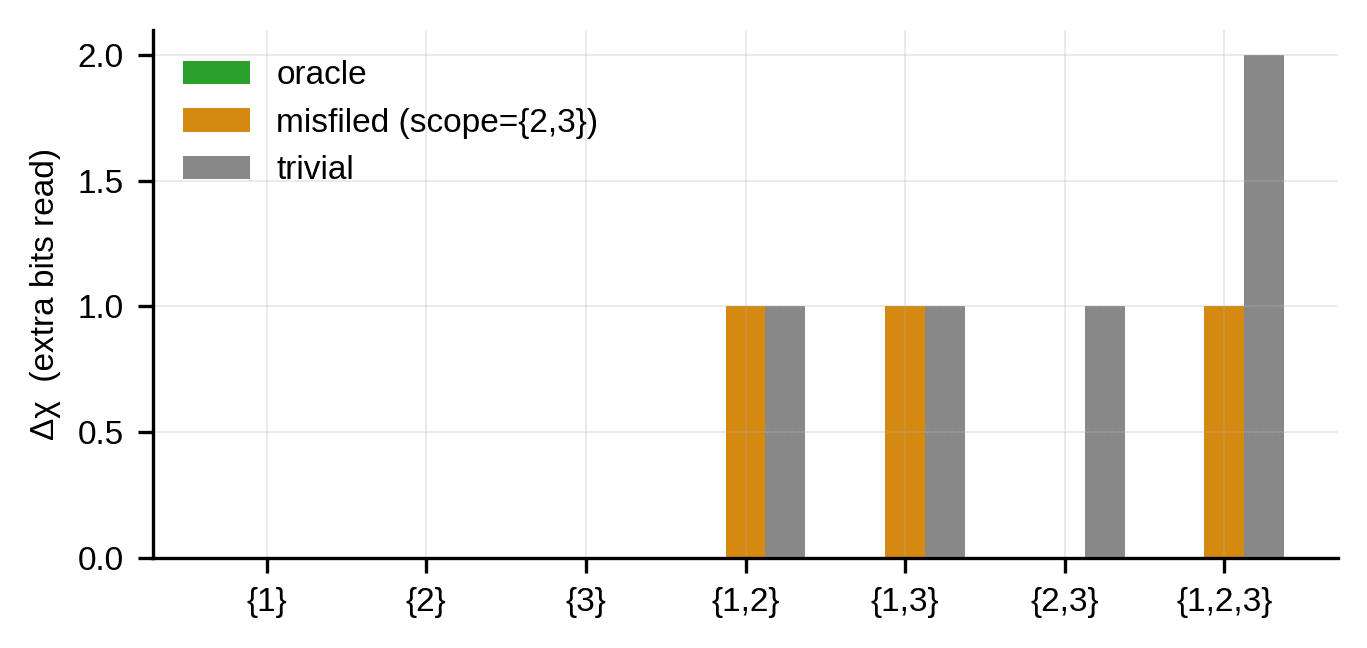
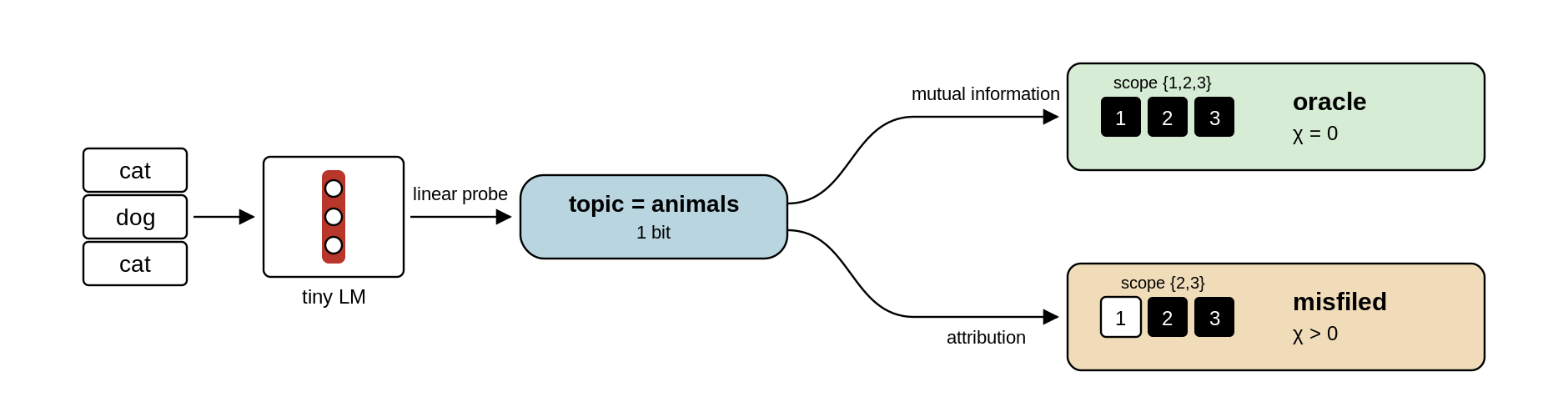
(06:54) 4. A model gives you concepts; scope is your problem
(08:44) 5. Does it work on real models?
(09:17) The pipeline
(10:55) The datasets
(13:11) Results
(14:23) Why PCA wins on induction
(15:26) 6. How far I got, and what worries me
The original text contained 22 footnotes which were omitted from this narration.
---
First published:
April 7th, 2026
Source:
https://www.lesswrong.com/posts/JKexLeze9kNhCYYzT/elementary-condensation
---
Narrated by TYPE III AUDIO.
---
Images from the article:
Listen Now
Love PodBriefly?
If you like Podbriefly.com, please consider donating to support the ongoing development.
Support Us