Episode Details
Back to Episodes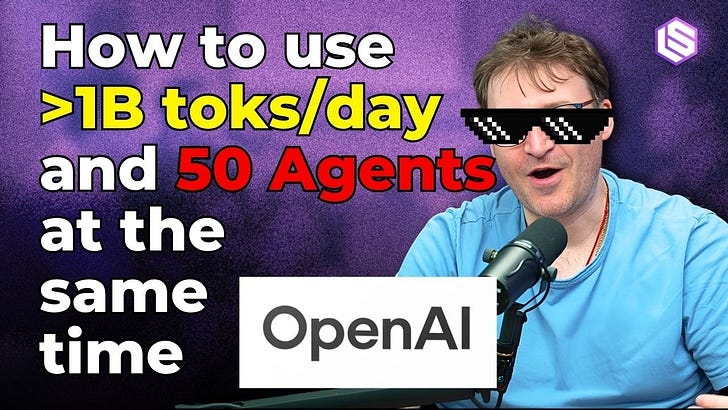
Extreme Harness Engineering for Token Billionaires: 1M LOC, 1B toks/day, 0% human code, 0% human review — Ryan Lopopolo, OpenAI Frontier & Symphony
Description
We’re proud to release this ahead of Ryan’s keynote at AIE Europe. Hit the bell, get notified when it is live! Attendees: come prepped for Ryan’s AMA with Vibhu after.
Move over, context engineering. Now it’s time for Harness engineering and the age of the token billionaires.
Ryan Lopopolo of OpenAI is leading that charge, recently publishing a lengthy essay on Harness Eng that has become the talk of the town:
In it, Ryan peeled back the curtains on how the recently announced OpenAI Frontier team have become OpenAI’s top Codex users, running a >1m LOC codebase with 0 human written code and, crucially for the Dark Factory fans, no human REVIEWED code before merge. Ryan is admirably evangelical about this, calling it borderline “negligent” if you aren’t using >1B tokens a day (roughly $2-3k/day in token spend based on market rates and caching assumptions):
Over the past five months, they ran an extreme experiment: building and shipping an internal beta product with zero manually written code. Through the experiment, they adopted a different model of engineering work: when the agent failed, instead of prompting it better or to “try harder,” the team would look at “what capability, context, or structure is missing?”
The result was Symphony, “a ghost library” and reference Elixir implementation (by Alex Kotliarskyi) that sets up a massive system of Codex agents all extensively prompted with the specificity of a proper PRD spec, but without full implementation:
The future starts taking shape as one where coding agents stop being copilots and start becoming real teammates anyone can use and Codex is doubling down on that mission with their Superbowl messaging of “you can just build things”.
Across Codex, internal observability stacks, and the multi-agent orchestration system his team calls Symphony, Ryan has been pushing what happens when you optimize an entire codebase, workflow, and organization around agent legibility instead of human habit.
We sat down with Ryan to dig into how OpenAI’s internal teams actually use Codex, why the real bottleneck in AI-native software development is now human attention rather than tokens, how fast build loops, observability, specs, and skills let agents operate autonomously, why software increasingly needs to be written for the model as much as for the engineer, and how Frontier points toward a future where agents can safely do economically valuable work across the enterprise.
We discuss:
* Ryan’s background from Snow