Episode Details
Back to Episodes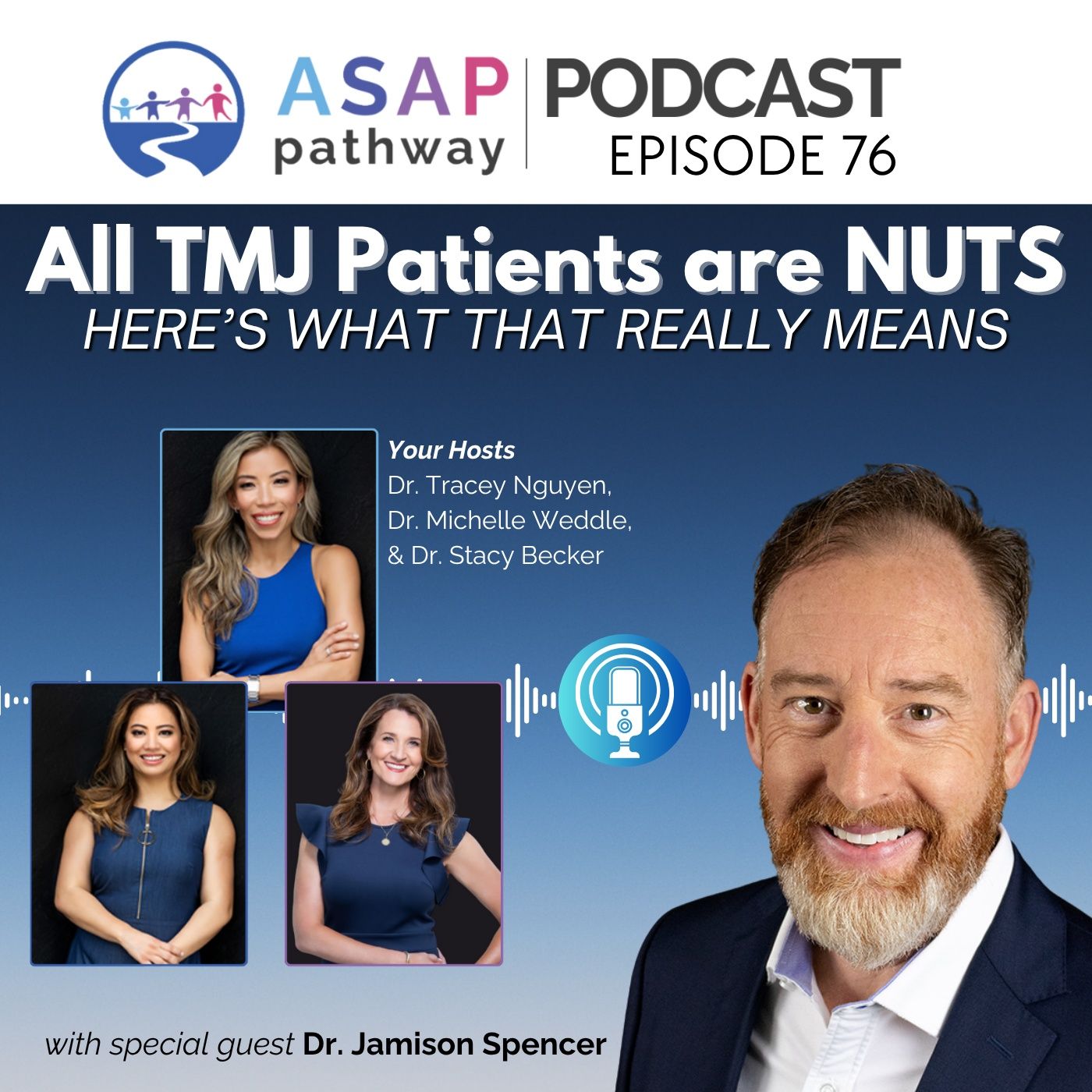
Ep.76, “All TMJ Patients Are NUTS”… Here’s What That Really Means, Dr. Jamison Spencer
Season 5
Episode 9
Published 2 months, 3 weeks ago
Description
📝 In this episode of ASAP Pathway, hosts Drs. Stacy, Michelle, and Tracey are joined by a highly respected leader in the field of TMJ and dental sleep medicine, Dr. Jamison Spencer. With nearly three decades of experience treating over 25,000 patients, Dr. Spencer brings a powerful and paradigm-shifting perspective to a topic many dentists avoid: temporomandibular joint disorders (TMJ).
Why are TMJ patients often labeled as “difficult”? Why do so many clinicians feel unprepared to treat them? And perhaps most importantly—are we sending patients to surgery when we don’t have to? This conversation dives deep into the gaps in dental education, the misunderstood progression of TMJ dysfunction (from clicking to locking).
Dr. Spencer challenges long-held beliefs and introduces emerging, non-surgical approaches—like platelet-rich fibrin (PRF)—that are changing outcomes for even the most complex cases. The discussion also connects TMJ to airway, growth and development, and early intervention in children—highlighting why dentists play a central role in both prevention and long-term health outcomes. This is more than a clinical conversation—it’s a call to rethink how we diagnose, treat, and truly understand TMJ.
About Dr Jamison Spencer
Learn Adult Dental Sleep Medicine and TMJ Therapy: The Spencer Study Club
⏱️ CHAPTERS
00:00 — Intro + ASAP Pathway welcome
00:29 — Meet Dr. Jameson Spencer
03:07 — Spencer Study Club + TMJ education
04:14 — Why dentists avoid TMJ patients
06:38 — “All TMJ patients are nuts” explained
07:28 — The problem with dental education on TMJ
08:23 — The dangerous gap: do nothing vs surgery
08:56 — PRF: A game changer in TMJ treatment
10:02 — Why surgery often makes TMJ worse
11:12 — Patients flying in to avoid surgery
12:26 — Why PRF works (and why it’s different)
13:19 — Peptides, exosomes, and regenerative medicine
14:51 — Dentistry vs medicine: prevention vs sick care
16:20 — Why most TMJ surgeries can be avoided
17:48 — What patients actually care about: pain + function
19:57 — Can joints actually heal? (Shocking cases)
21:37 — “That’s not possible”… but it is
23:15 — Why surgeons don’t want to do TMJ surgery
24:54 — You can always do surgery later
26:00 — TMJ, airway, and anatomy connection
27:28 — Early signs: what to look for in kids
28:06 — Disc displacement explained simply
29:06 — Why orthodontics may trigger TMJ symptoms
30:03 — The bite is the dictator
31:08 — Why the body prioritizes survival over structure
32:12 — Clicking → locking progression
33:14 — The biggest misconception about jaw clicking
34:32 — Why dentists misunderstand TMJ anatomy
35:33 — Ignoring the disc = ignoring the problem
36:24 — Why anatomy must be respected in treatment
37:46 — Why temporary fixes don’t last
39:00 — Occlusion vs muscles vs joints: what really matters
40:25 — TMJ and airway connection in kids
41:10 — Growth implications of disc displacement
42:03 — Rethinking orthodontics and jaw position
43:00 — Why changing anatomy matters long-term
44:20 — Treatment philosophy: options, not dogma
🧠 Key Learnings
Why are TMJ patients often labeled as “difficult”? Why do so many clinicians feel unprepared to treat them? And perhaps most importantly—are we sending patients to surgery when we don’t have to? This conversation dives deep into the gaps in dental education, the misunderstood progression of TMJ dysfunction (from clicking to locking).
Dr. Spencer challenges long-held beliefs and introduces emerging, non-surgical approaches—like platelet-rich fibrin (PRF)—that are changing outcomes for even the most complex cases. The discussion also connects TMJ to airway, growth and development, and early intervention in children—highlighting why dentists play a central role in both prevention and long-term health outcomes. This is more than a clinical conversation—it’s a call to rethink how we diagnose, treat, and truly understand TMJ.
About Dr Jamison Spencer
Learn Adult Dental Sleep Medicine and TMJ Therapy: The Spencer Study Club
⏱️ CHAPTERS
00:00 — Intro + ASAP Pathway welcome
00:29 — Meet Dr. Jameson Spencer
03:07 — Spencer Study Club + TMJ education
04:14 — Why dentists avoid TMJ patients
06:38 — “All TMJ patients are nuts” explained
07:28 — The problem with dental education on TMJ
08:23 — The dangerous gap: do nothing vs surgery
08:56 — PRF: A game changer in TMJ treatment
10:02 — Why surgery often makes TMJ worse
11:12 — Patients flying in to avoid surgery
12:26 — Why PRF works (and why it’s different)
13:19 — Peptides, exosomes, and regenerative medicine
14:51 — Dentistry vs medicine: prevention vs sick care
16:20 — Why most TMJ surgeries can be avoided
17:48 — What patients actually care about: pain + function
19:57 — Can joints actually heal? (Shocking cases)
21:37 — “That’s not possible”… but it is
23:15 — Why surgeons don’t want to do TMJ surgery
24:54 — You can always do surgery later
26:00 — TMJ, airway, and anatomy connection
27:28 — Early signs: what to look for in kids
28:06 — Disc displacement explained simply
29:06 — Why orthodontics may trigger TMJ symptoms
30:03 — The bite is the dictator
31:08 — Why the body prioritizes survival over structure
32:12 — Clicking → locking progression
33:14 — The biggest misconception about jaw clicking
34:32 — Why dentists misunderstand TMJ anatomy
35:33 — Ignoring the disc = ignoring the problem
36:24 — Why anatomy must be respected in treatment
37:46 — Why temporary fixes don’t last
39:00 — Occlusion vs muscles vs joints: what really matters
40:25 — TMJ and airway connection in kids
41:10 — Growth implications of disc displacement
42:03 — Rethinking orthodontics and jaw position
43:00 — Why changing anatomy matters long-term
44:20 — Treatment philosophy: options, not dogma
🧠 Key Learnings
- TMJ patients are often misunderstood—not difficult.
- Most dentists are not properly trained to diagnose or treat TMJ.
- Patients are too often pushed toward surgery too quickly.
- There are effective non-surgical options for TMJ treatment.
- Platelet-Rich Fibrin (PRF) is emerging as a powerful treatment tool.
- Patient outcomes should be measur