Episode Details
Back to Episodes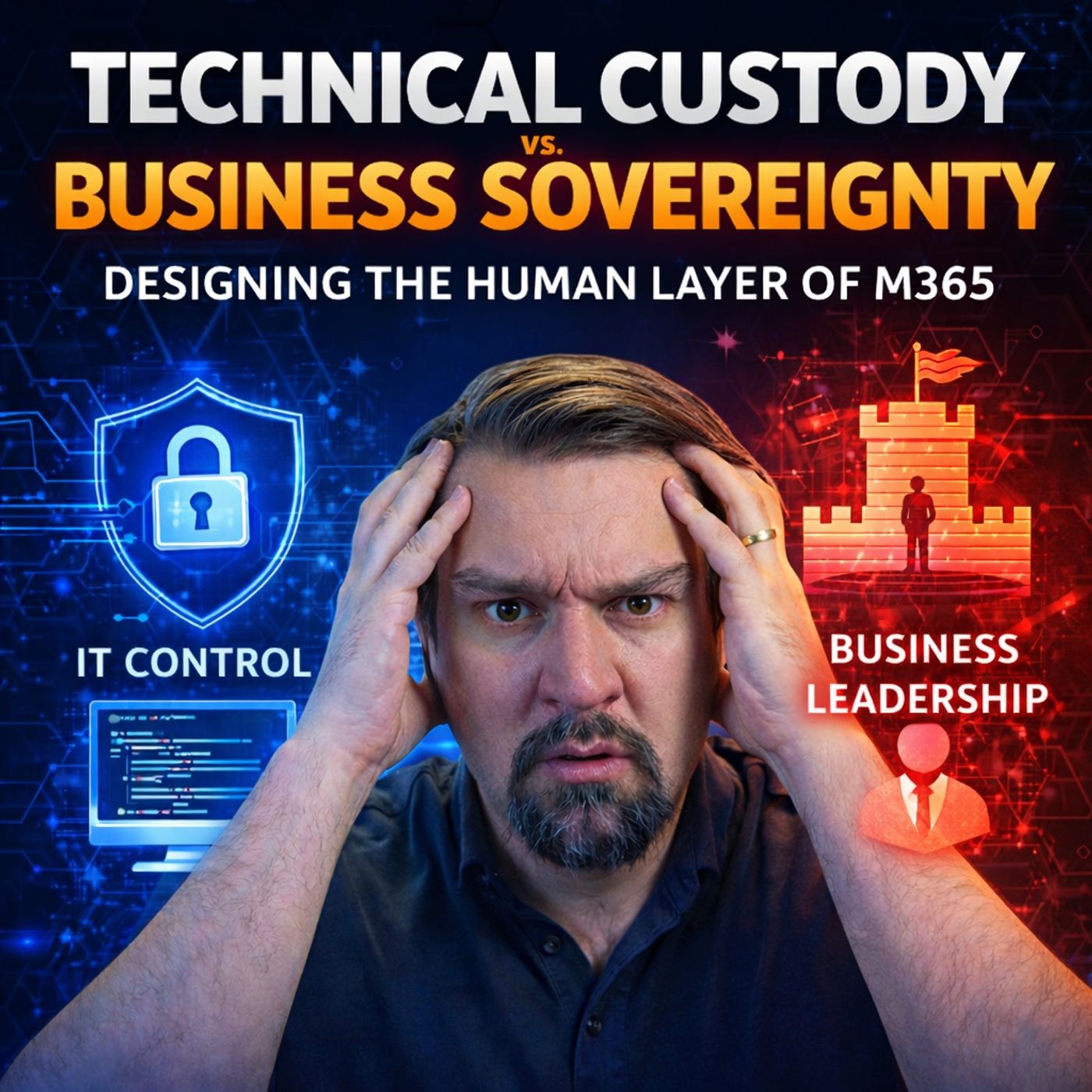
Technical Custody vs. Business Sovereignty: Designing the Human Layer of M365
Season 1
Published 4 months ago
Description
Microsoft 365 governance, ownership, and accountability are broken in most organizations. The idea of shared responsibility in Microsoft 365 sounds right—but in reality, it creates an ownership vacuum across Teams, SharePoint, Power Platform, and Copilot. When everyone is responsible, no one is accountable. This episode explains the critical difference between technical custody (IT responsibility) and business sovereignty (true ownership of data and decisions)—and why your M365 governance model fails without a designed human layer.
📈 WHAT YOU WILL LEARN
Most organizations confuse: 👉 Technical custody (IT runs the platform)
with
👉 Business sovereignty (who owns meaning, data, and decisions) This creates a structural gap where:
🏗️ THE SOLUTION: THE 3 OWNERSHIP LAYERS 1. Platform Ownership (IT / Entra)
⚡ WHY THIS MATTERS FOR AI (COPILOT) Copilot doesn’t create problems—it reveals them.
📈 WHAT YOU WILL LEARN
- Why shared responsibility in Microsoft 365 creates hidden risk
- The difference between technical custody vs. business sovereignty
- How orphaned Teams, external sharing, and retention gaps are symptoms of missing ownership
- Why RACI models fail in dynamic cloud environments
- How to design service ownership, data ownership, and platform ownership
- Why Microsoft Entra, Purview, and DLP only work with real accountability
- How ownership directly impacts Copilot quality, AI trust, and business performance
- Shared responsibility often means undefined accountability
- Governance fails when ownership is invisible or optional
- IT can manage systems—but cannot own business meaning
- External sharing risk comes from lack of closure, not access
- Retention without ownership is compliance theater
- AI (Copilot) exposes data ownership problems instantly
- Clear ownership reduces friction and speeds up decisions
- Governance must be designed into the system—not documented
Most organizations confuse: 👉 Technical custody (IT runs the platform)
with
👉 Business sovereignty (who owns meaning, data, and decisions) This creates a structural gap where:
- IT keeps things running
- The business uses the system
- Compliance defines rules
- Ownerless Teams
- Permanent external sharing
- Unclassified data
- Zombie Power Platform apps
- Orphaned Workspaces
- Teams created fast, but ownership not sustained
- Owners leave → no reassignment
- Data persists without accountability
- Links created for speed
- No lifecycle → access stays forever
- Risk accumulates silently over time
- Policies exist
- Labels exist
- But no one owns classification or meaning
🏗️ THE SOLUTION: THE 3 OWNERSHIP LAYERS 1. Platform Ownership (IT / Entra)
- Identity, access, tenant health
- Provides technical custody
- Teams collaboration
- External sharing
- Power Platform environments
- Meaning of information
- Classification & lifecycle
- Accountability for outcomes
⚡ WHY THIS MATTERS FOR AI (COPILOT) Copilot doesn’t create problems—it reveals them.
- Bad ownership → bad permissions
- Bad permissions → bad AI grounding
- Bad grounding → low trust in AI
- Struggle with M365 governance at scale
- See oversharing, chaos, or unclear ownership
- Want to prepare for Copilot and AI adoption
- Are stuck in alignment meetings instead of execution
- Assign real ownership
- Design accountability into the system
- Make governance scalable
- Tu