Episode Details
Back to Episodes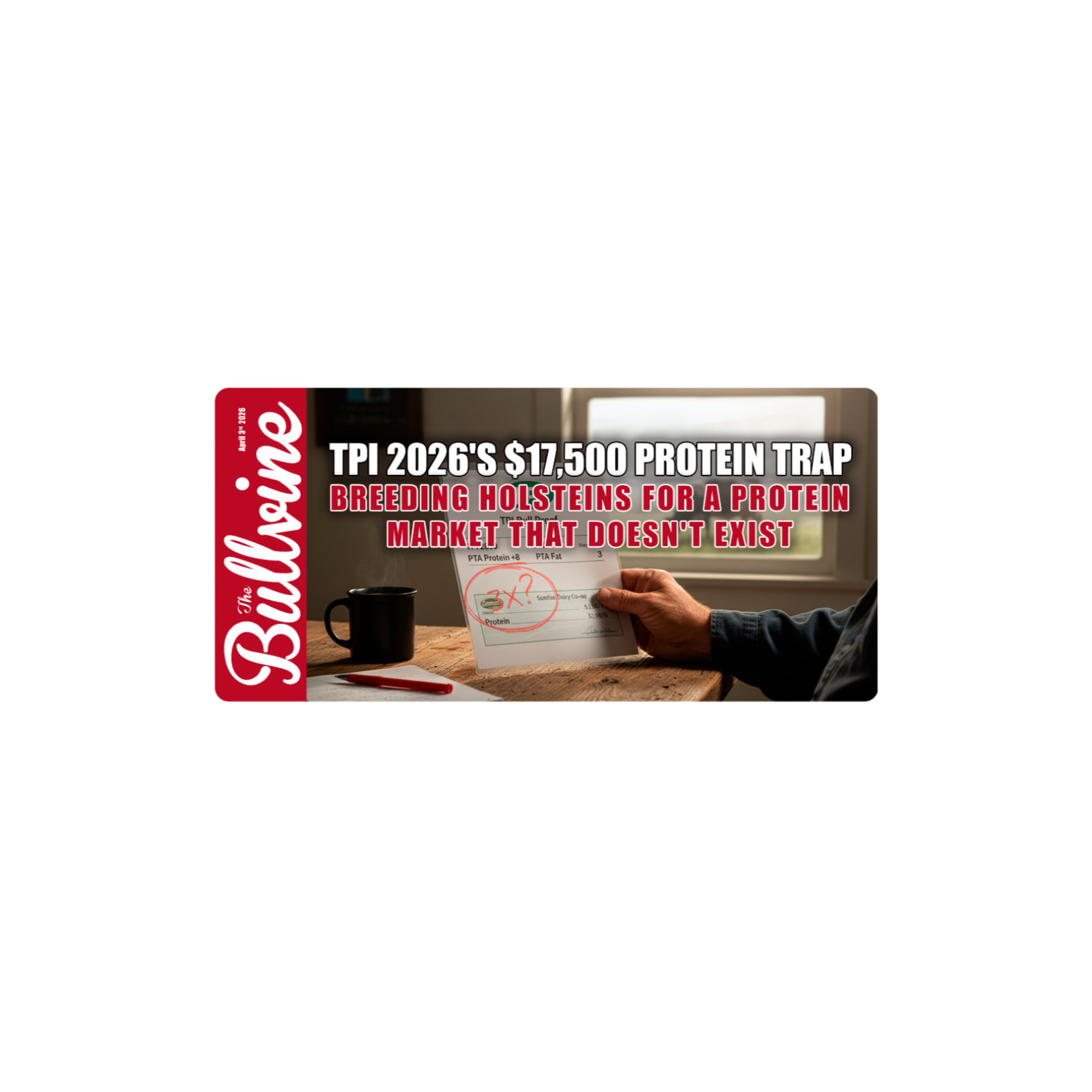
E528 TPI 2026’s $17,500 Protein Trap: Breeding Holsteins for a Protein Market That Doesn’t Exist
Description
Most Holstein breeders are quietly shifting their sire lists after the latest TPI update — without ever checking whether the new formula actually matches their milk check. This episode dissects TPI 2026’s 24P:14F production weights and makes an uncomfortable claim: a 500‑cow herd that blindly follows the protein‑heavy signal can bleed around $17,500 a year in component revenue compared to a herd that simply breeds for total fat + protein. If you rely on TPI to define “good bulls,” this conversation will force you to decide whether you’re optimizing for processor preferences or your own profitability.
Key Takeaways:
· Why the shift from 19P:19F to 24P:14F is a directional change, not a minor tweak, in how Holstein genetics are being rewarded.
· How the new TPI formula effectively values one pound of protein like ~1.7 pounds of fat — in a market where recent USDA Class III data still pays more per pound for fat.
· The simple barn‑math scenario showing how a 500‑cow herd can give up ~15 lb of fat to gain ~5 lb of protein and end up ~$35/cow/year behind.
· The “3× protein” break‑even rule — and why US component prices have never come close to justifying that trade.
· How TPI’s internal economics (FE$) actually value fat higher than protein, even as the external production weights do the opposite.
· Why Net Merit 2025 and Lactanet’s LPI move in a very different direction than TPI — and what that says about whose economics each index serves.
· A practical 30/90/365‑day playbook to audit your bull battery, stop over‑selecting on the protein‑to‑fat ratio, and re‑anchor your program on real component dollars.
· The key question every progressive breeder should be asking: “Does this index describe the cow my contract pays best, or just the cow the formula designer prefers?”
This episode doesn’t just recap a proof run; it pulls the hood off the economic assumptions driving modern Holstein breeding. You’ll hear a step‑by‑step breakdown of how the new TPI 2026 production slice (24% protein, 14% fat) changes selection pressure over the next decade and why that matters if you’re paid on components, not fluid volume. We walk through scenario math on a realistic 500‑cow Holstein herd, comparing a TPI‑driven, protein‑leaning mating strategy against a “boring” Net Merit / total‑CFP strategy that simply maximizes fat + protein sold.
Along the way, we confront a key contradiction: TPI’s own Feed Efficiency Dollar engine values fat at $1.86/lb and protein at $1.75/lb, yet the production weighting gives protein 71% more leverage than fat. Net Merit 2025, using similar economics, moves the opposite way — increasing the emphasis on fat and penalizing big cows. Lactanet’s LPI explicitly ties its 40F:60P shift to Canadian quota pricing. The result is a hard question for US herds on Class III grids: if your system still pays more per pound for fat, why are you letting a protein‑tilted index define your “best” bulls?
For the full article, charts, and the 30/90/365‑day bull‑audit checklist discussed in this episode, visit https://www.thebullvine.com/genetic-evaluation-system/tpi-2026s-17500-protein-trap-breeding-holsteins-for-a-protein-market-that-doesnt-exist/ and look for the feature on the TPI 2026 protein trap. Additional links to data sources, USDA component pricing, and index documentation are available on the episode page.