Episode Details
Back to Episodes“Impact of Holocaust on soil nematodes, mites, and springtails” by Niki Dupuis
Published 2 months, 2 weeks ago
Description
Summary
- I estimate the Holocaust increased the living time of (wild) soil nematodes, mites, and springtails.
- My best guess is that those soil invertebrates have negative lives, so I think that indirectly increasing their animal-years by mass murdering millions of people was harmful on net.
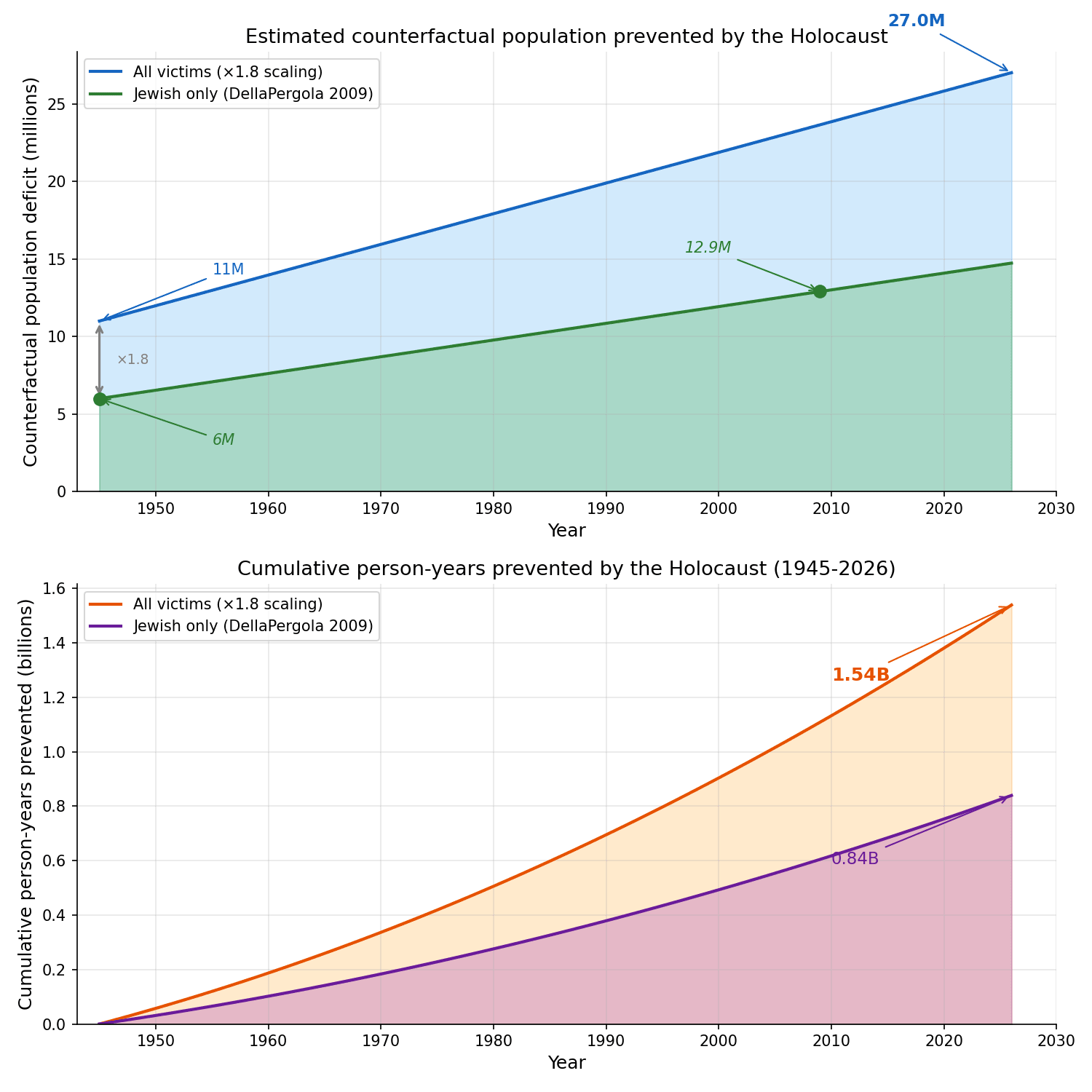
- I have been estimating the cost-effectiveness of various interventions accounting for effects on soil nematodes, mites, and springtails. Any event which causes a large and sustained change in human population affects agricultural land use, and therefore soil invertebrate welfare. The Holocaust killed 1.1*10^7 people and prevented an estimated 2.7*10^7 people from existing by 2026. I am not aware of any previous analysis of the Holocaust's impact on soil invertebrates. In this post, I estimate the direct effects from land use for camps, graves, and memorials, and the indirect effects from the human population deficit and reduced agricultural land use.
- I calculate that the naive case of the Holocaust being beneficial to soil invertebrates due to increased land use is overshadowed by the indirect impacts to soil land use caused by preventing 2.7*10^7 human lives.
- Direct land use effect of concentration camps, mass graves, and memorials constitute -8.88*10^9 QALYs or -807 QALYs per Holocaust-affected-person (HAP)
- [...]
---
Outline:
(00:12) Summary
(02:47) The direct impacts on soil invertebrate populations and welfare from land use and infrastructure for the Holocaust
(07:50) The indirect impacts on soil invertebrate populations and welfare from changes to human population and associated agricultural land use
(11:04) The indirect impact of the Holocaust on the population of people of Jewish descent in Effective Altruism
(12:31) My recommendations
---
First published:
April 1st, 2026
---
Narrated by TYPE III AUDIO.
---
Images from the article:

Apple Podcasts and Spotify do not show images in the episode description. Try
Listen Now
Love PodBriefly?
If you like Podbriefly.com, please consider donating to support the ongoing development.
Support Us