Episode Details
Back to Episodes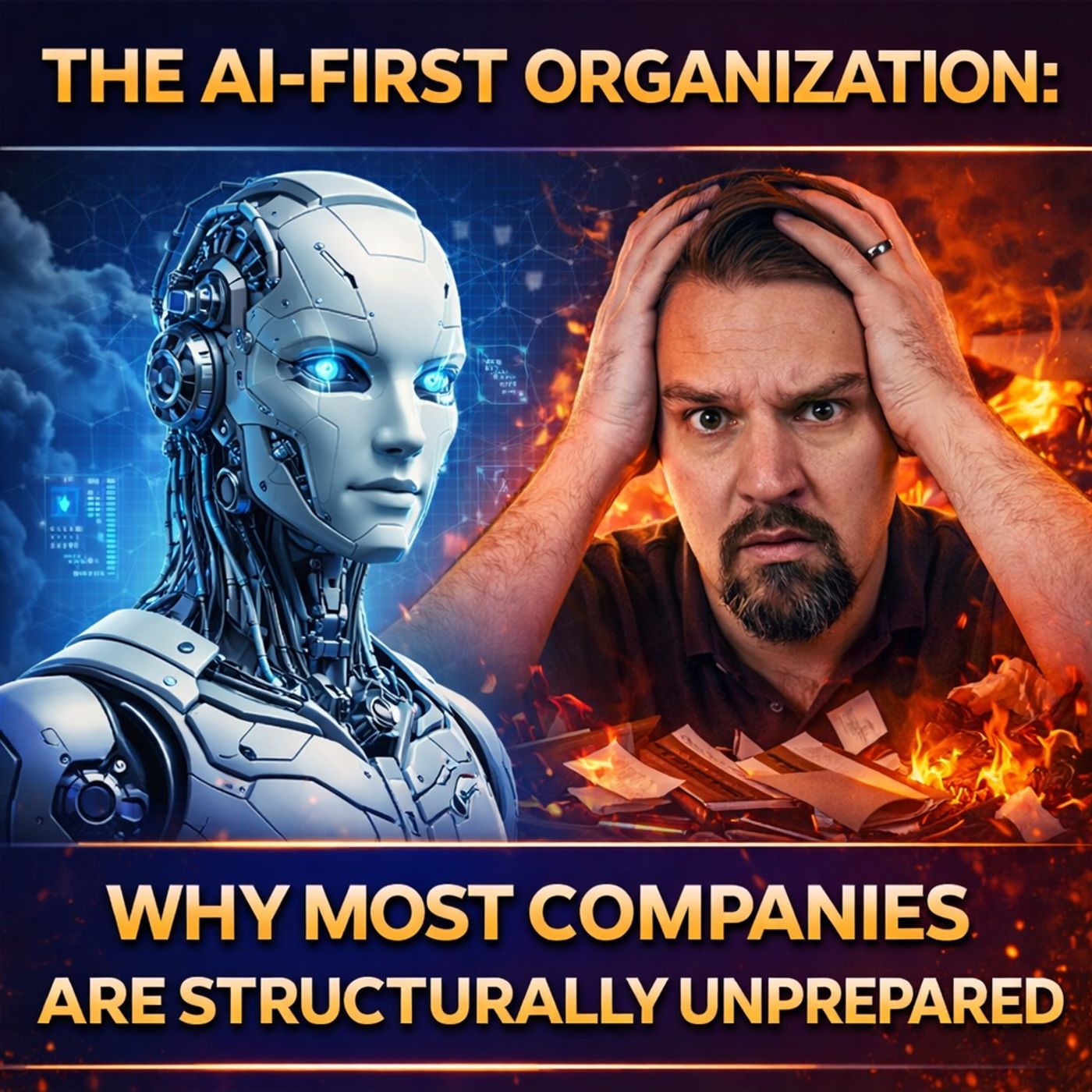
Microsoft 365 & AI: Why Most Organizations Are Not Structurally Ready for Copilot
Season 1
Published 4 months, 1 week ago
Description
In this episode of m365.fm, Mirko Peters explains why most organizations are failing at AI — not because the technology is wrong, but because their operating model cannot absorb it. From Microsoft 365 environments to Copilot rollouts, the real issue is not adoption. It is structural readiness.
AI is not your next tool. It is a system dependency test. Every Microsoft 365 environment that lacks clean data, clear ownership, and defined governance will expose those gaps the moment you deploy Copilot or any AI capability at scale. This episode breaks down exactly what structural readiness means in practice and why it determines whether your AI investment delivers results or quietly fails.
WHAT YOU WILL LEARN
Most organizations believe AI readiness is a technology question. It is not. It is an organizational design question. When you deploy Microsoft Copilot into a Microsoft 365 environment where data is unstructured, permissions are inconsistent, and ownership is unclear, the AI does not fail — it succeeds at exposing exactly how your organization actually operates. That exposure is uncomfortable. But it is also the most accurate diagnostic your organization has ever received.
Structural readiness for AI means your Microsoft 365 environment has clean, governed data that an AI can reason over. It means your processes are defined well enough that automation can follow them. It means your people know who owns what, and your systems enforce it. Without that foundation, Copilot becomes a confidence amplifier for broken processes — faster, more visible, and harder to ignore.
WHY MOST AI INITIATIVES STALL IN MICROSOFT 365
AI is not your next tool. It is a system dependency test. Every Microsoft 365 environment that lacks clean data, clear ownership, and defined governance will expose those gaps the moment you deploy Copilot or any AI capability at scale. This episode breaks down exactly what structural readiness means in practice and why it determines whether your AI investment delivers results or quietly fails.
WHAT YOU WILL LEARN
- Why Microsoft 365 AI initiatives fail due to structural problems, not technology limitations
- What structural readiness for Microsoft Copilot actually looks like inside an organization
- How data quality, ownership, and governance in Microsoft 365 determine AI outcomes
- Why most Copilot rollouts expose existing problems rather than solve them
- How to assess whether your Microsoft 365 environment is ready for AI at scale
- What needs to change in your operating model before AI can deliver real value
Most organizations believe AI readiness is a technology question. It is not. It is an organizational design question. When you deploy Microsoft Copilot into a Microsoft 365 environment where data is unstructured, permissions are inconsistent, and ownership is unclear, the AI does not fail — it succeeds at exposing exactly how your organization actually operates. That exposure is uncomfortable. But it is also the most accurate diagnostic your organization has ever received.
Structural readiness for AI means your Microsoft 365 environment has clean, governed data that an AI can reason over. It means your processes are defined well enough that automation can follow them. It means your people know who owns what, and your systems enforce it. Without that foundation, Copilot becomes a confidence amplifier for broken processes — faster, more visible, and harder to ignore.
WHY MOST AI INITIATIVES STALL IN MICROSOFT 365
- Microsoft 365 data is unstructured, unowned, and not governed at the source
- Copilot is deployed before the underlying information architecture is ready
- AI is treated as a capability layer, not as a dependency on organizational design
- Leadership expects AI to fix broken processes rather than expose and redesign them
- There is no clear ownership model for the data that AI is expected to reason over
- AI readiness in Microsoft 365 is a structural and organizational design problem, not a technology problem
- Microsoft Copilot will expose your data governance gaps faster than any audit ever could
- Structural readiness means clean data, defined ownership, and governed processes — before AI, not after
- Organizations that succeed with AI in Microsoft 365 design their systems for it before deploying it
- The question is not whether to adopt Microsoft Copilot — it is whether your organization is built to absorb it
- IT leaders and CIOs evaluating Microsoft Copilot readiness inside Microsoft 365
- Microsoft 365 architects responsible for governance, data structure, and AI integration
- Operations and transformation leaders preparing their organizations for AI at scale
- Anyone asking why their Microsoft 365 AI initiative is not delivering the expected results
- Microsoft Copilot Readiness & Organizational Design
- Microsoft 365 Data Governance & AI Integration
- AI Strategy in Microsoft 365 Environments
- Structural Readiness for Microsoft Copilot Deploymen