Episode Details
Back to Episodes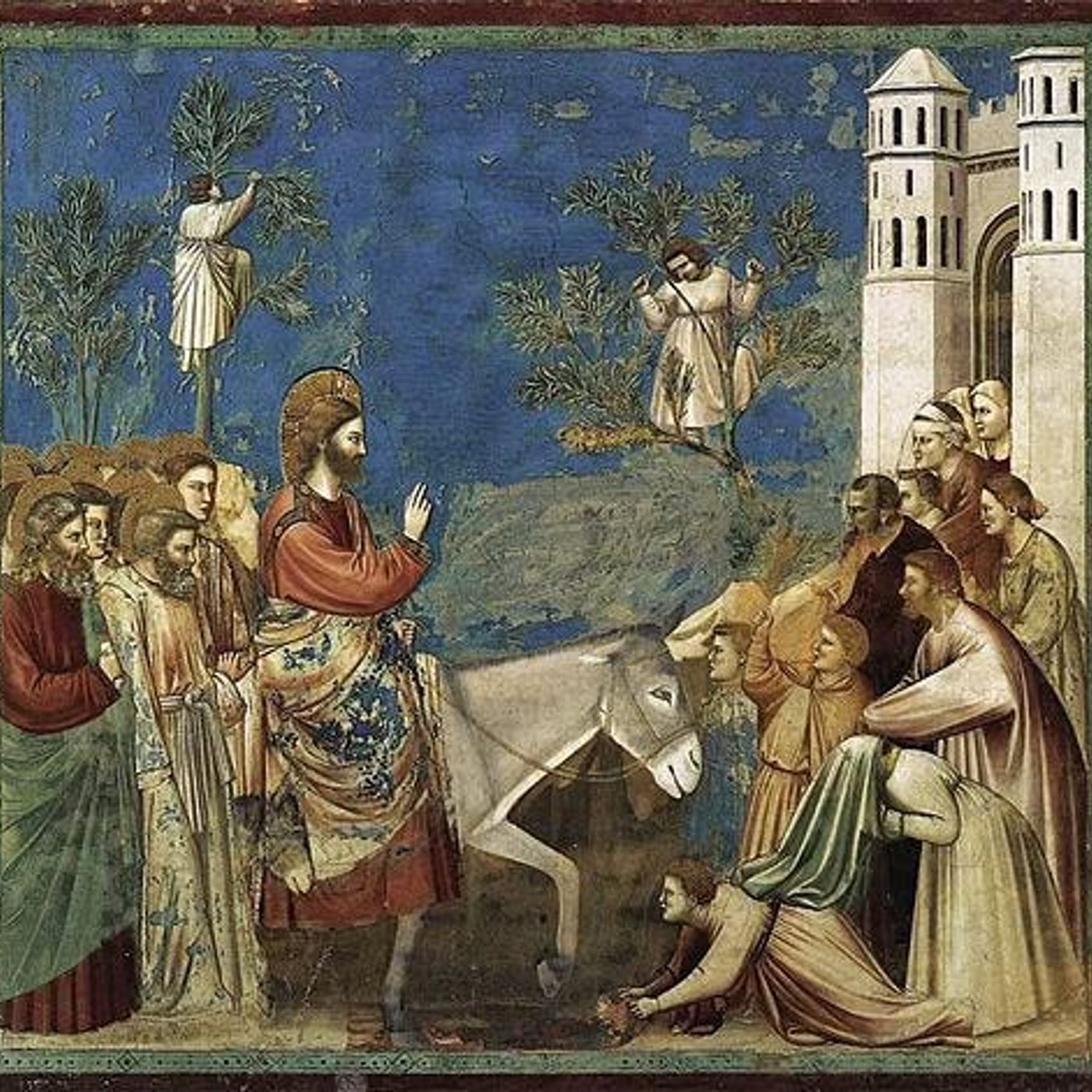
The Week of Weeks and the Transformation of Time
Published 7 months ago
Description
The Transformation of TimeThe week of weeks begins today. But what exactly does it mean to be a Catholic Christian who observes the liturgical calendar? And what is the significance of Palm Sunday and Holy Week?To begin with, we must recognise that we have been inculcated into a certain view of time: the time of the secular. Secular time implies that all time is the same and that one event simply follows other. We are cut off from the seasons and their festive observances because of technology and advanced infrastructure and thus we experience our lives as a succession of moments that tragically lead to annihilation and death. We can fill time with pleasure or kill it with distraction, but it can hold no more meaning for us than this.But t’was not always so. The pagan world, into which Christianity was born, knew its own pattern of feasts and festivals as of course did the Jewish religion. This pattern was taken up by the Christian Church and transfigured in the light of the Gospel. We are its heirs. And we can keep the flame alive, even in the darkness of the surrounding culture.But we must recognise that there is no neutral view of time. Nor is there a neutral way to inhabit time. We are faced with a choice: secular time or Christian time.Christian time does not see things as one moment after other with the present slipping into the past and the future leading nowhere. It sees time as transfigured in the light of eternity. This is most obvious when we consider the story of the Incarnation, and of Christ’s death and resurrection. For, in these events, we see the eternal breaking into the midst of ordinary life and giving it an eternal meaning. Our everyday reality is transfigured. Nothing can be the same. Life is not just one thing after other. Rather, it is a journey with Christ through this world and, from this world, into eternity.Palm Sunday and Holy WeekPerhaps that sounds somewhat vague. So let’s consider Palm Sunday and Holy Week. The liturgy that we have already enacted together has taken us from Christ’s triumphal entry into Jerusalem to his trial, condemnation and crucifixion. We have been part of two crowds: one shouting “Hosannah to the Son of David!” and the other demanding that a murderer be set free instead of Christ and crying out, “Let him be crucified! Let him be crucified!”This is a powerful illustration of what I’m talking about. Through the liturgy, we are inhabiting the lives and actions of these characters. We welcome Christ and we praise him. We give him thanks for his goodness to us. But, through our sin and our desire to be free from a life with God, we crucify the Son of God afresh. We would prefer Barabbas to be free than Christ. So, we cry out, “Let him be crucified instead!”As we recognise the fickleness of hearts and how our loves go astray, we are broken inside. We become like Peter who betrayed Christ and denounced him. And we are brought to deep contrition and sorrow for our sin. Our love has faded like the morning mist. How has it come to this? How could we have wandered away from Jesus in this way?Again, we do not just remember these things. We participate in them. They become a reality to us, here and now. And this is supremely true during this week of weeks. Through the liturgy of Holy Week, we stand in the places that Christ and his disciples stood. We are in the Upper Room as he washes his disciples’ feet, and our hearts are moved by his great humility. We are thrilled and perplexed at the institution of the Holy Eucharist. We are cut to the heart as we stand in the shadow of the cross. We kneel before it in sorrow and profound contrition. Our hopes are drowned in agony as Christ is buried in the tomb with death and evil appearing to have the final word.And we stand with Mary Magdalen outside the tomb, perhaps not even sure why we are there. And then we hear the resplendent and happy news (which I will not even utter at this moment). But, suffice to say, that we are made one with this j