Episode Details
Back to Episodes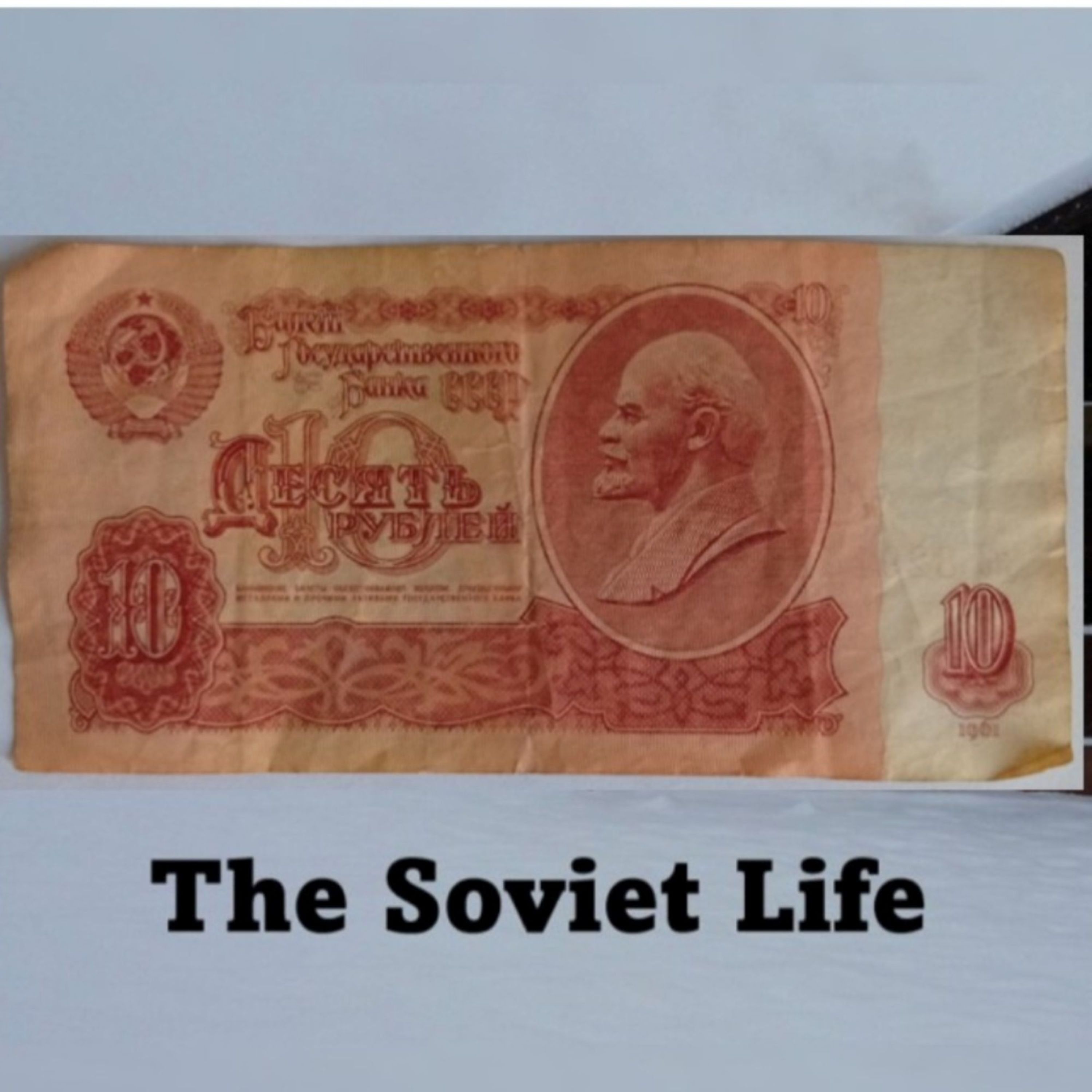
16: How Money Worked in the USSR - From Rubles to Survival
Description
In this episode of The Soviet Life, host Kate Saba takes you inside a world where money didn’t work the way we expect - it existed and often couldn’t buy what people actually needed. With personal insight and historical perspective, she explores a system where salaries were stable, yet shelves were empty, where long lines and shortages defined daily life, and where the most valuable currency wasn’t rubles, but relationships. From controlled prices and state banking to black markets and the sudden collapse that wiped out savings overnight, Kate reveals how an entire society learned to survive - and even thrive - when money alone wasn’t enough.
Key Takeaways
- Money didn’t equal access. In the USSR, you could have a steady salary - but still struggle to find basic goods on store shelves.
- The economy was controlled, not driven by demand. Prices and production were set by the state through central planning, not by what people actually needed.
- Shortages shaped everyday life. Long lines, limited choices, and waiting became a normal part of survival.
- Relationships were the real currency. The blat system - using personal connections - often mattered more than rubles when it came to getting goods or services.
- Income was stable, but opportunity was limited. Most people earned similar wages, but there was little chance to build wealth or improve living standards.
- There were two economies. The official system and an unofficial world of favors, exchanges that helped people get by.
- Luxury existed—but not for everyone. Special stores and access points created hidden inequality within a “supposedly equal” society.
- Banking didn’t function like in the West. Savings had limited purpose because there were few goods to spend money on.
- When the system collapsed, money collapsed with it. Inflation wiped out savings, showing how fragile the system really was.
- People adapted and found ways to survive. Resourcefulness, community, and resilience became essential life skills.
Key topics:
- Planned economy and five-year plans
- Soviet ruble and kapeikas
- Salaries and income stability
- Shortages and lines in stores
- Role of connections and BLAT system
- Banking system in the USSR
- Luxury goods and special stores
- Collapse of the Soviet economy and inflation
- Cultural significance of relationships
Sound Bites:
• "In the USSR, money often had nothing to buy."
• "Relationships were the most valuable currency."
• "The money began to behave like a chirp - flowing away."
Connect with us:
Please share your thoughts and stories, reach out at kate@thesovietlife.com. Follow us and leave a review to support the podcast!