Episode Details
Back to Episodes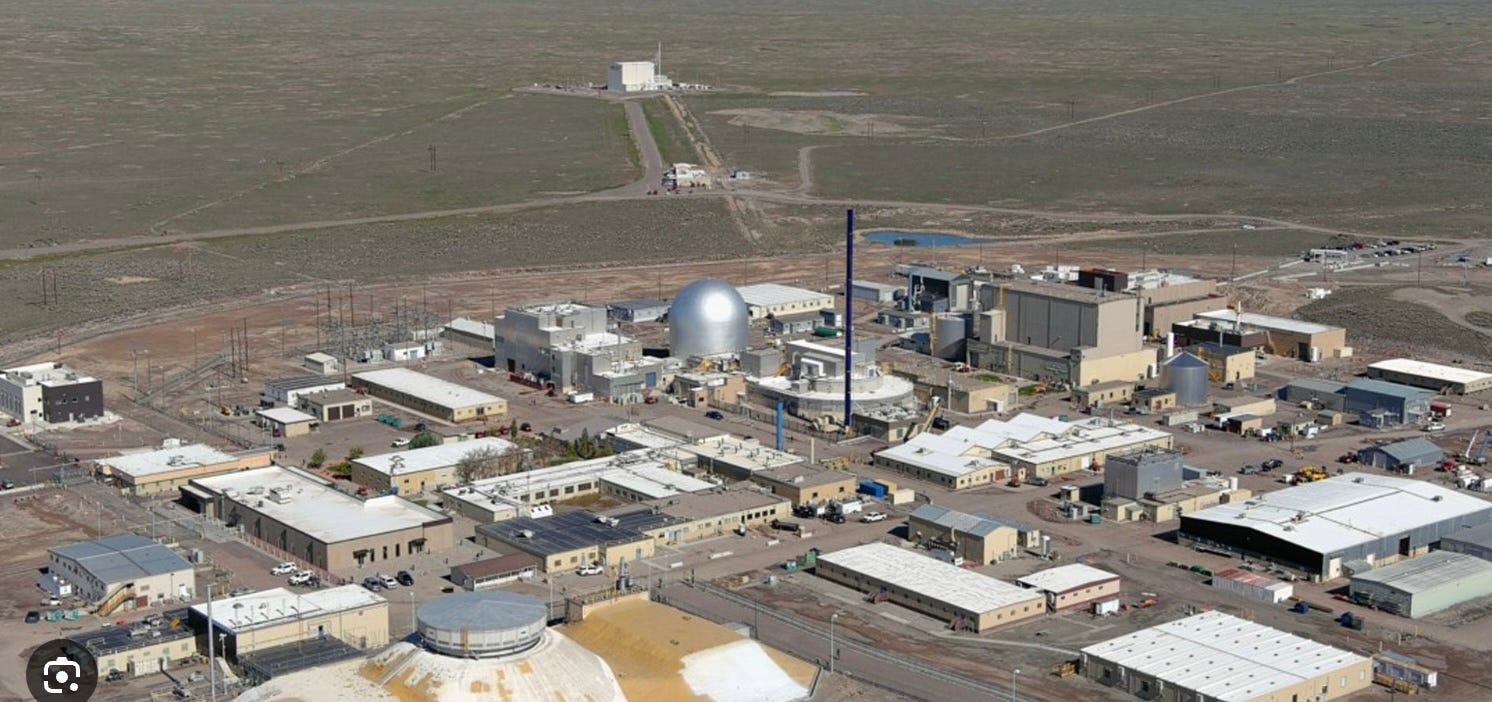
The Oil Refinery That Saved the Atom
Description
How a Chemical Processing Plant in Idaho Quietly Proved That Nuclear Fuel Recycling Is an Engineering Problem, Not a Science Fiction Story
In February 1953, a crew of American chemists, engineers, and mechanics drawn from the oil refining, chemical, and pharmaceutical industries walked into a concrete and steel building on the high desert plain of southeastern Idaho and dissolved spent nuclear reactor fuel in nitric acid for the first time. What they extracted from that acid bath, by a sequence of chemical steps borrowed almost directly from petroleum refining practice, was pure uranium-235: the same rare, expensive, intensely valuable material that had cost billions of dollars to produce through gaseous diffusion just years earlier. They did it commercially, on schedule, and under budget.
This is the story of the Idaho Chemical Processing Plant, known to its workers as the Chem Plant, and to the rest of the world as very nearly nothing at all. That invisibility is a commercial and policy failure worth understanding, because the Chem Plant demonstrated over nearly four decades of continuous operation something that the American nuclear energy debate keeps forgetting: spent nuclear fuel is not waste. It is feedstock. And the technology for processing it into something useful was proven, refined, and routinized by a contractor workforce in Idaho before the space age had even begun.
The genesis of the plant is a story about cost, not ideology. When the Atomic Energy Commission’s Materials Testing Reactor at the NRTS completed each seventeen-day cycle, its spent fuel elements still contained large quantities of unfissioned uranium-235. The gaseous diffusion enrichment process that produced that uranium in the first place was the largest single consumer of electricity in the United States, an industrial behemoth that required the equivalent output of multiple power stations running continuously. Throwing away partially burned reactor fuel was, from a pure production economics standpoint, indefensible. Chemist Don Reid and colleagues at Oak Ridge National Laboratory devised a pilot process to recover the uranium. The AEC commissioned a full commercial plant. And for the design work, they hired Foster Wheeler Corporation: an engineering firm whose principal expertise lay in oil refineries.
That choice was not accidental. It was deliberate and consequential. Foster Wheeler’s engineers took the laboratory flow sheets developed at Oak Ridge and converted them into a commercial plant using petroleum industry engineering principles, drawing conventions, and process control nomenclature. The company’s terminology for vessels, pumps, heat exchangers, and extraction columns was drawn directly from refinery practice. The resulting plant was not a glorified laboratory. It was a production facility with a production mentality, designed by people who had built plants that processed petroleum into gasoline and jet fuel, now applied to the challenge of processing irradiated uranium into recoverable product.
The commercial contractor model that the AEC chose for plant operations was equally deliberate. American Cyanamid Company served as the initial operator, followed by Phillips Petroleum. The AEC’s rationale was explicit: uranium recycling was intended to become a component of the civilian commercial power industry, and private companies needed to learn the operational craft. Government employees could have run the plant, and military officers did arrive briefly to expedite the addition of a secondary production capability. But the AEC understood that commercial technology transfer requires commercial operators. You cannot hand a working technology to industry if industry never touched it.
The technical record of the Chem Plant is, by any standard, remarkable. The facility processed more than one hundred distinct varieties of spent nuclear fuel between 1953 and 1992, recovering 31,432 kilogra